India To Set Up CRISPR Innovation Centre In Bengaluru
Technology

India To Set Up CRISPR Innovation Centre In Bengaluru

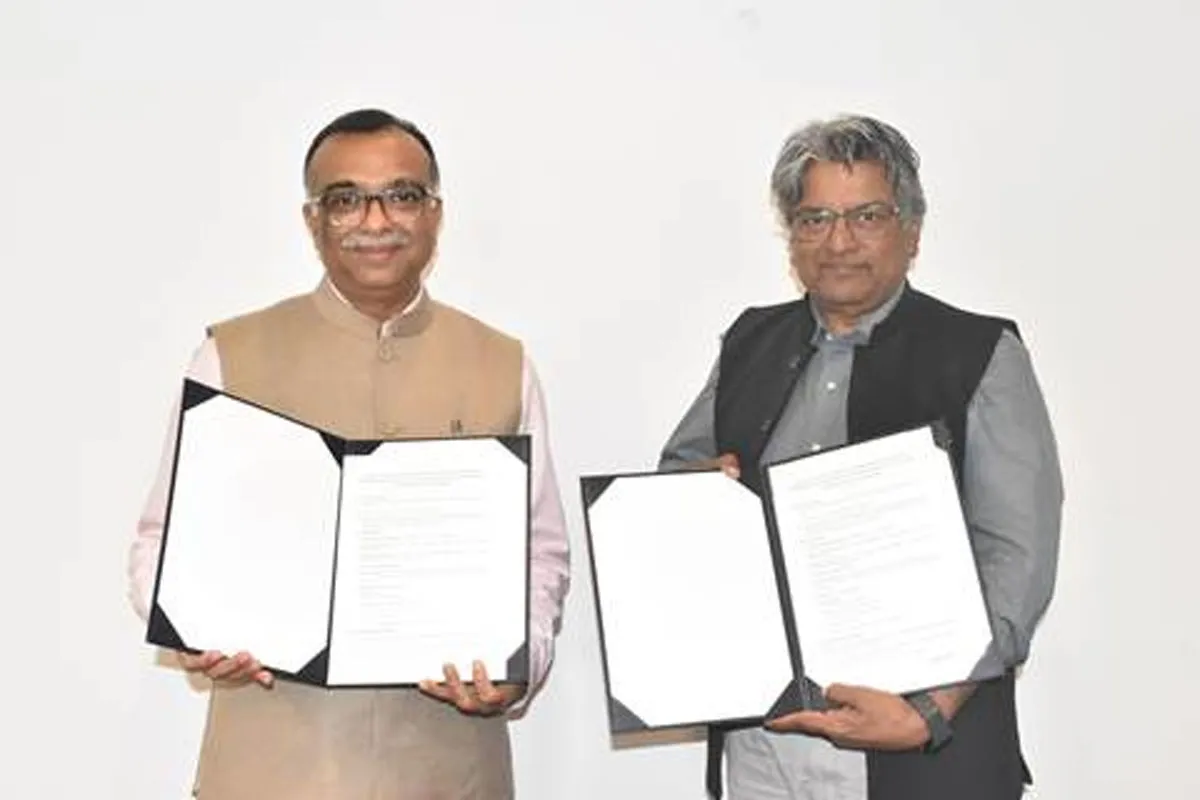
A new Letter of Intent has been signed to establish a Centre of Excellence for CRISPR Innovation and Translation, aimed at harnessing advanced CRISPR technologies to convert laboratory research into real-world clinical applications. The proposed centre will act as a dedicated hub to accelerate the translation of scientific discoveries into affordable and scalable healthcare solutions.

The Jawaharlal Nehru Centre for Advanced Scientific Research, Bengaluru—an autonomous institute under the Department of Science and Technology—and Delhi-based CrisprBits Private Limited have jointly announced the initiative, marking one of India’s early public–private partnerships in CRISPR-based biotechnology. CrisprBits specialises in gene-editing platforms focused on developing cost-effective diagnostic and therapeutic solutions.

The Centre of Excellence is envisioned as a bridge between fundamental research and clinical impact, combining JNCASR’s strengths in biomedical sciences with CrisprBits’ expertise in applied gene-editing and translational technologies. By addressing the long-standing gap between laboratory innovation and bedside application, the centre aims to demonstrate how Indian scientific research can be effectively transformed into societal and clinical benefits. It is also expected to serve as a replicable national model for strengthening collaboration between academia and industry within India’s biotechnology ecosystem.

Commenting on the development, JNCASR President Umesh Waghmare said the partnership represents a landmark step for the institution, bringing together complementary capabilities in genetics, molecular and chemical biology, and computational biology. He added that the collaboration would open new pathways to deliver societal impact while contributing to national scientific and innovation missions.

A new Letter of Intent has been signed to establish a Centre of Excellence for CRISPR Innovation and Translation, aimed at harnessing advanced CRISPR technologies to convert laboratory research into real-world clinical applications. The proposed centre will act as a dedicated hub to accelerate the translation of scientific discoveries into affordable and scalable healthcare solutions. The Jawaharlal Nehru Centre for Advanced Scientific Research, Bengaluru—an autonomous institute under the Department of Science and Technology—and Delhi-based CrisprBits Private Limited have jointly announced the initiative, marking one of India’s early public–private partnerships in CRISPR-based biotechnology. CrisprBits specialises in gene-editing platforms focused on developing cost-effective diagnostic and therapeutic solutions. The Centre of Excellence is envisioned as a bridge between fundamental research and clinical impact, combining JNCASR’s strengths in biomedical sciences with CrisprBits’ expertise in applied gene-editing and translational technologies. By addressing the long-standing gap between laboratory innovation and bedside application, the centre aims to demonstrate how Indian scientific research can be effectively transformed into societal and clinical benefits. It is also expected to serve as a replicable national model for strengthening collaboration between academia and industry within India’s biotechnology ecosystem. Commenting on the development, JNCASR President Umesh Waghmare said the partnership represents a landmark step for the institution, bringing together complementary capabilities in genetics, molecular and chemical biology, and computational biology. He added that the collaboration would open new pathways to deliver societal impact while contributing to national scientific and innovation missions.

Next Story
Infrastructure Transport

MMRDA advances 250 m on Orange Gate–Marine Drive tunnel

The Mumbai Metropolitan Region Development Authority (MMRDA) has completed 250 m of underground tunnelling for the Orange Gate–Marine Drive Urban Road Tunnel using India’s largest slurry shield tunnel boring machine (TBM) deployed for an urban road project.The project involves twin tunnels extending over 7 km beneath critical transport corridors, including Central Railway, Western Railway and Metro Line 3. The work requires high-precision engineering to navigate densely developed urban infrastructure.Once completed, the tunnel is expected to reduce travel time between Orange Gate and Marin..

Next Story
Infrastructure Urban

Hindustan Zinc Pays Rs 188.46 Billion in FY26

Hindustan Zinc contributed Rs 188.46 billion to the public exchequer in FY 2025-26, according to its 9th Tax Transparency Report. The contribution, equivalent to 46 per cent of the company’s revenue, included direct and indirect taxes, government royalties, dividends to the Government of India, withholding taxes and other statutory levies.The company’s five-year cumulative contribution to the exchequer stood at Rs 915.72 billion. In FY26, Hindustan Zinc reported revenue of Rs 408.44 billion, EBITDA of Rs 221.62 billion and profit after tax of Rs 138.32 billion. It also achieved its highest..

Next Story
Infrastructure Urban

World of Concrete India 2026 Opens in Mumbai

Informa Markets in India will host the 12th edition of World of Concrete India 2026 from 3–5 June 2026 at the Bombay Exhibition Centre, Mumbai. The specialised B2B exhibition will bring together manufacturers, suppliers, contractors, developers, architects, consultants, infrastructure companies, project leaders and government stakeholders.The event is expected to feature over 350 brands and more than 18,000 trade professionals. It will cover concrete and cement, dry mortar, precast technologies, formwork, construction chemicals, industrial and commercial flooring, scaffolding, safety solutio..

Advertisement

Subscribe to Our Newsletter

Get daily newsletters around different themes from Construction world.

STAY CONNECTED

Advertisement

Advertisement

Advertisement