+
Kolkata Metro Pink Line Wins Civic Clearance
RAILWAYS & METRO RAIL

Kolkata Metro Pink Line Wins Civic Clearance

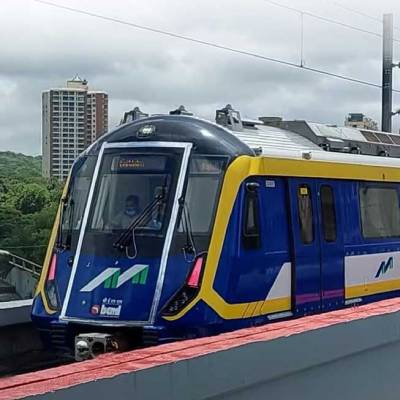
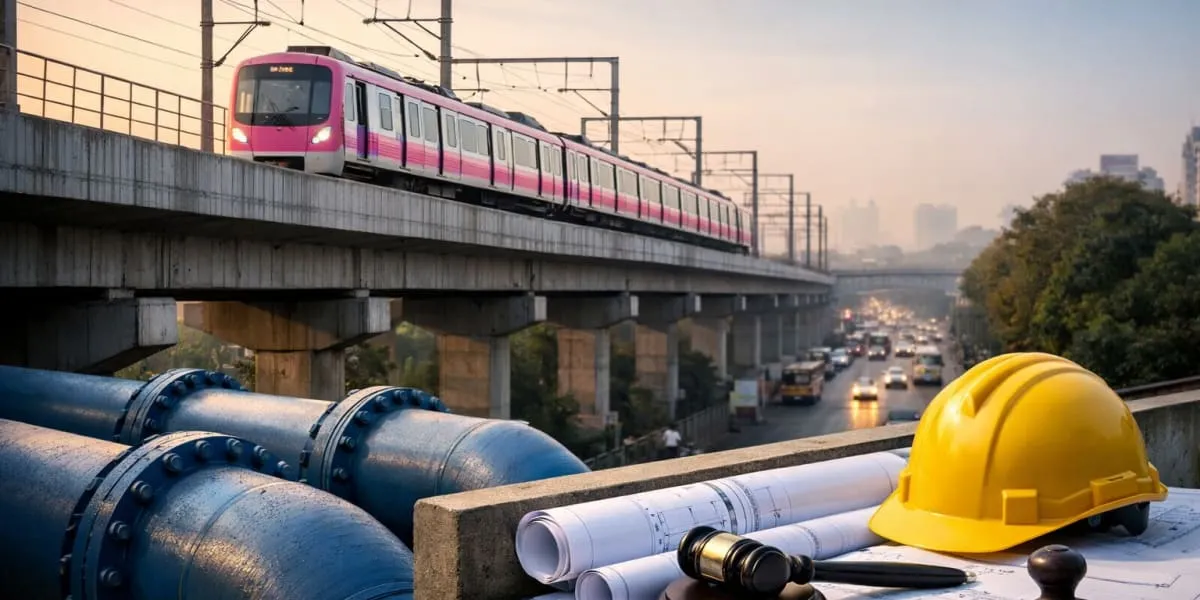
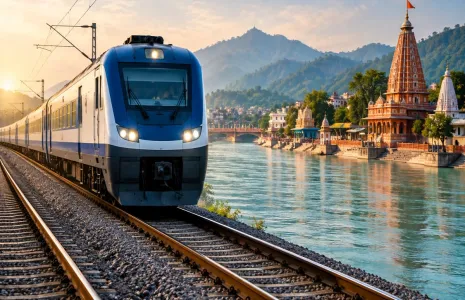
Kolkata Metro’s long-delayed Pink Line has won a crucial civic clearance that removes a major obstacle related to water supply pipelines beneath the Barrackpore Trunk Road. The 12.5-kilometre elevated corridor from Baranagar to Barrackpore is expected to cut travel time by 30 minutes and to ease congestion on the busy route. The clearance paves the way for construction to advance after years of delay.

Kolkata Municipal Corporation Municipal Commissioner Smita Pandey issued a no-objection certificate to permit the temporary closure of a 48-inch water transmission line along the trunk road, officials said. The road runs above six critical pipelines ranging from 42 to 72 inches in diameter, and managing these utilities had been the primary hurdle since the scheme was sanctioned in 2009. The KMC also approved building a new 72-inch pipeline from the Indira Gandhi Water Treatment Plant in Palta to the Talla Pumping Station to safeguard potable water supply.

The metro authority has floated a Rs 15.873 billion (bn) tender covering the elevated viaduct and ten stations, signalling renewed momentum for the project. The elevated Pink Line, or Line 5, will link with Line 1 at Baranagar, where the southern terminal is already operational as part of the Blue Line and will act as the main interchange for passengers heading to central Kolkata. Running along the trunk road, the line is intended to provide a rapid transit alternative and to reduce dependence on crowded Eastern Railway local trains.

There are 11 planned elevated stations from Baranagar to Barrackpore, including Kamarhati, Agarpara, Panihati, Sodepur, Subhash Nagar, Khardaha, Tata Gate, Titagarh and Talpukur. Residents welcomed the prospect of a direct metro link to the city centre and anticipated relief for school travel and daily commutes. Officials said the project gained pace after coordinated talks between the West Bengal government, central agencies and Rail Vikas Nigam Limited, and the Chief Minister characterised the approvals as an example of focused administrative determination that pairs transit expansion with civic safeguards. Work is expected to proceed in phases as approvals and contracts are finalised.

Kolkata Metro’s long-delayed Pink Line has won a crucial civic clearance that removes a major obstacle related to water supply pipelines beneath the Barrackpore Trunk Road. The 12.5-kilometre elevated corridor from Baranagar to Barrackpore is expected to cut travel time by 30 minutes and to ease congestion on the busy route. The clearance paves the way for construction to advance after years of delay. Kolkata Municipal Corporation Municipal Commissioner Smita Pandey issued a no-objection certificate to permit the temporary closure of a 48-inch water transmission line along the trunk road, officials said. The road runs above six critical pipelines ranging from 42 to 72 inches in diameter, and managing these utilities had been the primary hurdle since the scheme was sanctioned in 2009. The KMC also approved building a new 72-inch pipeline from the Indira Gandhi Water Treatment Plant in Palta to the Talla Pumping Station to safeguard potable water supply. The metro authority has floated a Rs 15.873 billion (bn) tender covering the elevated viaduct and ten stations, signalling renewed momentum for the project. The elevated Pink Line, or Line 5, will link with Line 1 at Baranagar, where the southern terminal is already operational as part of the Blue Line and will act as the main interchange for passengers heading to central Kolkata. Running along the trunk road, the line is intended to provide a rapid transit alternative and to reduce dependence on crowded Eastern Railway local trains. There are 11 planned elevated stations from Baranagar to Barrackpore, including Kamarhati, Agarpara, Panihati, Sodepur, Subhash Nagar, Khardaha, Tata Gate, Titagarh and Talpukur. Residents welcomed the prospect of a direct metro link to the city centre and anticipated relief for school travel and daily commutes. Officials said the project gained pace after coordinated talks between the West Bengal government, central agencies and Rail Vikas Nigam Limited, and the Chief Minister characterised the approvals as an example of focused administrative determination that pairs transit expansion with civic safeguards. Work is expected to proceed in phases as approvals and contracts are finalised.

Related Stories

Gold Stories
Next Story
Building Material

Hard Worker Wins Three Honours at Kyoorius Design Awards

The Ramco Cements Limited’s construction chemicals brand, Hard Worker, has won three honours at the Kyoorius Design Awards 2026, including the Grand Prix – Grey Elephant in the Design in Action category.The brand also secured two Blue Elephant honours, one for Design in Action and another for Packaging, recognising the design approach behind its brand identity and packaging.Launched in 2025, Hard Worker entered the construction chemicals segment with the brand promise, “Hard-working products for hardworking people.” Its visual identity uses animals and birds to represent product benefi..

Next Story
Infrastructure Transport

Kopri-Patni Creek Bridge to Improve Thane-Navi Mumbai Connectivity

Road connectivity between Thane and Navi Mumbai is set to receive a boost with the proposed six-lane Kopri-Patni Creek Bridge, which will provide a new route across Thane Creek. The project is intended to create a direct link between the two urban centres and add capacity to the region’s road network. The bridge will connect Kopri in Thane East with Patni in Navi Mumbai. It will begin at Mith Bandar Road in Kopri, about 750 metres from Thane railway station, cross Thane Creek and land near Airoli Knowledge City Road in Navi Mumbai. The project has advanced with Akshya Infra Projects emerging..

Next Story
Infrastructure Urban

Bengaluru Cuts Unaccounted-for Water to 26.5 Per Cent

The Bengaluru Water Supply and Sewerage Board (BWSSB) has reduced unaccounted-for water from nearly 51 per cent in 2013 to 26.5 per cent in 2025, improving efficiency across a metropolitan region of 14 mn people. The reduction has saved nearly 200 mn litres of water a day without requiring equivalent additional capacity. Bengaluru depends primarily on the Cauvery river system, with water transported over 100 km to the city. BWSSB operates six major treatment plants with combined installed capacity of 2,293 MLD and supplies nearly 150 litres per person per day. The Cauvery Water Supply Scheme S..

Advertisement

Subscribe to Our Newsletter

Get daily newsletters around different themes from Construction world.

STAY CONNECTED

Advertisement

SPECIAL OFFER
QR Code