+
India Plans 100 New Ships To Cut USD 75 Billion Freight Bill
ECONOMY & POLICY

India Plans 100 New Ships To Cut USD 75 Billion Freight Bill

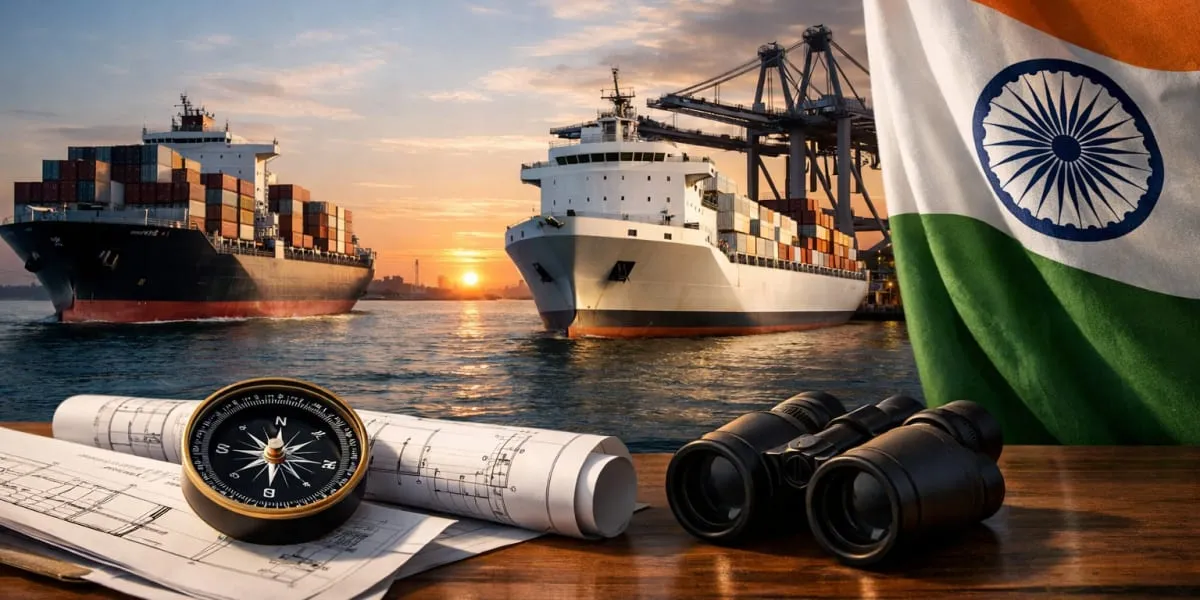
The National Shipping Board (NSB) held the inaugural Sagar Samvad in New Delhi, bringing together policymakers, shipowners, financiers and cadets to outline a roadmap for maritime expansion. Union Minister of Ports, Shipping and Waterways (MoPSW) Sarbananda Sonowal described a plan to add 100 vessels to India's foreign-dependent merchant fleet over the next five years as part of efforts to reduce the foreign freight bill. The event was presented as a platform to align the re-enacted Merchant Shipping Act, 2025 and new National Shipping Board rules with the Maritime India Vision 2030 and Maritime Amrit Kaal Vision 2047.

The NSB submitted its annual and subcommittee reports and proposed a five point roadmap stressing fiscal reform, assured cargo support, access to competitive financing, regulatory streamlining and ease of doing business. Sonowal welcomed the roadmap and credited the Container Manufacturing Assistance Scheme, worth Rs100 bn, with encouraging domestic container production and attracting large orders from global shipping companies. The minister emphasised that these measures aim to ensure Indian shipowners participate in growth arising from expanded port capacity.

A session on maritime labour force challenges examined wage taxation, pension gaps and welfare provisions affecting seafarers and linked skilling to employment generation. The Union Minister of Labour and Employment and Youth Affairs and Sports outlined steps to expand industry led training, address gender disparity and develop specialised talent for emerging segments such as cruise shipping and advanced shipbuilding. The government signalled an intent to leverage global demand for skilled seafarers to create wider employment pathways for youth.

The Union Minister of State for Ports, Shipping and Waterways noted that India pays close to USD75 bn every year in freight to foreign lines and argued that augmenting Indian tonnage is necessary for trade security. NSB chairperson presented the board's advisory role under the Merchant Shipping Act, 2025 and framed Sagar Samvad as a consultative forum to build consensus on building a future ready maritime sector. Participants discussed opportunities and challenges in expanding the fleet and improving competitiveness to support long term goals through 2047.

The National Shipping Board (NSB) held the inaugural Sagar Samvad in New Delhi, bringing together policymakers, shipowners, financiers and cadets to outline a roadmap for maritime expansion. Union Minister of Ports, Shipping and Waterways (MoPSW) Sarbananda Sonowal described a plan to add 100 vessels to India's foreign-dependent merchant fleet over the next five years as part of efforts to reduce the foreign freight bill. The event was presented as a platform to align the re-enacted Merchant Shipping Act, 2025 and new National Shipping Board rules with the Maritime India Vision 2030 and Maritime Amrit Kaal Vision 2047. The NSB submitted its annual and subcommittee reports and proposed a five point roadmap stressing fiscal reform, assured cargo support, access to competitive financing, regulatory streamlining and ease of doing business. Sonowal welcomed the roadmap and credited the Container Manufacturing Assistance Scheme, worth Rs100 bn, with encouraging domestic container production and attracting large orders from global shipping companies. The minister emphasised that these measures aim to ensure Indian shipowners participate in growth arising from expanded port capacity. A session on maritime labour force challenges examined wage taxation, pension gaps and welfare provisions affecting seafarers and linked skilling to employment generation. The Union Minister of Labour and Employment and Youth Affairs and Sports outlined steps to expand industry led training, address gender disparity and develop specialised talent for emerging segments such as cruise shipping and advanced shipbuilding. The government signalled an intent to leverage global demand for skilled seafarers to create wider employment pathways for youth. The Union Minister of State for Ports, Shipping and Waterways noted that India pays close to USD75 bn every year in freight to foreign lines and argued that augmenting Indian tonnage is necessary for trade security. NSB chairperson presented the board's advisory role under the Merchant Shipping Act, 2025 and framed Sagar Samvad as a consultative forum to build consensus on building a future ready maritime sector. Participants discussed opportunities and challenges in expanding the fleet and improving competitiveness to support long term goals through 2047.

Related Stories

Gold Stories

Next Story
Infrastructure Transport

97 Per Cent Of Rongjeng-Mangsang-Adokgre Road Nears Completion

Deputy Chief Minister in-charge of public works Prestone Tynsong said in Shillong on 26 August that 97 per cent physical progress had been achieved on the ongoing Rongjeng-Mangsang-Adokgre road being constructed under the Non-Lapsable Central Pool of Resources (NLCPR). He noted the project was sanctioned in 2017 and that the stipulated time for completion had been 24 months from issue of the final work order. The deputy chief minister informed the assembly that the government had decided to include the remaining work under a World Bank project. In reply to a query from Rongjeng MLA Jim M Sangm..

Next Story
Infrastructure Transport

First TBM Starts Digging Five Point Three Kilometre Tunnel Under SGNP

The Goregaon-Mulund Link Road (GMLR) Phase three (B) project has reached a key milestone as the first tunnel boring machine (TBM) began excavation of the first of two tunnels beneath the Sanjay Gandhi National Park (SGNP). The machine, named Tulsi, started cutting a five point three kilometre bore that will link Dadasaheb Phalke Chitranagari in Goregaon East with Amar Nagar in Mulund West. Officials issued a statement noting the commencement of tunnelling work under the protected green belt. The twin tunnels are being constructed using mechanised tunnelling methods that aim to limit surface di..

Next Story
Infrastructure Transport

UP Approves Two Expressways And Rs 240 bn Infrastructure Push

The Uttar Pradesh Cabinet approved a series of infrastructure and industrial investment proposals totalling Rs 240 billion (Rs 240 bn), including two major expressway projects, a manufacturing and logistics cluster in Sultanpur and incentives for 11 industrial projects across the state. The decisions, taken at a meeting chaired by Chief Minister Yogi Adityanath, underline the state government’s focus on expanding road connectivity around emerging industrial hubs while attracting manufacturing investment to districts beyond major urban centres. The approvals cover both greenfield expressway c..

Advertisement

Subscribe to Our Newsletter

Get daily newsletters around different themes from Construction world.

STAY CONNECTED

Advertisement

SPECIAL OFFER
QR Code