
Tvasta, CEPT Launch 3D Construction Printing Platform
Technology

Tvasta, CEPT Launch 3D Construction Printing Platform

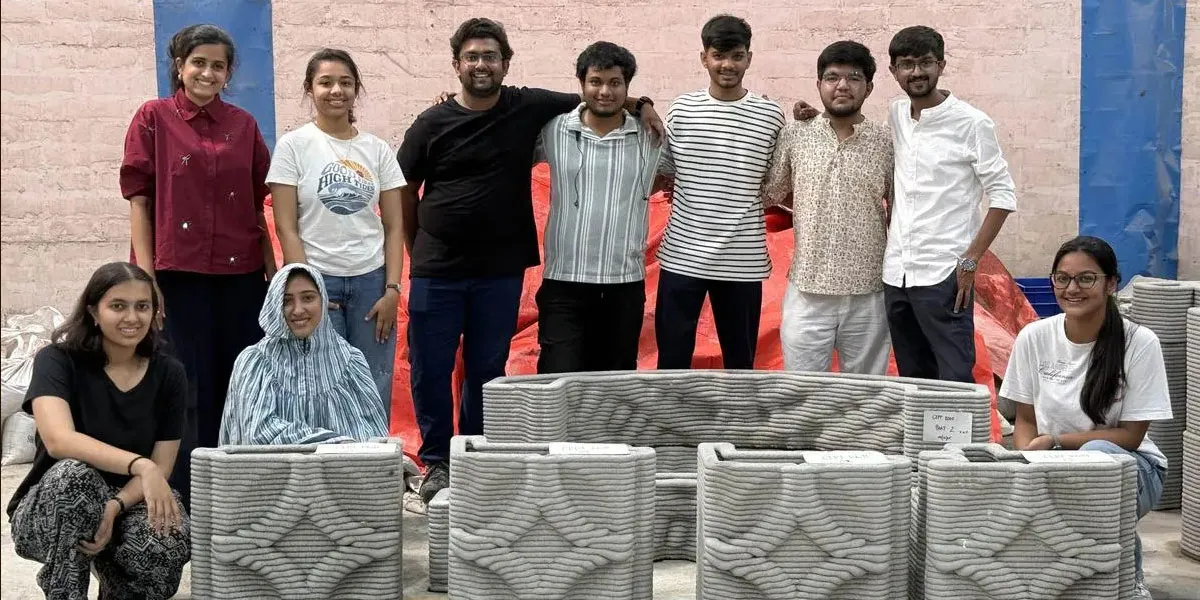
Chennai-based deep-tech startup Tvasta Manufacturing Solutions has partnered with CEPT University in Ahmedabad to create a national platform focused on 3D construction printing. The initiative aims to integrate research, classroom learning and real-world testing by bringing academic work and on-ground construction systems together.

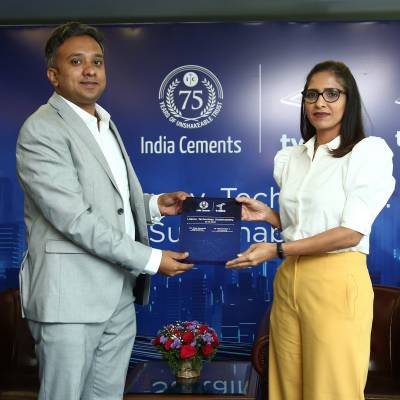
A memorandum of understanding has been signed under which CEPT University will establish an advanced additive manufacturing workshop on its campus in the coming months. The facility will support teaching studios, applied research and the development of prototypes designed to address practical challenges in the construction sector.

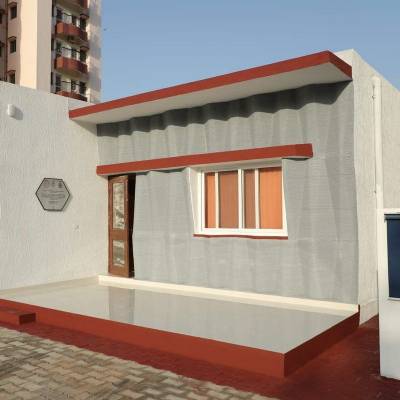
As part of the collaboration, Tvasta will provide CEPT with an industrial robotic arm capable of printing complex concrete forms. Researchers from both institutions will study printed facades, building components and structural systems in which walls, roofs and slabs can be produced as single, integrated units. The partnership will also examine how 3D-printed structures respond to heat, local climate conditions and airflow.

Another focus area will be the development of construction components that can be printed off-site, transported and assembled in regions where conventional building methods are difficult or inefficient. The workshop is expected to give students and faculty direct exposure to industrial-scale 3D printing, strengthening the link between digital design and physical construction.

Jinal Shah, Programme Chair for MCDF at CEPT University, said the facility would allow students and faculty to test design ideas, experiment with printed components and connect architectural and engineering concepts with real-world construction practice.

Chennai-based deep-tech startup Tvasta Manufacturing Solutions has partnered with CEPT University in Ahmedabad to create a national platform focused on 3D construction printing. The initiative aims to integrate research, classroom learning and real-world testing by bringing academic work and on-ground construction systems together. A memorandum of understanding has been signed under which CEPT University will establish an advanced additive manufacturing workshop on its campus in the coming months. The facility will support teaching studios, applied research and the development of prototypes designed to address practical challenges in the construction sector. As part of the collaboration, Tvasta will provide CEPT with an industrial robotic arm capable of printing complex concrete forms. Researchers from both institutions will study printed facades, building components and structural systems in which walls, roofs and slabs can be produced as single, integrated units. The partnership will also examine how 3D-printed structures respond to heat, local climate conditions and airflow. Another focus area will be the development of construction components that can be printed off-site, transported and assembled in regions where conventional building methods are difficult or inefficient. The workshop is expected to give students and faculty direct exposure to industrial-scale 3D printing, strengthening the link between digital design and physical construction. Jinal Shah, Programme Chair for MCDF at CEPT University, said the facility would allow students and faculty to test design ideas, experiment with printed components and connect architectural and engineering concepts with real-world construction practice.

Next Story
Infrastructure Transport

CMRL to Open 15.8 km Chennai Metro Phase II in February

Chennai Metro Rail (CMRL) has revised its rollout strategy for Phase II of the Chennai Metro, deciding to commission the entire 15.8-km stretch between Poonamallee Bypass and Vadapalani directly in February. The move marks a shift from the earlier plan of launching services on a shorter section first and extending them in stages.Initially, CMRL had proposed to start operations on the Poonamallee Bypass–Porur Junction stretch by the end of January, with services extended to Vadapalani in February. However, officials said the revised approach would allow commuters to benefit from better connec..

Next Story
Infrastructure Transport

Power Mech Emerges L1 for Mumbai Monorail O&M Contract

Power Mech Projects has emerged as the lowest bidder (L1) for the operations and maintenance (O&M) contract of the Mumbai Monorail project, officials said. The contract was floated by the Mumbai Metropolitan Region Development Authority (MMRDA) with a tenure of 1,825 days, or five years.MMRDA had invited bids for the O&M work of the Mumbai Monorail corridor from Sant Gadge Maharaj Chowk to Chembur. Technical bids were opened on November 12, 2025, with four firms submitting bids for the contract. Following the technical evaluation conducted on January 1, 2026, two bidders were disqualif..

Next Story
Infrastructure Transport

E to E Transportation Clarifies SECR Contract Value at Rs 270.35 Mn

NSE Emerge-listed E to E Transportation Infrastructure has issued a clarification on the value of a railway signalling and telecommunication contract awarded by the South East Central Railway (SECR), Raipur Division, after identifying a typographical error in its earlier regulatory disclosure.In a filing dated January 4, 2026, the company said the correct value of the Letter of Acceptance (LoA) is Rs 270.34 million, and not Rs 2.73 billion as previously stated in an announcement uploaded on the NSE Emerge portal earlier the same day. The company noted that the incorrect figure was the result o..

Advertisement

Subscribe to Our Newsletter

Get daily newsletters around different themes from Construction world.

STAY CONNECTED

Advertisement

Advertisement

Advertisement

Advertisement

Open In App