+
 India’s GDP contracts 7.3% in FY21: State Bank of India
ECONOMY & POLICY

India’s GDP contracts 7.3% in FY21: State Bank of India

State Bank of India (SBI), in its Ecowrap report, said on Tuesday that Indian GDP has possibly contracted less than estimated in the fiscal year 2021.

On the other hand, in February, the Central Statistics Office (CSO) estimated Asia's third-largest economy to have contracted by 8% in FY21. SBI now predicts India's economy may have contracted by 7.3%.

According to the SBI's statement in the report, based on the quarterly GDP numbers in FY21 and the entire FY21 GDP estimates, Q4GDP was expected to reveal a contraction of 1.1%. The GDP growth for Q4 would be near 1.3%, based on the forecasting by the SBI Nowcasting model. The expected GDP decline for the entire year is around -7.3%, earlier expected to be -7.4%.

The Central Statistics Office (CSO) will release its provisional estimates of GDP for FY21 on May 31.

The report said the likely consequence of any upward bias in FY21 results in a collateral decline in FY22 GDP estimates. It further says the impact of the second wave of Covid-19 on the economy was limited compared to the first wave, now estimates that there may be a nominal loss of Rs 6 lakh crore in GDP during the Q1 of FY22 as compared to the loss of Rs 11 lakh crore during the Q1 FY21. The actual loss of GDP would be between Rs 4-4.5 lakh crore, and therefore, the real GDP growth would range between 10-15% during Q1 FY21. Further, it said that in the second wave, the health crisis has been overwhelming, and so, the impact of the second wave on GDP will be more from health channels than from mobility channels. The sequential momentum of leading indicators is low all the time.

Through the corporate results, SBI said that the growth in the March quarter of FY21 would be better than growth in the December quarter. The complete projection for the March quarter of FY21 depends on what extent the previous data will be revised by NSO.

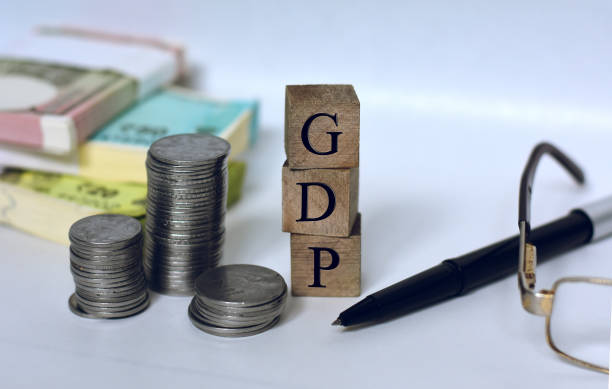
Image Source


Also read: Forecasted GDP rate for FY22 drops to 9.2%: Care Ratings

Also read: FDIs in India rise 19% to $59.64 billion in FY21: Govt data

State Bank of India (SBI), in its Ecowrap report, said on Tuesday that Indian GDP has possibly contracted less than estimated in the fiscal year 2021. On the other hand, in February, the Central Statistics Office (CSO) estimated Asia's third-largest economy to have contracted by 8% in FY21. SBI now predicts India's economy may have contracted by 7.3%. According to the SBI's statement in the report, based on the quarterly GDP numbers in FY21 and the entire FY21 GDP estimates, Q4GDP was expected to reveal a contraction of 1.1%. The GDP growth for Q4 would be near 1.3%, based on the forecasting by the SBI Nowcasting model. The expected GDP decline for the entire year is around -7.3%, earlier expected to be -7.4%. The Central Statistics Office (CSO) will release its provisional estimates of GDP for FY21 on May 31. The report said the likely consequence of any upward bias in FY21 results in a collateral decline in FY22 GDP estimates. It further says the impact of the second wave of Covid-19 on the economy was limited compared to the first wave, now estimates that there may be a nominal loss of Rs 6 lakh crore in GDP during the Q1 of FY22 as compared to the loss of Rs 11 lakh crore during the Q1 FY21. The actual loss of GDP would be between Rs 4-4.5 lakh crore, and therefore, the real GDP growth would range between 10-15% during Q1 FY21. Further, it said that in the second wave, the health crisis has been overwhelming, and so, the impact of the second wave on GDP will be more from health channels than from mobility channels. The sequential momentum of leading indicators is low all the time. Through the corporate results, SBI said that the growth in the March quarter of FY21 would be better than growth in the December quarter. The complete projection for the March quarter of FY21 depends on what extent the previous data will be revised by NSO. Image Source Also read: Forecasted GDP rate for FY22 drops to 9.2%: Care Ratings Also read: FDIs in India rise 19% to $59.64 billion in FY21: Govt data

Next Story
Infrastructure Urban

Implementation Status of Jal Jeevan Mission

Since August 2019 the Government has implemented Jal Jeevan Mission to provide assured potable water through household tap connections in rural India. At the start of the mission only 32.3 million (mn) rural households, representing 16.7 per cent, were reported to have tap water connections. States and union territories have reported that 125.8 mn additional rural households have since been provided with tap connections. As a result, of about 193.6 mn rural households roughly 158.2 mn, or 81.71 per cent, are reported to have tap water supply at home.\n\nThe State, district and village level st..

Next Story
Infrastructure Urban

Jal Jeevan Mission Reaches Eighty One Per Cent Rural Coverage

The Government reported substantial progress under the Jal Jeevan Mission, launched in August 2019 to provide tap water to every rural household. At launch only 32.3 million (mn) rural households had tap connections and states and Union territories reported provision of 125.8 mn additional households by March 2026. Consequently, out of about 193.6 mn rural households around 158.2 mn, or 81.71 per cent, are reported to have tap water at home. The Finance Minister announced extension of the mission until 2028 in the 2025-26 budget speech. The Swachh Bharat Mission Grameen, launched in October 20..

Next Story
Infrastructure Urban

Empowering Local Governance for Sustainable Rural Water Supply

The Ministry of Jal Shakti has aligned the Jal Jeevan Mission (JJM) with the 73rd Amendment to strengthen village level planning and community ownership of water supply. Gram Panchayats, village water and sanitation committees and Pani Samitis are to plan, implement, manage and maintain piped water systems, with gram sabha processes formalising handover and oversight. Implementation support agencies including non government organisations, community based organisations and self help groups have been empanelled to train local committees and promote women participation. Under JJM, the department ..

Advertisement

Subscribe to Our Newsletter

Get daily newsletters around different themes from Construction world.

STAY CONNECTED

Advertisement

Advertisement

Advertisement