16,755 e-challans worth Rs 94.9 million issued at Bihar toll plazas
ECONOMY & POLICY

16,755 e-challans worth Rs 94.9 million issued at Bihar toll plazas

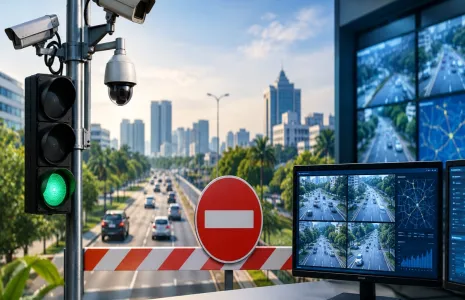
The Bihar Transport Department and traffic police issued over 16,700 e-challans, totalling Rs 94.9 million, within a week using the newly installed e-detection system at 13 toll plazas across the state. From August 7 to August 15, 9,676 of these e-challans were issued to vehicles registered in other states, while 7,079 were issued to vehicles registered in Bihar, according to officials.

Additional Director General (ADG) of Bihar Traffic Police, Sudhanshu Kumar, stated that the e-detection system, coordinated between the state transport department and traffic police, automatically issues e-challans to vehicle owners without valid insurance, fitness, and pollution certificates. Vehicle owners receive the e-challans on their mobile phones.

Kumar added that the government is working with the National Informatics Centre (NIC) to install the e-detection system at all toll plazas in the state. The system's primary goal is to ensure that vehicles meet all legal requirements to reduce road accidents, especially on National Highways, where most fatalities occur. The introduction of the e-detection system is expected to encourage compliance with the Motor Vehicles Act and improve road safety.

In addition, the Bihar government has recently sanctioned 10,332 new posts, including 4,215 for highway patrolling, to strengthen traffic rule enforcement across the state. Chief Minister Nitish Kumar also launched a "National Highway Patrolling System," deploying hi-tech patrol vehicles every 50 km along highways to respond quickly to accidents and save lives. (ET)

The Bihar Transport Department and traffic police issued over 16,700 e-challans, totalling Rs 94.9 million, within a week using the newly installed e-detection system at 13 toll plazas across the state. From August 7 to August 15, 9,676 of these e-challans were issued to vehicles registered in other states, while 7,079 were issued to vehicles registered in Bihar, according to officials. Additional Director General (ADG) of Bihar Traffic Police, Sudhanshu Kumar, stated that the e-detection system, coordinated between the state transport department and traffic police, automatically issues e-challans to vehicle owners without valid insurance, fitness, and pollution certificates. Vehicle owners receive the e-challans on their mobile phones. Kumar added that the government is working with the National Informatics Centre (NIC) to install the e-detection system at all toll plazas in the state. The system's primary goal is to ensure that vehicles meet all legal requirements to reduce road accidents, especially on National Highways, where most fatalities occur. The introduction of the e-detection system is expected to encourage compliance with the Motor Vehicles Act and improve road safety. In addition, the Bihar government has recently sanctioned 10,332 new posts, including 4,215 for highway patrolling, to strengthen traffic rule enforcement across the state. Chief Minister Nitish Kumar also launched a National Highway Patrolling System, deploying hi-tech patrol vehicles every 50 km along highways to respond quickly to accidents and save lives. (ET)

Next Story
Infrastructure Urban

Implementation Status of Jal Jeevan Mission

Since August 2019 the Government has implemented Jal Jeevan Mission to provide assured potable water through household tap connections in rural India. At the start of the mission only 32.3 million (mn) rural households, representing 16.7 per cent, were reported to have tap water connections. States and union territories have reported that 125.8 mn additional rural households have since been provided with tap connections. As a result, of about 193.6 mn rural households roughly 158.2 mn, or 81.71 per cent, are reported to have tap water supply at home.\n\nThe State, district and village level st..

Next Story
Infrastructure Urban

Jal Jeevan Mission Reaches Eighty One Per Cent Rural Coverage

The Government reported substantial progress under the Jal Jeevan Mission, launched in August 2019 to provide tap water to every rural household. At launch only 32.3 million (mn) rural households had tap connections and states and Union territories reported provision of 125.8 mn additional households by March 2026. Consequently, out of about 193.6 mn rural households around 158.2 mn, or 81.71 per cent, are reported to have tap water at home. The Finance Minister announced extension of the mission until 2028 in the 2025-26 budget speech. The Swachh Bharat Mission Grameen, launched in October 20..

Next Story
Infrastructure Urban

Empowering Local Governance for Sustainable Rural Water Supply

The Ministry of Jal Shakti has aligned the Jal Jeevan Mission (JJM) with the 73rd Amendment to strengthen village level planning and community ownership of water supply. Gram Panchayats, village water and sanitation committees and Pani Samitis are to plan, implement, manage and maintain piped water systems, with gram sabha processes formalising handover and oversight. Implementation support agencies including non government organisations, community based organisations and self help groups have been empanelled to train local committees and promote women participation. Under JJM, the department ..

Advertisement

Subscribe to Our Newsletter

Get daily newsletters around different themes from Construction world.

STAY CONNECTED

Advertisement

Advertisement

Advertisement