6th Edition of Otis’ Made to Move Challenge Kicks Off
ECONOMY & POLICY

6th Edition of Otis’ Made to Move Challenge Kicks Off

Otis India, a subsidiary of Otis Worldwide Corporation— the global leader in elevator and escalator manufacturing, installation, and service — has announced the sixth edition of its global Made to Move Communities™ challenge. This year’s program invites students to design AI-based mobility solutions that help communities and first responders prepare for, respond to, and recover from natural disasters.

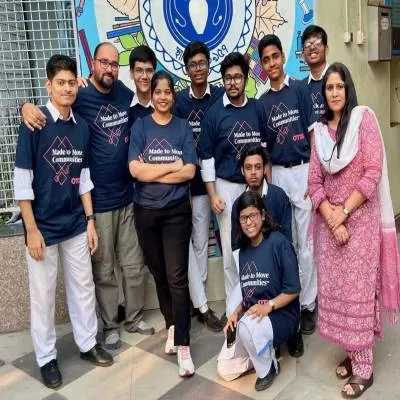
The initiative underscores Otis’ long-standing commitment to advancing STEM education and empowering young innovators to apply technology and empathy toward building safer, more resilient cities. Over the coming months, more than 200 students from 18 countries and territories will collaborate with 150 Otis mentors to develop AI-led innovations that enhance disaster preparedness and recovery.

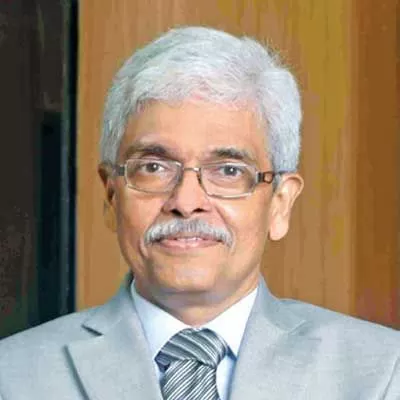
Sebi Joseph, President, Otis India, said, “During natural calamities, reliable vertical mobility plays a crucial role in ensuring safety and access to essential support. This year’s Made to Move Communities challenge encourages students to blend innovation with compassion — to view mobility through a humanitarian lens. I’m confident their ideas will not only address disaster-related mobility challenges but also nurture empathy and problem-solving among tomorrow’s leaders.”

Launched in 2020, Made to Move Communities™ is Otis’ flagship global STEM challenge, inspiring students to develop creative, real-world mobility solutions for their communities. Regional teams present their ideas to Otis judges, and winners advance to a global finale, where selected schools receive STEM grants ranging from $7,500 to 35,000 to further their innovation and education initiatives.

To date, the program has engaged over 1,000 students and 950 Otis mentors worldwide, contributing more than $1.25 million in grants to participating schools, reinforcing Otis’ vision to move the world safely, efficiently, and sustainably.

Otis India, a subsidiary of Otis Worldwide Corporation— the global leader in elevator and escalator manufacturing, installation, and service — has announced the sixth edition of its global Made to Move Communities™ challenge. This year’s program invites students to design AI-based mobility solutions that help communities and first responders prepare for, respond to, and recover from natural disasters.The initiative underscores Otis’ long-standing commitment to advancing STEM education and empowering young innovators to apply technology and empathy toward building safer, more resilient cities. Over the coming months, more than 200 students from 18 countries and territories will collaborate with 150 Otis mentors to develop AI-led innovations that enhance disaster preparedness and recovery.Sebi Joseph, President, Otis India, said, “During natural calamities, reliable vertical mobility plays a crucial role in ensuring safety and access to essential support. This year’s Made to Move Communities challenge encourages students to blend innovation with compassion — to view mobility through a humanitarian lens. I’m confident their ideas will not only address disaster-related mobility challenges but also nurture empathy and problem-solving among tomorrow’s leaders.”Launched in 2020, Made to Move Communities™ is Otis’ flagship global STEM challenge, inspiring students to develop creative, real-world mobility solutions for their communities. Regional teams present their ideas to Otis judges, and winners advance to a global finale, where selected schools receive STEM grants ranging from $7,500 to 35,000 to further their innovation and education initiatives.To date, the program has engaged over 1,000 students and 950 Otis mentors worldwide, contributing more than $1.25 million in grants to participating schools, reinforcing Otis’ vision to move the world safely, efficiently, and sustainably.

Next Story
Real Estate

AI: The New Recruit

From getting ideas to evaluating designs, presenting concepts to clients and tracking projects, artificial intelligence (AI) is helping architects work better and faster.“AI allows architects to spend more time doing what only they can do: think critically, synthesise complexity and design with intent,” says Dikshu C Kukreja, Managing Principal, CP Kukreja Architects. “Every minute reclaimed from repetitive processes can be invested in creativity, contextual understanding, interdisciplinary collaboration and innovation – the qualities that define meaningful architecture.”To read the ..

Next Story
Real Estate

Redevelopment 2.0

In 2017, Mumbai identified 160,000 ageing buildings due for structural audit. Close to half of these were in the Western Suburbs. Redeveloping the oldest and structurally weakest of these would help unlock new housing, much needed given the city’s growing population density and constant developed area of 437.7 sq km. At 30,600 people per sq km in 2024, Mumbai’s density was almost thrice that of Gurugram, and 60 per cent higher than Bengaluru’s.Essentially, Mumbai’s realty market has demand. It has capital. It has realty development potential.Fast forward to 2026. Mumbai has 1,094 regis..

Next Story
Technology

Cost intelligence will become a strategic contributor to project success

As India's construction industry accelerates its digital transformation, integrated platforms, AI and connected data are becoming essential to improving cost certainty, project efficiency and sustainability. Ravi Kumar, Sales Director – India, RIB Software India, shares how digital workflows are reshaping project planning, commercial management and decision-making across the construction value chain.India's construction sector is embracing digital technologies at an unprecedented pace. From your perspective, what are the biggest shifts driving this transformation and how is RIB Software enab..

Advertisement

Subscribe to Our Newsletter

Get daily newsletters around different themes from Construction world.

STAY CONNECTED

Advertisement

Advertisement

Advertisement