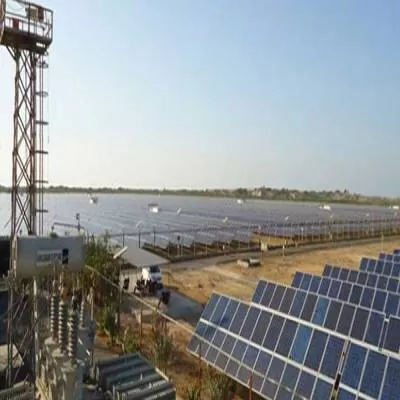
APTEL Orders Tariff Review For 10 MW Punjab Rooftop Solar
ECONOMY & POLICY

APTEL Orders Tariff Review For 10 MW Punjab Rooftop Solar

The Appellate Tribunal for Electricity (APTEL) granted partial relief to Radiance Punjab Renewable Private Limited in a dispute over its 10 megawatt (MW) rooftop solar project in Punjab. The Punjab State Electricity Regulatory Commission (PSERC) had reduced the contracted tariff from Rs seven point five nine per kWh to Rs five point zero nine per kWh after recognising only a 29-day delay in achieving the Commercial Operation Date (COD). The developer contested the order and sought recognition of further delays as Force Majeure.

The project began in March 2015 when the developer's predecessor won a competitive bid by the Punjab Energy Development Agency (PEDA) and signed an Implementation Agreement and a Power Purchase Agreement (PPA) with the Punjab State Power Corporation Limited (PSPCL). The PPA required commissioning within 10 months. The company said factors beyond its control caused the delays.

In its appeal the company identified three delay periods: a 41-day lapse in regulatory approval of the PPA, 127 days lost to site finalisation and grid connectivity, and a 10-day disruption from the Jat agitation. The state utilities argued the developer failed to issue a formal Force Majeure notice, but APTEL observed that a PPA becomes enforceable only after State Commission approval and that the delay in approval was the responsibility of the state utility, so it allowed the 41-day extension. The Tribunal upheld PSERC's calculation on the site and grid delays.

APTEL declined relief for the 10-day Jat agitation period because the developer had not served the mandatory contractual notice. The tribunal partly allowed the appeal and directed PSERC to recalculate delays for each of the nine rooftop solar sites and to determine the applicable tariff on the revised timelines. Regulators will therefore revisit tariff outcomes for the affected projects.

The Appellate Tribunal for Electricity (APTEL) granted partial relief to Radiance Punjab Renewable Private Limited in a dispute over its 10 megawatt (MW) rooftop solar project in Punjab. The Punjab State Electricity Regulatory Commission (PSERC) had reduced the contracted tariff from Rs seven point five nine per kWh to Rs five point zero nine per kWh after recognising only a 29-day delay in achieving the Commercial Operation Date (COD). The developer contested the order and sought recognition of further delays as Force Majeure. The project began in March 2015 when the developer's predecessor won a competitive bid by the Punjab Energy Development Agency (PEDA) and signed an Implementation Agreement and a Power Purchase Agreement (PPA) with the Punjab State Power Corporation Limited (PSPCL). The PPA required commissioning within 10 months. The company said factors beyond its control caused the delays. In its appeal the company identified three delay periods: a 41-day lapse in regulatory approval of the PPA, 127 days lost to site finalisation and grid connectivity, and a 10-day disruption from the Jat agitation. The state utilities argued the developer failed to issue a formal Force Majeure notice, but APTEL observed that a PPA becomes enforceable only after State Commission approval and that the delay in approval was the responsibility of the state utility, so it allowed the 41-day extension. The Tribunal upheld PSERC's calculation on the site and grid delays. APTEL declined relief for the 10-day Jat agitation period because the developer had not served the mandatory contractual notice. The tribunal partly allowed the appeal and directed PSERC to recalculate delays for each of the nine rooftop solar sites and to determine the applicable tariff on the revised timelines. Regulators will therefore revisit tariff outcomes for the affected projects.

Next Story
Infrastructure Transport

Surya Roshni delivers customised lighting for NCRTC RRTS stations

Surya Roshni has supplied customised indoor lighting solutions for 18 elevated stations on the National Capital Region Transport Corporation's (NCRTC) Rapid Rail Transit System (RRTS), strengthening its presence in India's infrastructure lighting segment.The project involved the design and deployment of lighting systems for platforms, concourses, foot overbridges (FOBs) and back-of-house (BOH) areas. According to the company, the luminaires were developed specifically to meet NCRTC's design, operational and performance requirements rather than using standard products.Surya introduced two custo..

Next Story
Real Estate

Hilton debuts Tapestry Collection brand in Vietnam

Hilton has opened NHAAN Resort & Spa Hoi An, Tapestry Collection by Hilton, marking the debut of the Tapestry Collection brand in Vietnam and expanding its lifestyle hospitality portfolio in Southeast Asia.Located along the Co Co River in Cam Thanh village, the 174-key resort provides access to Hoi An Ancient Town, Cua Dai Beach and the Cam Thanh Nipa Forest. The property has been designed by Vietnamese architect Vo Trong Nghia, incorporating biophilic architecture, locally sourced materials and riverfront landscapes.The resort offers a mix of guest rooms and suites, including family-frien..

Next Story
Building Material

Electrent expands lithium energy storage system portfolio

Electrent Energy has expanded its lithium-based energy storage portfolio with the launch of the ESS 850 and ESS 1050, targeting compact and maintenance-free power backup solutions for Indian homes.The new systems integrate a Home UPS and a LiFePO4 lithium battery into a single unit, extending the company's product range following the launch of its ESS 1350 and ESS 2500 models.Designed for apartments and smaller homes, the ESS 850 provides up to 1 hour 15 minutes of backup, while the ESS 1050 offers up to 1 hour 45 minutes on a typical 400 W household load. The systems can power essential appli..

Advertisement

Subscribe to Our Newsletter

Get daily newsletters around different themes from Construction world.

STAY CONNECTED

Advertisement

Advertisement

Advertisement