+
Are large format municipalities efficient at governance?
ECONOMY & POLICY

Are large format municipalities efficient at governance?

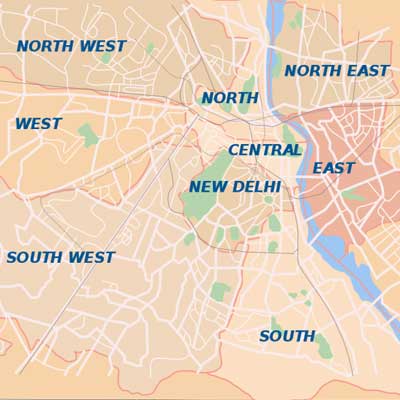
The recent move to unify the three municipal corporations of Delhi into a combined entity again after 11 years has triggered a debate on the impact of size and scale of municipalities on efficiency of governance. Three experts discuss the issue with E Jayashree Kurup.

The Delhi Municipal Corporation (Amendment) Bill, 2022, to reunify the three municipal corporations in the Capital, was introduced in the Lok Sabha on March 25, 2022. Even as the debate over the political motivations of this move are being discussed, there is a larger issue whether this move to reunite the three Municipal Corporations will have any significant impact on the city’s governance structure.

Former Secretary to the Government of India, Sudhir Krishna feels that smaller units are better for governance while bigger units at the planning stages bring…

For more, CLICK HERE…

The recent move to unify the three municipal corporations of Delhi into a combined entity again after 11 years has triggered a debate on the impact of size and scale of municipalities on efficiency of governance. Three experts discuss the issue with E Jayashree Kurup. The Delhi Municipal Corporation (Amendment) Bill, 2022, to reunify the three municipal corporations in the Capital, was introduced in the Lok Sabha on March 25, 2022. Even as the debate over the political motivations of this move are being discussed, there is a larger issue whether this move to reunite the three Municipal Corporations will have any significant impact on the city’s governance structure. Former Secretary to the Government of India, Sudhir Krishna feels that smaller units are better for governance while bigger units at the planning stages bring…For more, CLICK HERE…

Related Stories

Gold Stories

Next Story
Infrastructure Transport

Risk is the Roadblock

For an industry often described as capital-intensive, India’s roads and highways sector faces an interesting paradox: Capital is available, but not every form of capital is willing to take every kind of risk.The discussion on Financing Roads & Highways in a Capital-Constrained Era, moderated by Suneet K Maheshwari, Managing Partner, Udvik Infra, and Independent Board Director, brought together Pratik Panwala, Vice President, Investments, NIIFL; Vishal Gupta, Senior Vice President - PA&SF, SBI Capital Markets; Sandeep Upadhyay, Managing Director - Infrastructure Advisory, Centrum Capi..

Next Story
Infrastructure Urban

When the Clause Bars Damages

In large-scale infrastructure and construction projects, delays are often an inevitable reality. To shield themselves from financial liabilities arising out of project prolongations, employers – particularly government entities and public-sector undertakings (PSUs) – frequently incorporate standard ‘No Damage for Delay’ or ‘No Liability’ clauses. These clauses aim to restrict the contractor's remedy solely to an extension of time (EOT), barring any monetary claims for extra overheads, idling costs or lost profits.Origin and relevanceUnderstanding the nature, enforceability and judi..

Next Story
Infrastructure Urban

We must become equally good at making cities liveable

India’s cities are growing rapidly but the focus must now shift from building more to creating better places to live. Suresh Babu, Organising Secretary, National Convention of Architectural Engineers, discusses the need for integrated, inclusive and people-centric urban development, and the role of technology and architectural engineering in shaping future cities.What is the central idea behind the convention?India aspires to become a developed nation by 2047 and cities will be central to that transformation. But development cannot be measured only by taller buildings, wider roads or larger ..

Advertisement

Subscribe to Our Newsletter

Get daily newsletters around different themes from Construction world.

STAY CONNECTED

Advertisement

SPECIAL OFFER
QR Code