ATF Prices Cut By Rs Five Per Litre After Global Oil Eases
ECONOMY & POLICY

ATF Prices Cut By Rs Five Per Litre After Global Oil Eases

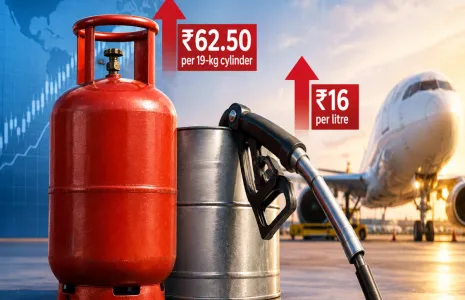
Aviation turbine fuel (ATF) prices were reduced by Rs five per litre on Wednesday, marking the first cut since the West Asia conflict drove rates higher. The move brings the domestic jet fuel rate in Delhi to Rs 110 per litre, industry sources said, offering immediate cost relief for carriers. The reduction follows several weeks of elevated fuel costs that had increased operating burdens for airlines.

International crude oil prices have softened in recent sessions as concerns over supply disruptions eased and market sentiment improved, which led to downward pressure on jet fuel benchmarks. Market sources and pricing formulas used by state-owned oil marketing companies influenced the revision, with changes tied to international benchmark prices and the rupee-dollar exchange rate. Analysts noted that the timing of such adjustments reflects the lagged pass-through of global price movements to domestic pump levels.

Aviation fuel accounts for nearly 35 to 40 per cent of an airline's operating expenses, making movements in ATF prices a central determinant of carrier profitability and fare levels. Domestic refiners and fuel sellers review jet fuel tariffs twice every month, applying the benchmark and currency formula to set retail rates across cities. Operators had faced higher bills in recent weeks after the conflict pushed ATF rates to record highs.

The rollback of Rs five per litre therefore represents the first easing of that squeeze and should reduce short term cash outflows for carriers, while not immediately solving longer term cost volatility. Industry participants will now watch global crude trends and the rupee to assess whether further cuts follow in subsequent revisions. The adjustment is likely to be welcomed by both airlines and passengers who bore the brunt of elevated fuel related costs.

Aviation turbine fuel (ATF) prices were reduced by Rs five per litre on Wednesday, marking the first cut since the West Asia conflict drove rates higher. The move brings the domestic jet fuel rate in Delhi to Rs 110 per litre, industry sources said, offering immediate cost relief for carriers. The reduction follows several weeks of elevated fuel costs that had increased operating burdens for airlines. International crude oil prices have softened in recent sessions as concerns over supply disruptions eased and market sentiment improved, which led to downward pressure on jet fuel benchmarks. Market sources and pricing formulas used by state-owned oil marketing companies influenced the revision, with changes tied to international benchmark prices and the rupee-dollar exchange rate. Analysts noted that the timing of such adjustments reflects the lagged pass-through of global price movements to domestic pump levels. Aviation fuel accounts for nearly 35 to 40 per cent of an airline's operating expenses, making movements in ATF prices a central determinant of carrier profitability and fare levels. Domestic refiners and fuel sellers review jet fuel tariffs twice every month, applying the benchmark and currency formula to set retail rates across cities. Operators had faced higher bills in recent weeks after the conflict pushed ATF rates to record highs. The rollback of Rs five per litre therefore represents the first easing of that squeeze and should reduce short term cash outflows for carriers, while not immediately solving longer term cost volatility. Industry participants will now watch global crude trends and the rupee to assess whether further cuts follow in subsequent revisions. The adjustment is likely to be welcomed by both airlines and passengers who bore the brunt of elevated fuel related costs.

Next Story
Building Material

Saint-Gobain, CEPT partner on sustainable construction

Saint-Gobain and CEPT University have entered into a strategic partnership to establish a Tech Commons Centre aimed at advancing research, innovation and skill development in sustainable and energy-efficient construction.The centre will serve as a platform for building science research, prototyping, industry collaboration and knowledge exchange, bringing together Saint-Gobain's expertise in sustainable construction and CEPT's capabilities in education and research. The collaboration will focus on sustainability, energy efficiency, climate resilience and wellbeing in the built environment.Accor..

Next Story
Building Material

Aludecor launches Stonic ACP surface series

Aludecor Lamination has launched its Stonic aluminium composite panel (ACP) surface series and the second phase of its 'Test Nahi Toh Trust Nahi' campaign as part of its 24th Foundation Day celebrations.Inspired by the natural craquelure patterns found in aged stone, the Stonic series is available in seven finishes and has been developed using the company's Spray Fusion technology. The ACP range is designed for use in façades, feature walls, entranceways, soffits, balcony fascia, ceilings and other commercial, residential and hospitality applications.The company also introduced 'The Fikar-Fre..

Next Story
Real Estate

NABARD, MAHAPREIT partner on rural green infrastructure

NABARD has signed a memorandum of understanding (MoU) with Mahatma Phule Renewable Energy and Infrastructure Technology (MAHAPREIT) to finance and promote green, climate-resilient infrastructure in rural India, with an initial focus on Maharashtra.The partnership will combine NABARD's expertise in rural development and climate finance with MAHAPREIT's experience in renewable energy and sustainable infrastructure. The collaboration will identify, develop and finance projects aimed at strengthening village infrastructure, Panchayati Raj Institutions and other community assets.Priority areas incl..

Advertisement

Subscribe to Our Newsletter

Get daily newsletters around different themes from Construction world.

STAY CONNECTED

Advertisement

Advertisement

Advertisement