Bengaluru Pink Line Ready For September Inauguration
ECONOMY & POLICY

Bengaluru Pink Line Ready For September Inauguration

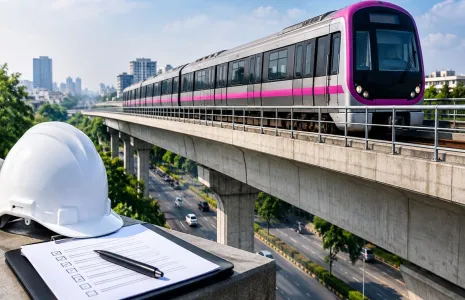
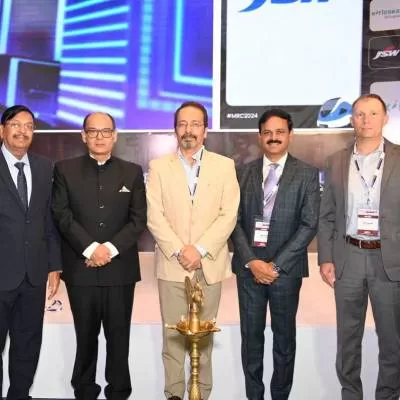
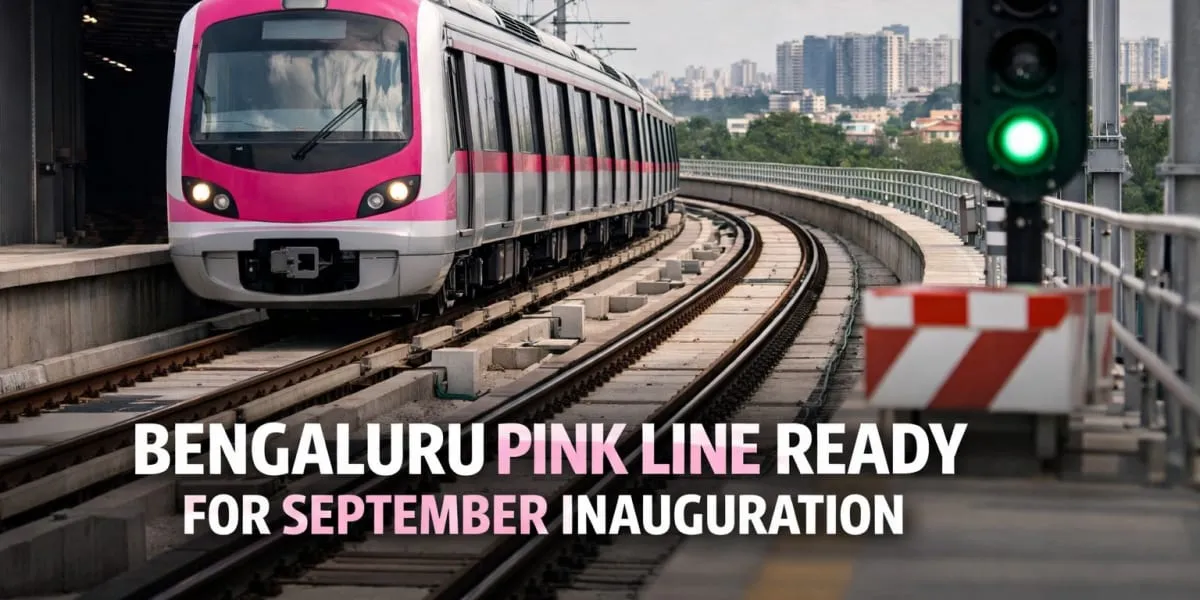
Krishna Byre Gowda, the Bengaluru development minister, inspected the seven point five kilometre Kalena Agrahara-Tavarekere stretch of the Pink Line on September two and indicated the section was ready for inauguration, with the state government hopeful of a central government date in September. The minister, joined by Bengaluru South MP Tejasvi Surya, MLA M Krishnappa, Bengaluru Metro Rail Corporation Limited (BMRCL) managing director PC Jaffer and other officials, undertook a trial run and reviewed opening preparations.

Officials said BMRCL is awaiting railway sanction for new rolling stock followed by authorisation from the Commissioner of Metro Railway Safety (CMRS) before passenger services can begin. Janak Kumar Garg, Chief Commissioner of Railway Safety, who holds additional charge as CMRS for the Southern Circle, inspected trainsets on August 13; the depot review at Kothanur covered braking, speed, door, emergency evacuation and suspension system checks and a report was expected this week.

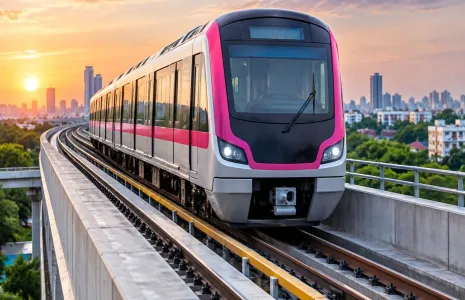
A BMRCL statement said the trains manufactured by Bharat Earth Movers Limited (BEML) contain around seventy per cent local content and are equipped to support Automatic Train Operation and advanced Unattended Train Operation enabling driverless running. Sufficient trainsets are available for the elevated stretch and the sets must complete the mandatory seven hundred and fifty kilometre running before deployment, while train operator training is scheduled to conclude this week.

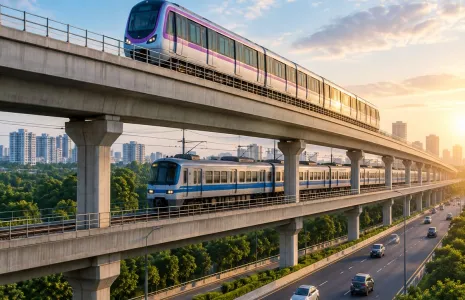
The seven point five kilometre elevated section will include stations at Kalena Agrahara, Hulimavu, IIM Bangalore, JP Nagar Fourth Phase, Jayadeva Hospital and Swagath Road Cross and is expected to ease congestion on Bannerghatta Road and improve south Bengaluru connectivity. BEML has delivered eight driverless capable trainsets for the stretch, though the agency and the project have repeatedly missed deadlines and delays pushed Phase one costs from Rs 63.95 billion (bn) in 2005 to Rs 141.33 bn and Phase two costs from Rs 264.05 bn in 2014 to Rs 406.14 bn in 2024.

Krishna Byre Gowda, the Bengaluru development minister, inspected the seven point five kilometre Kalena Agrahara-Tavarekere stretch of the Pink Line on September two and indicated the section was ready for inauguration, with the state government hopeful of a central government date in September. The minister, joined by Bengaluru South MP Tejasvi Surya, MLA M Krishnappa, Bengaluru Metro Rail Corporation Limited (BMRCL) managing director PC Jaffer and other officials, undertook a trial run and reviewed opening preparations. Officials said BMRCL is awaiting railway sanction for new rolling stock followed by authorisation from the Commissioner of Metro Railway Safety (CMRS) before passenger services can begin. Janak Kumar Garg, Chief Commissioner of Railway Safety, who holds additional charge as CMRS for the Southern Circle, inspected trainsets on August 13; the depot review at Kothanur covered braking, speed, door, emergency evacuation and suspension system checks and a report was expected this week. A BMRCL statement said the trains manufactured by Bharat Earth Movers Limited (BEML) contain around seventy per cent local content and are equipped to support Automatic Train Operation and advanced Unattended Train Operation enabling driverless running. Sufficient trainsets are available for the elevated stretch and the sets must complete the mandatory seven hundred and fifty kilometre running before deployment, while train operator training is scheduled to conclude this week. The seven point five kilometre elevated section will include stations at Kalena Agrahara, Hulimavu, IIM Bangalore, JP Nagar Fourth Phase, Jayadeva Hospital and Swagath Road Cross and is expected to ease congestion on Bannerghatta Road and improve south Bengaluru connectivity. BEML has delivered eight driverless capable trainsets for the stretch, though the agency and the project have repeatedly missed deadlines and delays pushed Phase one costs from Rs 63.95 billion (bn) in 2005 to Rs 141.33 bn and Phase two costs from Rs 264.05 bn in 2014 to Rs 406.14 bn in 2024.

Related Stories

Gold Stories

Next Story
Building Material

From Rough to Refined: How Modern Plastering Is Changing Wall Finishes

When Rohan first walked into his newly constructed home, he imagined what it would become—a warm living room, a bright bedroom, and walls smooth enough to complement his carefully chosen interiors.But there was one problem.The walls didn't look anything like the finished home he had imagined.They were uneven in places, rough to the touch, and covered with visible patches and minor surface imperfections. Rohan initially thought paint would fix everything.His contractor had a different answer.“Before the paint, we need to get the plastering right.”That conversation made Rohan realise somet..

Next Story
Infrastructure Urban

Embraer to Acquire 51 Per Cent Stake in Mahindra Aerospace Arm

Brazilian aerospace major Embraer will acquire a 51 per cent equity stake in Novavayu Aerospace, a step-down subsidiary of Mahindra and Mahindra, under an Investment Agreement notified by the automobile company in an exchange filing. The transaction will give Embraer control of the aerospace business. Following completion of the acquisition, Novavayu Aerospace will cease to be a wholly owned subsidiary and become an associate of Mahindra Defence Systems, which is a step-down wholly owned subsidiary of Mahindra and Mahindra. The agreement is expected to be completed on or before December 1. Mah..

Next Story
Infrastructure Urban

RBI Opens Special Dollar Window for Three State-Run OMCs

The Reserve Bank of India (RBI) has opened a special facility to meet the entire daily US dollar requirements of three public sector oil marketing companies (OMCs), in a move aimed at easing pressure on the Indian rupee. The facility will take effect on October 12, 2026, and remain available until further notice. Indian Oil Corporation, Hindustan Petroleum Corporation and Bharat Petroleum Corporation are eligible to use the arrangement. Under the facility, the RBI will sell US dollars to the three companies through designated banks, allowing them to meet their oil-import payments without sourc..

Advertisement

Subscribe to Our Newsletter

Get daily newsletters around different themes from Construction world.

STAY CONNECTED

Advertisement

SPECIAL OFFER
QR Code