BEST Proposes Rs 270 Billion Unified Bus Plan for MMR
ECONOMY & POLICY

BEST Proposes Rs 270 Billion Unified Bus Plan for MMR

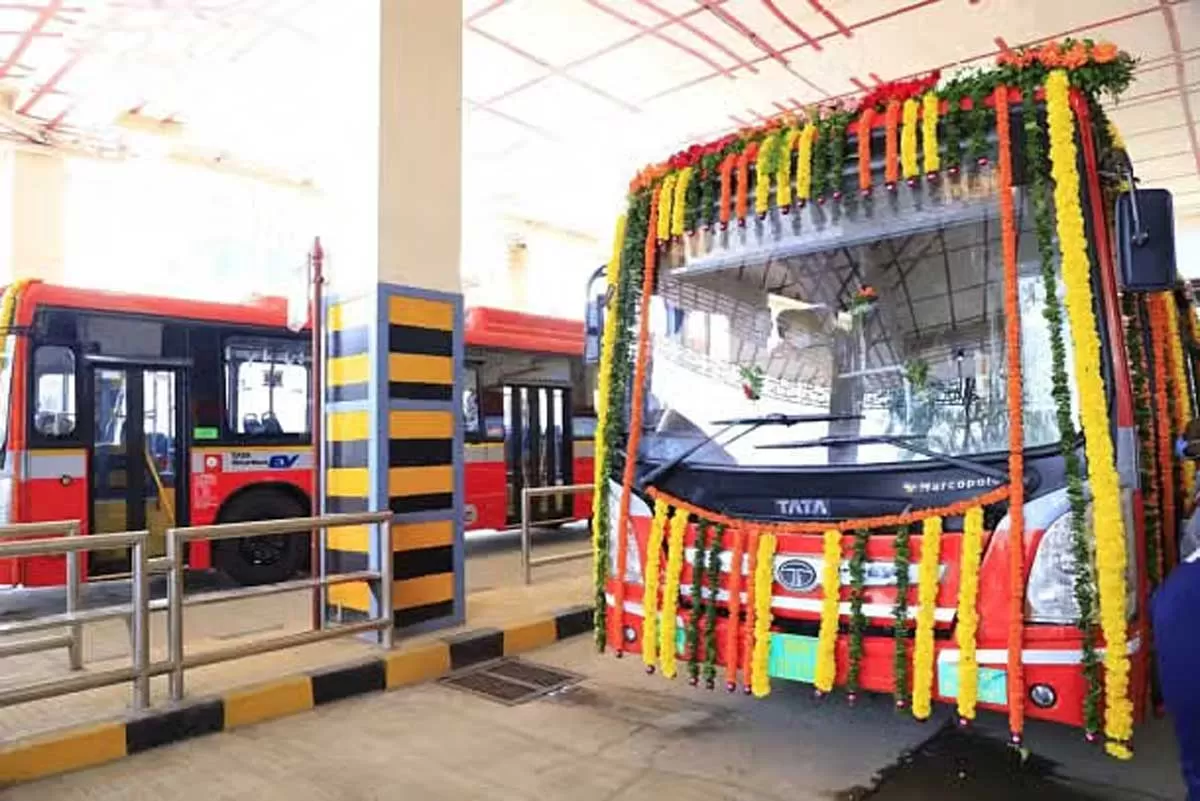
To reform the disjointed public transport system in the Mumbai Metropolitan Region (MMR), the Brihanmumbai Electric Supply and Transport (BEST) undertaking has proposed leading the creation of a unified and integrated bus network, The Free Press Journal reported.
The initiative was presented by BEST General Manager SVR Srinivas during a recent meeting of the newly formed transport task force. Addressing concerns about BEST’s capacity to lead such a large-scale effort, Srinivas stated that through route optimisation and improved operational efficiency, BEST is capable of spearheading the integration.
The proposal follows a Government Resolution issued on 10 June by the Urban Development Department, establishing a 12-member task force. Chaired by Srinivas, the committee includes representatives from MMRDA, BMC, traffic police, and municipal bodies of Thane, Navi Mumbai, and Vasai-Virar.
The task force has been assigned to design a regional public transport integration plan, featuring a unified ticketing system and a coordinated bus route strategy.
Currently, public transport in MMR is fragmented, with various municipal agencies operating overlapping routes. This creates confusion for commuters and leads to operational inefficiencies.
Under BEST’s proposed model, high-density arterial routes would be managed centrally by BEST, while local operators would focus on feeder services within their respective zones.
“Streamlining operations will reduce duplication and make transport more reliable and accessible for the public,” a senior official involved with the plan noted.
Although BEST currently operates fewer than 2,700 buses, the project is aligned with the G-HUB initiative under NITI Aayog, which identifies MMR as a pilot region for infrastructure-driven urban growth.

To reform the disjointed public transport system in the Mumbai Metropolitan Region (MMR), the Brihanmumbai Electric Supply and Transport (BEST) undertaking has proposed leading the creation of a unified and integrated bus network, The Free Press Journal reported.The initiative was presented by BEST General Manager SVR Srinivas during a recent meeting of the newly formed transport task force. Addressing concerns about BEST’s capacity to lead such a large-scale effort, Srinivas stated that through route optimisation and improved operational efficiency, BEST is capable of spearheading the integration.The proposal follows a Government Resolution issued on 10 June by the Urban Development Department, establishing a 12-member task force. Chaired by Srinivas, the committee includes representatives from MMRDA, BMC, traffic police, and municipal bodies of Thane, Navi Mumbai, and Vasai-Virar.The task force has been assigned to design a regional public transport integration plan, featuring a unified ticketing system and a coordinated bus route strategy.Currently, public transport in MMR is fragmented, with various municipal agencies operating overlapping routes. This creates confusion for commuters and leads to operational inefficiencies.Under BEST’s proposed model, high-density arterial routes would be managed centrally by BEST, while local operators would focus on feeder services within their respective zones.“Streamlining operations will reduce duplication and make transport more reliable and accessible for the public,” a senior official involved with the plan noted.Although BEST currently operates fewer than 2,700 buses, the project is aligned with the G-HUB initiative under NITI Aayog, which identifies MMR as a pilot region for infrastructure-driven urban growth. 

Next Story
Infrastructure Transport

MMRDA advances 250 m on Orange Gate–Marine Drive tunnel

The Mumbai Metropolitan Region Development Authority (MMRDA) has completed 250 m of underground tunnelling for the Orange Gate–Marine Drive Urban Road Tunnel using India’s largest slurry shield tunnel boring machine (TBM) deployed for an urban road project.The project involves twin tunnels extending over 7 km beneath critical transport corridors, including Central Railway, Western Railway and Metro Line 3. The work requires high-precision engineering to navigate densely developed urban infrastructure.Once completed, the tunnel is expected to reduce travel time between Orange Gate and Marin..

Next Story
Infrastructure Urban

Hindustan Zinc Pays Rs 188.46 Billion in FY26

Hindustan Zinc contributed Rs 188.46 billion to the public exchequer in FY 2025-26, according to its 9th Tax Transparency Report. The contribution, equivalent to 46 per cent of the company’s revenue, included direct and indirect taxes, government royalties, dividends to the Government of India, withholding taxes and other statutory levies.The company’s five-year cumulative contribution to the exchequer stood at Rs 915.72 billion. In FY26, Hindustan Zinc reported revenue of Rs 408.44 billion, EBITDA of Rs 221.62 billion and profit after tax of Rs 138.32 billion. It also achieved its highest..

Next Story
Infrastructure Urban

World of Concrete India 2026 Opens in Mumbai

Informa Markets in India will host the 12th edition of World of Concrete India 2026 from 3–5 June 2026 at the Bombay Exhibition Centre, Mumbai. The specialised B2B exhibition will bring together manufacturers, suppliers, contractors, developers, architects, consultants, infrastructure companies, project leaders and government stakeholders.The event is expected to feature over 350 brands and more than 18,000 trade professionals. It will cover concrete and cement, dry mortar, precast technologies, formwork, construction chemicals, industrial and commercial flooring, scaffolding, safety solutio..

Advertisement

Subscribe to Our Newsletter

Get daily newsletters around different themes from Construction world.

STAY CONNECTED

Advertisement

Advertisement

Advertisement