Bihar Chief Secretary Chairs Meeting With ADB On Investment Proposals
ECONOMY & POLICY

Bihar Chief Secretary Chairs Meeting With ADB On Investment Proposals

The Bihar chief secretary chaired a meeting with the Asian Development Bank (ADB) to review investment proposals and development priorities for the state. Senior officials from the ADB and state departments attended and presented project outlines and financing models. The discussions focused on assessing project readiness, expected socioeconomic benefits and alignment with the state development strategy. The meeting aimed to prioritise proposals, identify bottlenecks and agree on a roadmap to accelerate preparation and approvals.

Key areas of attention included infrastructure, health, education, renewable energy and urban development as well as measures to support agricultural value chains. The meeting addressed the need for technical assistance, capacity building and comprehensive appraisals to meet multilateral development bank standards. Participants considered environmental and social safeguards, procurement timelines and institutional arrangements for implementation. Speakers emphasised the importance of stakeholder consultations, social inclusion and gender responsive design in project formulation and community engagement.

Follow up actions were agreed to streamline appraisal processes and improve documentation, with task forces proposed to oversee feasibility studies and due diligence. Officials indicated a preference for a mix of concessional finance and technical cooperation to enhance project viability and sustainability. Coordination mechanisms were discussed to ensure timely clearances and inter department collaboration. A timeline was suggested for key milestones and capacity enhancement programmes were proposed to strengthen implementing agencies and monitoring systems.

The engagement is part of ongoing state efforts to attract multilateral investment and strengthen the investment climate through reform and enhanced project preparation. Further meetings were planned to refine project dossiers and establish monitoring frameworks to track implementation progress. State and ADB officials will continue consultations to advance projects from proposal to approval and execution. Officials noted the need to coordinate with central authorities and to explore partnerships with private sector stakeholders for cofinancing and technical support.

The Bihar chief secretary chaired a meeting with the Asian Development Bank (ADB) to review investment proposals and development priorities for the state. Senior officials from the ADB and state departments attended and presented project outlines and financing models. The discussions focused on assessing project readiness, expected socioeconomic benefits and alignment with the state development strategy. The meeting aimed to prioritise proposals, identify bottlenecks and agree on a roadmap to accelerate preparation and approvals. Key areas of attention included infrastructure, health, education, renewable energy and urban development as well as measures to support agricultural value chains. The meeting addressed the need for technical assistance, capacity building and comprehensive appraisals to meet multilateral development bank standards. Participants considered environmental and social safeguards, procurement timelines and institutional arrangements for implementation. Speakers emphasised the importance of stakeholder consultations, social inclusion and gender responsive design in project formulation and community engagement. Follow up actions were agreed to streamline appraisal processes and improve documentation, with task forces proposed to oversee feasibility studies and due diligence. Officials indicated a preference for a mix of concessional finance and technical cooperation to enhance project viability and sustainability. Coordination mechanisms were discussed to ensure timely clearances and inter department collaboration. A timeline was suggested for key milestones and capacity enhancement programmes were proposed to strengthen implementing agencies and monitoring systems. The engagement is part of ongoing state efforts to attract multilateral investment and strengthen the investment climate through reform and enhanced project preparation. Further meetings were planned to refine project dossiers and establish monitoring frameworks to track implementation progress. State and ADB officials will continue consultations to advance projects from proposal to approval and execution. Officials noted the need to coordinate with central authorities and to explore partnerships with private sector stakeholders for cofinancing and technical support.

Related Stories

Gold Stories

Next Story
Infrastructure Urban

KONE Opens India's First Digital Experience Centre in Pune

KONE, a global elevator and escalator manufacturer, has inaugurated its first Digital Experience Centre (DEC) in India, located in Pune. The facility aims to showcase how artificial intelligence (AI), connectivity and data-driven technologies can enhance customer experiences and improve building operations.The centre was inaugurated by Jussi Herlin, Executive Vice Chair, KONE Corporation; Philippe Delorme, President and CEO, KONE; and Nandan Nilekani, Co-founder and Chairman of the Board, Infosys.Designed as an interactive customer environment, the facility demonstrates digital solutions cover..

Next Story
Infrastructure Urban

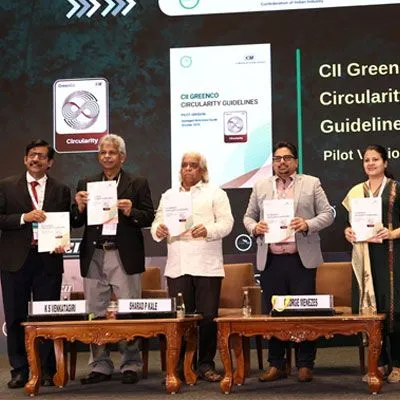
CII GreenCo Launches Circularity Guidelines for Indian Industry

The Confederation of Indian Industry (CII) GreenCo Council has launched the CII GreenCo Circularity Guidelines – Pilot Version at the 17th CII GreenCo Waste & Resource Management Summit 2026 in Chennai. The initiative aims to strengthen resource efficiency, waste reduction and circular economy practices across Indian manufacturing and process industries.The guidelines introduce a structured framework with circularity indices covering raw materials, consumables, packaging and other resource inputs. These indicators will help industries assess existing practices, identify opportunities to ..

Next Story
Infrastructure Energy

Global Electronics Association Launches IPC-1783-CO2E Standard

The Global Electronics Association has introduced IPC-1783-CO2E, a new international standard aimed at improving consistency, transparency and comparability in product carbon footprint reporting across the electronics manufacturing industry.The standard, titled International Standard for Data Collection and Reporting of CO2 Equivalent (CO2e) Emissions for the Electronics Manufacturing Supply Chain, provides industry-specific guidance for collecting, estimating and reporting carbon emissions data.With increasing regulatory requirements and customer expectations, electronics manufacturers face c..

Advertisement

Subscribe to Our Newsletter

Get daily newsletters around different themes from Construction world.

STAY CONNECTED

Advertisement

SPECIAL OFFER
QR Code