+
Bihar CM Launches Rs 5.42 Billion Tunnel Linking Two Museums
ECONOMY & POLICY

Bihar CM Launches Rs 5.42 Billion Tunnel Linking Two Museums

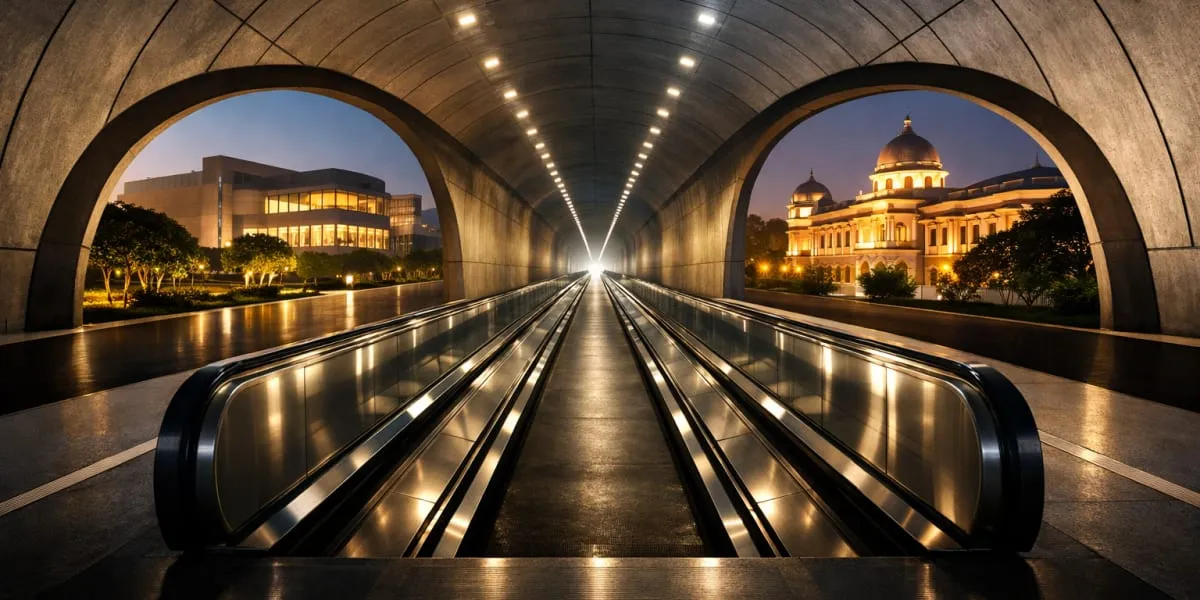
Bihar chief minister Nitish Kumar on Tuesday launched a new Rs 5.42 billion tunnel project to link the Bihar Museum and the Patna Museum. The project was described by officials as an effort to enhance visitor movement and to strengthen cultural connectivity between the two institutions. The initiative forms part of broader measures to upgrade the urban cultural infrastructure in Patna. The announcement follows consultations with cultural stakeholders and municipal planners and is intended to complement other heritage initiatives.

The state government will provide funding and oversee implementation in coordination with the museum authorities and the public works department. Officials indicated the design aims to provide secure, accessible passage for visitors and to reduce surface congestion around the museum precincts. The project is expected to create opportunities for guided circulation, better visitor flow management and improved interpretation of exhibits. Officials expect local contractors and vendors to be engaged during implementation to support the regional economy.

The tunnel will be developed with attention to safety, lighting and accessibility standards, according to project outlines shared by administrative sources. Construction planning will consider the protection of archaeological assets and the integration of wayfinding facilities to assist visitors. Authorities also signalled that ancillary works around the museums will be aligned with heritage conservation objectives. Environmental assessments will guide measures to limit disruption and to protect surrounding green spaces.

Stakeholders said the scheme is intended to boost cultural tourism and to make the museums more accessible to residents and visitors. Oversight will remain with state departments and museum management to ensure compliance with regulatory and conservation norms. Officials added that the initiative reflects a push to modernise civic amenities while preserving the historical character of museum surroundings. Municipal leaders said the project aligns with efforts to present Patna as a cultural destination for domestic and international visitors.

Bihar chief minister Nitish Kumar on Tuesday launched a new Rs 5.42 billion tunnel project to link the Bihar Museum and the Patna Museum. The project was described by officials as an effort to enhance visitor movement and to strengthen cultural connectivity between the two institutions. The initiative forms part of broader measures to upgrade the urban cultural infrastructure in Patna. The announcement follows consultations with cultural stakeholders and municipal planners and is intended to complement other heritage initiatives. The state government will provide funding and oversee implementation in coordination with the museum authorities and the public works department. Officials indicated the design aims to provide secure, accessible passage for visitors and to reduce surface congestion around the museum precincts. The project is expected to create opportunities for guided circulation, better visitor flow management and improved interpretation of exhibits. Officials expect local contractors and vendors to be engaged during implementation to support the regional economy. The tunnel will be developed with attention to safety, lighting and accessibility standards, according to project outlines shared by administrative sources. Construction planning will consider the protection of archaeological assets and the integration of wayfinding facilities to assist visitors. Authorities also signalled that ancillary works around the museums will be aligned with heritage conservation objectives. Environmental assessments will guide measures to limit disruption and to protect surrounding green spaces. Stakeholders said the scheme is intended to boost cultural tourism and to make the museums more accessible to residents and visitors. Oversight will remain with state departments and museum management to ensure compliance with regulatory and conservation norms. Officials added that the initiative reflects a push to modernise civic amenities while preserving the historical character of museum surroundings. Municipal leaders said the project aligns with efforts to present Patna as a cultural destination for domestic and international visitors.

Next Story
Infrastructure Urban

Implementation Status of Jal Jeevan Mission

Since August 2019 the Government has implemented Jal Jeevan Mission to provide assured potable water through household tap connections in rural India. At the start of the mission only 32.3 million (mn) rural households, representing 16.7 per cent, were reported to have tap water connections. States and union territories have reported that 125.8 mn additional rural households have since been provided with tap connections. As a result, of about 193.6 mn rural households roughly 158.2 mn, or 81.71 per cent, are reported to have tap water supply at home.\n\nThe State, district and village level st..

Next Story
Infrastructure Urban

Jal Jeevan Mission Reaches Eighty One Per Cent Rural Coverage

The Government reported substantial progress under the Jal Jeevan Mission, launched in August 2019 to provide tap water to every rural household. At launch only 32.3 million (mn) rural households had tap connections and states and Union territories reported provision of 125.8 mn additional households by March 2026. Consequently, out of about 193.6 mn rural households around 158.2 mn, or 81.71 per cent, are reported to have tap water at home. The Finance Minister announced extension of the mission until 2028 in the 2025-26 budget speech. The Swachh Bharat Mission Grameen, launched in October 20..

Next Story
Infrastructure Urban

Empowering Local Governance for Sustainable Rural Water Supply

The Ministry of Jal Shakti has aligned the Jal Jeevan Mission (JJM) with the 73rd Amendment to strengthen village level planning and community ownership of water supply. Gram Panchayats, village water and sanitation committees and Pani Samitis are to plan, implement, manage and maintain piped water systems, with gram sabha processes formalising handover and oversight. Implementation support agencies including non government organisations, community based organisations and self help groups have been empanelled to train local committees and promote women participation. Under JJM, the department ..

Advertisement

Subscribe to Our Newsletter

Get daily newsletters around different themes from Construction world.

STAY CONNECTED

Advertisement

Advertisement

Advertisement