Bihar Hosts First Global Buyer Meet for Agri-Food Growth
ECONOMY & POLICY

Bihar Hosts First Global Buyer Meet for Agri-Food Growth

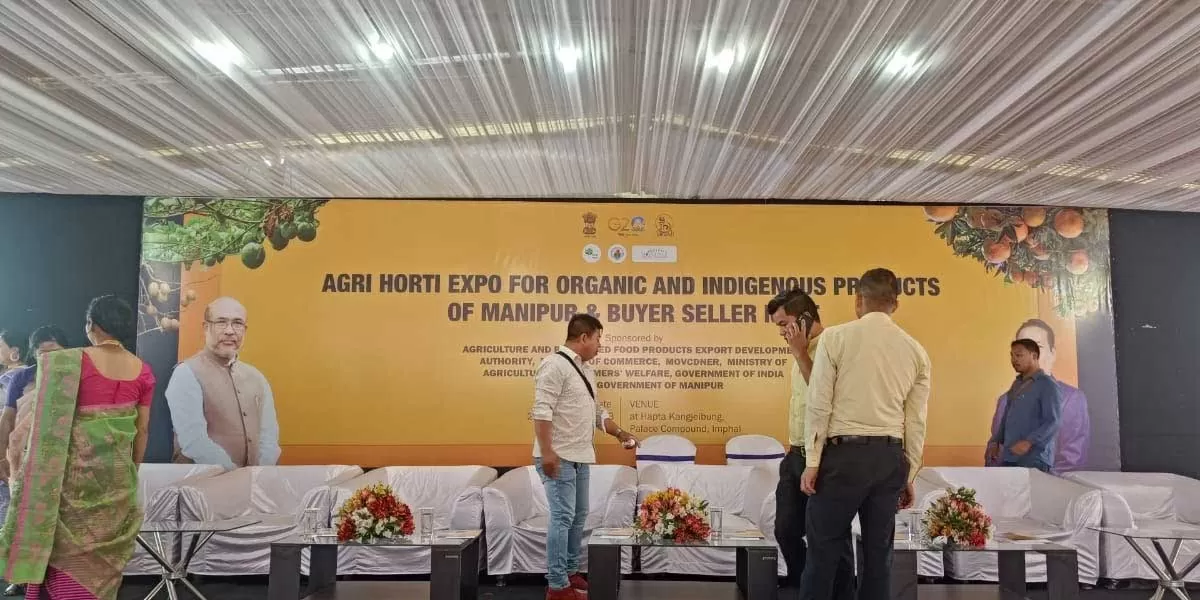
The Ministry of Food Processing Industries (MoFPI), in collaboration with the Government of Bihar, APEDA, and the Trade Promotion Council of India (TPCI), successfully concluded the inaugural International Buyer-Seller Meet (IBSM) in Bihar. Held over two days at Gyan Bhawan in Patna, the event marked a significant milestone in Bihar’s agri-food sector by directly connecting micro, small, and medium enterprises (MSMEs), Farmer Producer Organisations (FPOs), and Self-Help Groups (SHGs) with international buyers.

Union Minister for Food Processing Industries, Shri Chirag Paswan, inaugurated the event, describing it as a transformative initiative aligned with the vision of a ‘Viksit Bharat’. He emphasised Bihar’s rich heritage, agricultural strengths, and youth potential as the foundation of the state’s global economic integration.

The meet attracted over 70 international buyers from 20 countries—including the UAE, UK, Germany, Japan, Ghana, and Singapore—as well as 50 domestic and 20 institutional buyers. More than 500 structured B2B meetings took place, generating strong export leads for GI-tagged products such as makhana (fox nut), Shahi litchi, Zardalu mango, and Katarni rice.

Key developments included strong interest from West African buyers in Sattu, a traditional high-protein food. Singaporean firms expressed interest in sourcing litchis and mangoes, while catering companies explored using Bihar’s agricultural produce for in-flight and railway meals.

A highlight was the signing of a Memorandum of Understanding between APEDA, the Bihar government, and UAE-based Lulu Group, focused on boosting exports of Bihar’s litchis by improving their shelf life.

Beyond trade deals, the IBSM featured a robust capacity-building programme. Experts from MoFPI, APEDA, NIFTEM-Kundli, ICRIER, EXIM Bank, the Indian Institute of Packaging, and Start-Up India conducted technical sessions on export preparedness, advanced packaging, certification, and formalising start-ups. MoFPI also spotlighted key schemes like PMFME, under which Bihar had the highest number of sanctioned units in FY25.

A public exhibition with 120+ exhibitors showcased Bihar’s full agri-food spectrum—from FPOs and women-led SHGs to national brands and potential exporters—highlighting the convergence of grassroots innovation and global ambition.

The success of the IBSM underscores strong Centre-State collaboration, effective multi-agency coordination, and a model for leveraging food processing to catalyse regional development. More than just a trade event, the IBSM symbolises India’s evolving food diplomacy, where local value chains anchor global partnerships. With strengthened infrastructure and export linkages, Bihar is now poised to emerge as a key player in positioning India as the Global Food Basket.

Image source:https://i.ytimg.com/vi/syuj7aoiI4I/maxresdefault.jpg


The Ministry of Food Processing Industries (MoFPI), in collaboration with the Government of Bihar, APEDA, and the Trade Promotion Council of India (TPCI), successfully concluded the inaugural International Buyer-Seller Meet (IBSM) in Bihar. Held over two days at Gyan Bhawan in Patna, the event marked a significant milestone in Bihar’s agri-food sector by directly connecting micro, small, and medium enterprises (MSMEs), Farmer Producer Organisations (FPOs), and Self-Help Groups (SHGs) with international buyers.Union Minister for Food Processing Industries, Shri Chirag Paswan, inaugurated the event, describing it as a transformative initiative aligned with the vision of a ‘Viksit Bharat’. He emphasised Bihar’s rich heritage, agricultural strengths, and youth potential as the foundation of the state’s global economic integration.The meet attracted over 70 international buyers from 20 countries—including the UAE, UK, Germany, Japan, Ghana, and Singapore—as well as 50 domestic and 20 institutional buyers. More than 500 structured B2B meetings took place, generating strong export leads for GI-tagged products such as makhana (fox nut), Shahi litchi, Zardalu mango, and Katarni rice.Key developments included strong interest from West African buyers in Sattu, a traditional high-protein food. Singaporean firms expressed interest in sourcing litchis and mangoes, while catering companies explored using Bihar’s agricultural produce for in-flight and railway meals.A highlight was the signing of a Memorandum of Understanding between APEDA, the Bihar government, and UAE-based Lulu Group, focused on boosting exports of Bihar’s litchis by improving their shelf life.Beyond trade deals, the IBSM featured a robust capacity-building programme. Experts from MoFPI, APEDA, NIFTEM-Kundli, ICRIER, EXIM Bank, the Indian Institute of Packaging, and Start-Up India conducted technical sessions on export preparedness, advanced packaging, certification, and formalising start-ups. MoFPI also spotlighted key schemes like PMFME, under which Bihar had the highest number of sanctioned units in FY25.A public exhibition with 120+ exhibitors showcased Bihar’s full agri-food spectrum—from FPOs and women-led SHGs to national brands and potential exporters—highlighting the convergence of grassroots innovation and global ambition.The success of the IBSM underscores strong Centre-State collaboration, effective multi-agency coordination, and a model for leveraging food processing to catalyse regional development. More than just a trade event, the IBSM symbolises India’s evolving food diplomacy, where local value chains anchor global partnerships. With strengthened infrastructure and export linkages, Bihar is now poised to emerge as a key player in positioning India as the Global Food Basket.Image source:https://i.ytimg.com/vi/syuj7aoiI4I/maxresdefault.jpg 

Next Story
Infrastructure Transport

India Becomes First to Produce Bio-Bitumen for Roads

India has become the first country in the world to commercially produce bio-bitumen for use in road construction, according to Road, Transport and Highways Minister Nitin Gadkari. Bitumen, a black and viscous hydrocarbon derived from crude oil, is a key binding material in road building, and the bio-based alternative is expected to significantly improve the sector’s environmental footprint.Addressing the CSIR Technology Transfer Ceremony in New Delhi, Mr Gadkari congratulated Council of Scientific and Industrial Research on achieving the milestone, noting that the initiative would help curb ..

Next Story
Infrastructure Urban

HILT Policy Seen Boosting Telangana Revenue Sharply

The Hyderabad Industrial Land Transformation (HILT) Policy is expected to generate around Rs 1.08 billion in revenue for the Telangana state exchequer, according to Deputy Chief Minister Bhatti Vikramarka Mallu. Speaking in the Telangana Legislative Assembly, he said the policy would be implemented within a six-month timeframe in a transparent manner, with uniform rules applicable to all stakeholders. Mr Vikramarka noted that without the HILT Policy, the state would have earned only about Rs 1.2 million per acre. Under the new framework, however, revenue is projected to rise sharply to Rs 70 ..

Next Story
Infrastructure Urban

India Post, MoRD Tie Up to Boost Rural Inclusion

The Department of Posts and the Ministry of Rural Development have signed a Memorandum of Understanding to accelerate rural transformation and expand financial, digital and logistics services for Self-Help Groups (SHGs) and rural households across India. The agreement was signed in the presence of Union Minister of Communications and Development of North Eastern Region Jyotiraditya M. Scindia and Union Minister of Rural Development and Agriculture and Farmers’ Welfare Shivraj Singh Chouhan. The collaboration aligns with the government’s “Dak Sewa, Jan Sewa” vision and seeks to repositi..

Advertisement

Subscribe to Our Newsletter

Get daily newsletters around different themes from Construction world.

STAY CONNECTED

Advertisement

Advertisement

Advertisement

Advertisement

Open In App