Biocon Expands Employee Public Transport To Reduce Private Vehicle Use
ECONOMY & POLICY

Biocon Expands Employee Public Transport To Reduce Private Vehicle Use

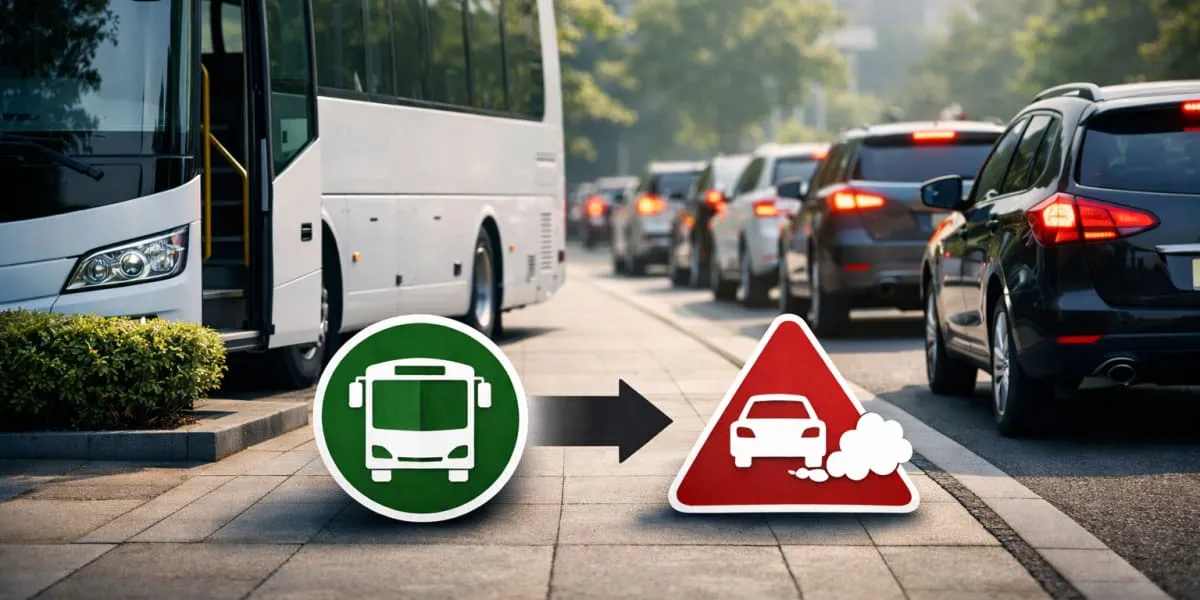
Biocon has implemented an end-to-end public transport programme to enable employees to shift from private vehicles to shared transit for daily commutes. The initiative aims to streamline travel, reduce congestion around company campuses and support the organisation's environmental and employee welfare objectives. The programme is designed to be inclusive of diverse shift patterns and to encourage a modal shift that aligns with corporate targets on emissions and employee wellbeing.

The scheme covers first mile and last mile connections and integrates scheduled shuttle services with existing municipal routes to provide seamless options. It includes designated pick up points, flexible timing to match shift schedules and real time tracking to improve reliability. Biocon has partnered with local transport operators and municipal authorities to coordinate routes and manage capacity efficiently. Scheduling is intended to reduce idle waiting times and to ensure predictable door to door connectivity, thereby increasing the attractiveness of the service compared with private cars.

The company expects lower parking demand at its facilities and anticipates improved air quality in surrounding areas as more staff adopt public transit. Employees will benefit from reduced commute stress, potential cost savings and shorter overall journey times where coordinated services replace multiple private car trips. The move will contribute to healthier neighbourhoods and support local efforts to lower vehicular emissions while maintaining staff mobility.

The initiative supports Biocon's broader sustainability agenda and forms part of a multifaceted approach to reduce the organisation's carbon footprint while maintaining operational efficiency. The company intends to monitor uptake and performance metrics and refine services based on employee feedback and travel patterns, with potential expansion to additional sites over time. Data from monitoring will inform iterative adjustments to routes and schedules and the company will publish periodic summaries to demonstrate progress against sustainability indicators. Employee participation is being actively encouraged.

Biocon has implemented an end-to-end public transport programme to enable employees to shift from private vehicles to shared transit for daily commutes. The initiative aims to streamline travel, reduce congestion around company campuses and support the organisation's environmental and employee welfare objectives. The programme is designed to be inclusive of diverse shift patterns and to encourage a modal shift that aligns with corporate targets on emissions and employee wellbeing. The scheme covers first mile and last mile connections and integrates scheduled shuttle services with existing municipal routes to provide seamless options. It includes designated pick up points, flexible timing to match shift schedules and real time tracking to improve reliability. Biocon has partnered with local transport operators and municipal authorities to coordinate routes and manage capacity efficiently. Scheduling is intended to reduce idle waiting times and to ensure predictable door to door connectivity, thereby increasing the attractiveness of the service compared with private cars. The company expects lower parking demand at its facilities and anticipates improved air quality in surrounding areas as more staff adopt public transit. Employees will benefit from reduced commute stress, potential cost savings and shorter overall journey times where coordinated services replace multiple private car trips. The move will contribute to healthier neighbourhoods and support local efforts to lower vehicular emissions while maintaining staff mobility. The initiative supports Biocon's broader sustainability agenda and forms part of a multifaceted approach to reduce the organisation's carbon footprint while maintaining operational efficiency. The company intends to monitor uptake and performance metrics and refine services based on employee feedback and travel patterns, with potential expansion to additional sites over time. Data from monitoring will inform iterative adjustments to routes and schedules and the company will publish periodic summaries to demonstrate progress against sustainability indicators. Employee participation is being actively encouraged.

Next Story
Infrastructure Urban

MRPL Board Approves Results For Year Ended March 2026

The board of Mangalore Refinery and Petrochemicals Limited approved audited standalone and consolidated financial results for the fourth quarter and year ended 31 March 2026. The board meeting was held on 24 April 2026 and approved the accounts for the quarter and the financial year. The company reported revenue from operations for the quarter of Rs 284,930 million (mn). This compares with the prior period figures disclosed in the filing. Profit before tax for the quarter was Rs 12,350 mn, up from Rs 5,840 mn in the corresponding quarter of the previous year. Profit after tax for the quarter w..

Next Story
Infrastructure Urban

Reliance Posts Record Annual Revenue And Profit For FY26

Reliance Industries reported record annual consolidated revenue of Rs 11,759.19 billion (bn) for the year ended 31 March 2026, reflecting an increase of nine point eight per cent year on year, and annual consolidated EBITDA of Rs 2,079.11 bn, up thirteen point four per cent. Annual profit after tax reached Rs 956.10 bn, rising eighteen point three per cent, and the board declared a dividend of Rs six per share. Quarterly consolidated gross revenue stood at Rs 3,252.90 bn while quarterly EBITDA was stable at Rs 485.88 bn, with capital expenditure for the year at Rs 1,442.71 bn as the group adva..

Next Story
Infrastructure Urban

Lodha Posts Record Pre-sales And Reduced Net Debt In FY26

Lodha Developers reported strong FY26 performance, with record annual pre-sales of Rs 205,300 million (mn) and a marked reduction in net debt to Rs 53,770 million. The report covered the quarter ended 31 March 2026 and noted the best-ever quarterly and annual pre-sales, driven by rising collections and operational efficiencies. Net debt to equity stood at 0.23x by quarter end, reflecting low leverage alongside scaled business expansion. The company delivered profit after tax of Rs 34,310 million, up 24 per cent, with PAT margin improving to 20.0 per cent from 19.5 per cent a year earlier. Duri..

Advertisement

Subscribe to Our Newsletter

Get daily newsletters around different themes from Construction world.

STAY CONNECTED

Advertisement

Advertisement

Advertisement