BorgWarner Wins First 48V Electric Cross Differential Programme
ECONOMY & POLICY

BorgWarner Wins First 48V Electric Cross Differential Programme

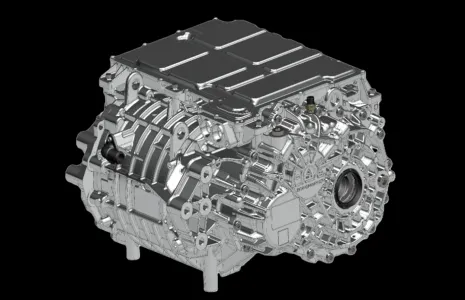
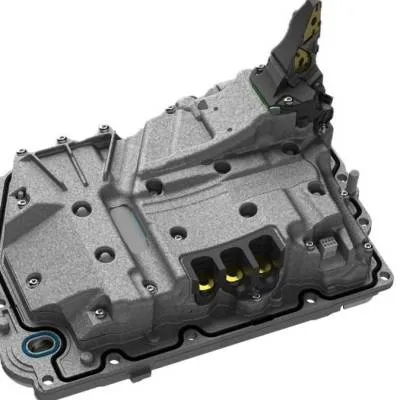
BorgWarner has secured a new electric cross differential (eXD) programme with a leading Chinese original equipment manufacturer (OEM), marking the company's first 48V eXD application in its global portfolio and broadening its torque management capabilities for electric vehicles. The programme is integrated with the customer's 48V electrical and electronic (E/E) architecture and is designed specifically for a 48V system. This award follows BorgWarner's ongoing expansion of 48V electric vehicle technology in China.

A 48V E/E architecture offers advantages that include improved energy efficiency, optimised wiring and component costs, and support for higher power applications, and BorgWarner designed the eXD to leverage these attributes. The system is integrated into the vehicle E/E architecture to work alongside other electrified subsystems, enabling coherent torque distribution strategies. By aligning the eXD with the 48V environment, BorgWarner expects gains in system efficiency and energy utilisation.

The electric cross differential is engineered to dynamically control torque distribution between wheels to enhance handling and traction while maintaining a balance among performance, safety and system efficiency. It is configured to adjust slip control in real time according to driving conditions and vehicle status, supporting stability during high speed driving, rapid acceleration and sharp turns. The technology is also intended to deliver consistent handling behaviour across varying surface friction levels.

In dry conditions, higher friction allows the eXD to transfer additional torque to outer wheels to improve cornering, while in low friction environments such as ice, snow or mud the system detects wheel slip and limits torque to slipping wheels so drive force is reallocated to wheels with better traction to preserve control. BorgWarner leadership described securing the first 48V eXD programme as evidence of the company's ability to adapt proven torque management technologies to new electrical architectures and indicated that the solution is expected to improve energy utilisation, system efficiency and reliability and to elevate the driving experience for electric vehicle users. For more than 130 years BorgWarner has positioned itself as a global product leader focused on sustainability and mobility innovation.

BorgWarner has secured a new electric cross differential (eXD) programme with a leading Chinese original equipment manufacturer (OEM), marking the company's first 48V eXD application in its global portfolio and broadening its torque management capabilities for electric vehicles. The programme is integrated with the customer's 48V electrical and electronic (E/E) architecture and is designed specifically for a 48V system. This award follows BorgWarner's ongoing expansion of 48V electric vehicle technology in China. A 48V E/E architecture offers advantages that include improved energy efficiency, optimised wiring and component costs, and support for higher power applications, and BorgWarner designed the eXD to leverage these attributes. The system is integrated into the vehicle E/E architecture to work alongside other electrified subsystems, enabling coherent torque distribution strategies. By aligning the eXD with the 48V environment, BorgWarner expects gains in system efficiency and energy utilisation. The electric cross differential is engineered to dynamically control torque distribution between wheels to enhance handling and traction while maintaining a balance among performance, safety and system efficiency. It is configured to adjust slip control in real time according to driving conditions and vehicle status, supporting stability during high speed driving, rapid acceleration and sharp turns. The technology is also intended to deliver consistent handling behaviour across varying surface friction levels. In dry conditions, higher friction allows the eXD to transfer additional torque to outer wheels to improve cornering, while in low friction environments such as ice, snow or mud the system detects wheel slip and limits torque to slipping wheels so drive force is reallocated to wheels with better traction to preserve control. BorgWarner leadership described securing the first 48V eXD programme as evidence of the company's ability to adapt proven torque management technologies to new electrical architectures and indicated that the solution is expected to improve energy utilisation, system efficiency and reliability and to elevate the driving experience for electric vehicle users. For more than 130 years BorgWarner has positioned itself as a global product leader focused on sustainability and mobility innovation.

Related Stories

Gold Stories

Next Story
Infrastructure Urban

KONE Opens India's First Digital Experience Centre in Pune

KONE, a global elevator and escalator manufacturer, has inaugurated its first Digital Experience Centre (DEC) in India, located in Pune. The facility aims to showcase how artificial intelligence (AI), connectivity and data-driven technologies can enhance customer experiences and improve building operations.The centre was inaugurated by Jussi Herlin, Executive Vice Chair, KONE Corporation; Philippe Delorme, President and CEO, KONE; and Nandan Nilekani, Co-founder and Chairman of the Board, Infosys.Designed as an interactive customer environment, the facility demonstrates digital solutions cover..

Next Story
Infrastructure Urban

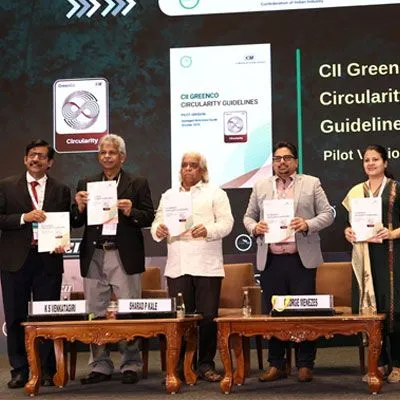
CII GreenCo Launches Circularity Guidelines for Indian Industry

The Confederation of Indian Industry (CII) GreenCo Council has launched the CII GreenCo Circularity Guidelines – Pilot Version at the 17th CII GreenCo Waste & Resource Management Summit 2026 in Chennai. The initiative aims to strengthen resource efficiency, waste reduction and circular economy practices across Indian manufacturing and process industries.The guidelines introduce a structured framework with circularity indices covering raw materials, consumables, packaging and other resource inputs. These indicators will help industries assess existing practices, identify opportunities to ..

Next Story
Infrastructure Energy

Global Electronics Association Launches IPC-1783-CO2E Standard

The Global Electronics Association has introduced IPC-1783-CO2E, a new international standard aimed at improving consistency, transparency and comparability in product carbon footprint reporting across the electronics manufacturing industry.The standard, titled International Standard for Data Collection and Reporting of CO2 Equivalent (CO2e) Emissions for the Electronics Manufacturing Supply Chain, provides industry-specific guidance for collecting, estimating and reporting carbon emissions data.With increasing regulatory requirements and customer expectations, electronics manufacturers face c..

Advertisement

Subscribe to Our Newsletter

Get daily newsletters around different themes from Construction world.

STAY CONNECTED

Advertisement

SPECIAL OFFER
QR Code