+
Cabinet Approves Rs. 17.9 bn Traffic Management System for Delhi
ECONOMY & POLICY

Cabinet Approves Rs. 17.9 bn Traffic Management System for Delhi

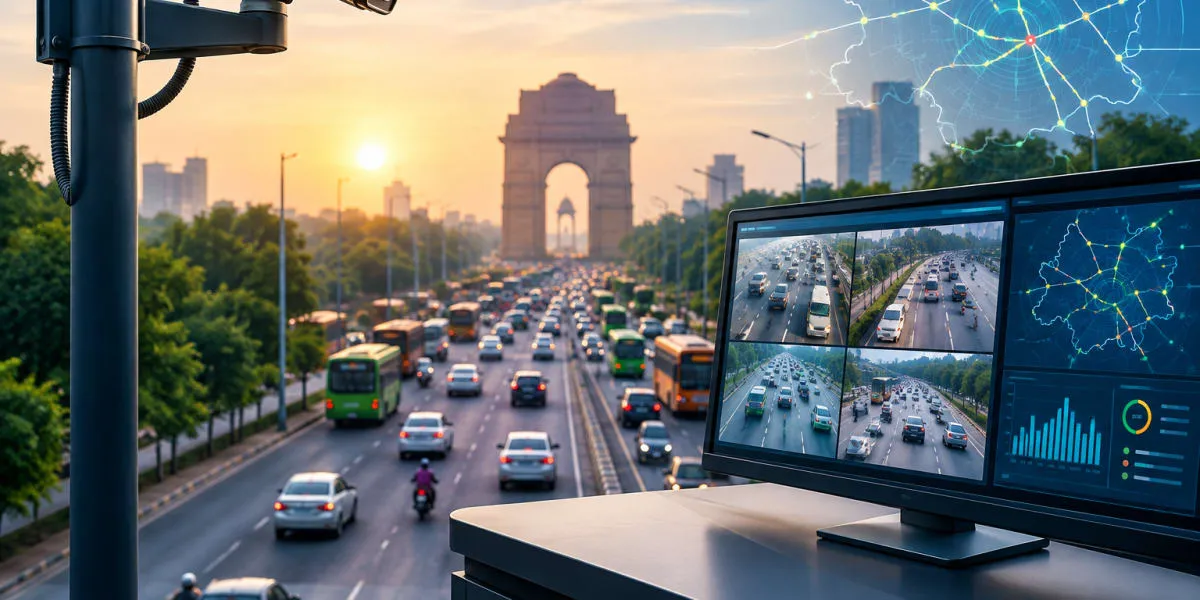
The Cabinet Committee on Economic Affairs (CCEA), chaired by Prime Minister Narendra Modi, has approved the Intelligent Traffic Management System (ITMS) project for Delhi Police at an estimated cost of Rs. 17.9 bn, inclusive of taxes. The project will cover 42 identified traffic corridors and be implemented in three phases over 24 months, followed by five years of operation and maintenance.

The technology-led initiative aims to improve traffic management, transport infrastructure and urban mobility by using real-time traffic data, adaptive signals, automated enforcement and integrated command-and-control systems. Delhi’s existing road network will be managed through systems designed to respond to changing traffic conditions rather than relying primarily on fixed signal timings and manual intervention.

The project will include 1,092 Adaptive Traffic Control Systems and 1,029 enforcement locations. These systems will dynamically adjust signal timings, coordinate traffic signals along selected corridors and support priority movement for emergency vehicles. They will also detect congestion, slow-moving traffic and road incidents, enabling Delhi Police to introduce diversions and respond more quickly to disruptions.

Variable Message Sign boards and digital platforms will provide information about congestion, diversions, parking availability and traffic conditions. The system is also designed to support information sharing with navigation service providers. Automated enforcement will cover violations including red-light and stop-line breaches, speeding, wrong-way driving, failure to use helmets and seat belts, illegal parking and mobile phone use while driving.

Artificial intelligence-based analytics will assist in identifying stolen, hot-listed and blacklisted vehicles, repeat offenders and vehicles linked to hit-and-run incidents. Traffic regulation, enforcement and information dissemination will be integrated through Traffic Command and Control Centres, supported by secure data centre and disaster recovery infrastructure. Delhi Police will appoint a Master System Integrator through competitive bidding, while C-DAC will provide technical support as project management consultant. Each phase will proceed after evaluation of the preceding phase against prescribed testing, commissioning, acceptance and performance parameters.

The Cabinet Committee on Economic Affairs (CCEA), chaired by Prime Minister Narendra Modi, has approved the Intelligent Traffic Management System (ITMS) project for Delhi Police at an estimated cost of Rs. 17.9 bn, inclusive of taxes. The project will cover 42 identified traffic corridors and be implemented in three phases over 24 months, followed by five years of operation and maintenance. The technology-led initiative aims to improve traffic management, transport infrastructure and urban mobility by using real-time traffic data, adaptive signals, automated enforcement and integrated command-and-control systems. Delhi’s existing road network will be managed through systems designed to respond to changing traffic conditions rather than relying primarily on fixed signal timings and manual intervention. The project will include 1,092 Adaptive Traffic Control Systems and 1,029 enforcement locations. These systems will dynamically adjust signal timings, coordinate traffic signals along selected corridors and support priority movement for emergency vehicles. They will also detect congestion, slow-moving traffic and road incidents, enabling Delhi Police to introduce diversions and respond more quickly to disruptions. Variable Message Sign boards and digital platforms will provide information about congestion, diversions, parking availability and traffic conditions. The system is also designed to support information sharing with navigation service providers. Automated enforcement will cover violations including red-light and stop-line breaches, speeding, wrong-way driving, failure to use helmets and seat belts, illegal parking and mobile phone use while driving. Artificial intelligence-based analytics will assist in identifying stolen, hot-listed and blacklisted vehicles, repeat offenders and vehicles linked to hit-and-run incidents. Traffic regulation, enforcement and information dissemination will be integrated through Traffic Command and Control Centres, supported by secure data centre and disaster recovery infrastructure. Delhi Police will appoint a Master System Integrator through competitive bidding, while C-DAC will provide technical support as project management consultant. Each phase will proceed after evaluation of the preceding phase against prescribed testing, commissioning, acceptance and performance parameters.

Related Stories

Gold Stories

Next Story
Infrastructure Urban

CAFE-III Gives Auto Industry Investment Clarity

The government’s new Corporate Average Fuel Economy (CAFE-III) norms have provided the automobile industry with a clearer framework for technology investments, according to industry representatives. The framework seeks to balance environmental objectives with flexibility for manufacturers while encouraging the adoption of flex-fuel vehicles and biofuels. Society of Indian Automobile Manufacturers (SIAM) President Shenu Agarwal said the five-year framework would give automakers greater predictability to plan investments and accelerate innovation. He said the regulation established annual targ..

Next Story
Infrastructure Energy

Mines Ministry to Auction Two Offshore Mineral Blocks in Andaman Sea

The Ministry of Mines will launch an auction of two offshore mineral blocks in the Andaman Sea on Thursday, seeking to unlock India’s offshore mineral potential and strengthen long-term mineral resource security. The blocks will be offered under a composite licence, which permits exploration and development activities in accordance with the applicable regulatory framework. The ministry said the auction was intended to encourage systematic exploration, attract investment and promote the use of advanced technologies for offshore mineral exploration and development. The initiative is also aimed..

Next Story
Infrastructure Energy

India Invites Global Mining Community to India Mining Week 2026

India has invited the global mining community to participate in India Mining Week 2026, seeking international collaboration, expertise and investment to support the development of the country’s mining and minerals sector. The event is scheduled to be held from November 15 to 17, 2026, at Yashobhoomi in New Delhi. Coal Additional Secretary Rupinder Brar extended the invitation while addressing India Mining: Global Connect, an international outreach interaction involving representatives from diplomatic missions in 19 countries. The meeting focused on opportunities for greater international par..

Advertisement

Subscribe to Our Newsletter

Get daily newsletters around different themes from Construction world.

STAY CONNECTED

Advertisement

SPECIAL OFFER
QR Code