+
CAQM enforces stricter pollution measures as GRAP stage-II starts in NCR
ECONOMY & POLICY

CAQM enforces stricter pollution measures as GRAP stage-II starts in NCR

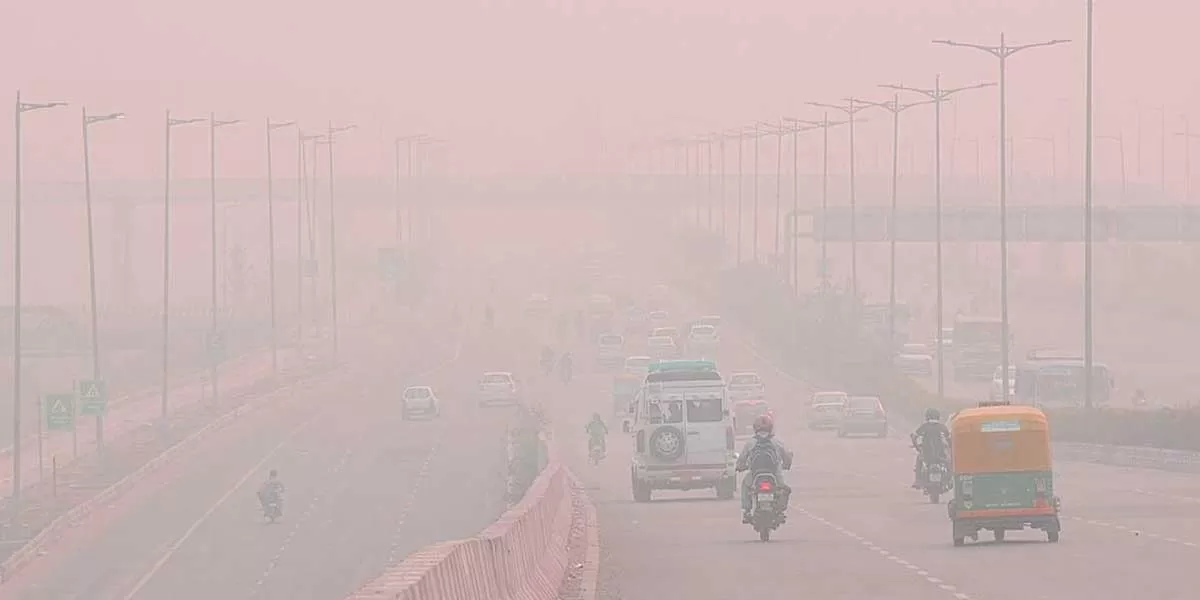
The Commission for Air Quality Management (CAQM) in NCR and adjoining areas has intensified efforts to mitigate air pollution under the on-going Graded Response Action Plan (GRAP) in the National Capital Region.

In a recent meeting, the Sub-Committee on Safeguarding & Enforcement reviewed and monitored the enforcement actions taken by NCR state governments and the Government of National Capital Territory of Delhi (GNCTD), in collaboration with Punjab. The discussion addressed various issues, such as monitoring paddy stubble burning, implementing transport sector guidelines, and enforcing Pollution Under Control (PUC) norms. The Commission also evaluated the progress on liquidating end-of-life vehicles according to RVSF Rules, 2021, and assessed the capacity utilization of vehicle scrapping facilities. Additionally, compliance with guidelines for intercity bus services in the NCR and transition plans for clean intercity buses from neighbouring states were reviewed.

The CAQM highlighted the need to enforce GRAP Stage-II measures, including the use of anti-smog guns, increased mechanized sweeping, and restricting the use of diesel generators. It instructed NCR states and GNCTD to intensify enforcement actions through inspections and penalties to prevent further air quality deterioration.

The meeting also emphasized adherence to the Supreme Court’s orders on banning firecrackers, particularly during the festival season, which coincides with peak paddy harvesting. The Commission urged relevant agencies to assign nodal officers for hotspot monitoring and to expand the deployment of anti-smog guns on high-rise buildings.

The Commission further stressed the importance of continuous review and effective actions across sectors under GRAP to control pollution levels. NCR state governments reaffirmed their commitment to coordinated efforts to ensure compliance with air quality measures outlined in the plan.

The Commission for Air Quality Management (CAQM) in NCR and adjoining areas has intensified efforts to mitigate air pollution under the on-going Graded Response Action Plan (GRAP) in the National Capital Region. In a recent meeting, the Sub-Committee on Safeguarding & Enforcement reviewed and monitored the enforcement actions taken by NCR state governments and the Government of National Capital Territory of Delhi (GNCTD), in collaboration with Punjab. The discussion addressed various issues, such as monitoring paddy stubble burning, implementing transport sector guidelines, and enforcing Pollution Under Control (PUC) norms. The Commission also evaluated the progress on liquidating end-of-life vehicles according to RVSF Rules, 2021, and assessed the capacity utilization of vehicle scrapping facilities. Additionally, compliance with guidelines for intercity bus services in the NCR and transition plans for clean intercity buses from neighbouring states were reviewed. The CAQM highlighted the need to enforce GRAP Stage-II measures, including the use of anti-smog guns, increased mechanized sweeping, and restricting the use of diesel generators. It instructed NCR states and GNCTD to intensify enforcement actions through inspections and penalties to prevent further air quality deterioration. The meeting also emphasized adherence to the Supreme Court’s orders on banning firecrackers, particularly during the festival season, which coincides with peak paddy harvesting. The Commission urged relevant agencies to assign nodal officers for hotspot monitoring and to expand the deployment of anti-smog guns on high-rise buildings. The Commission further stressed the importance of continuous review and effective actions across sectors under GRAP to control pollution levels. NCR state governments reaffirmed their commitment to coordinated efforts to ensure compliance with air quality measures outlined in the plan.

Related Stories

Gold Stories

Next Story
Infrastructure Urban

Infrastructure Opportunity Outlook by IMPACCT.Info

India’s infrastructure pipeline is witnessing dynamic activity across stages — from immediate bidding to future planning. IMPACCT segments these into three categories: Immediate, 3–6 Month, and Future Opportunities, enabling businesses to identify, prepare, and participate in high-value tenders and projects across sectors.To read full article Click Here ..

Next Story
Real Estate

Glass, Reframed!

Glass façades, quintessential aesthetic building envelopes globally, have been widely adopted in India as well. But when the focus is high-performance building systems that deliver energy efficiency, comfort and architectural identity, glass isn’t the only preference. Combination solutions, involving glass and some other material, improve façade outcomes. Some combinations come at comparable prices, some at a higher price. Here is a selection of performance-oriented solutions...To read the full story Click Here ..

Next Story
Infrastructure Urban

Beyond Building Faster

India’s cities are expanding at an unprecedented pace, bringing new infrastructure and development opportunities while also intensifying challenges around mobility, public spaces, liveability and supporting infrastructure. The question, therefore, is not simply whether India can build faster, but whether it can build cities that work better.At a CW webinar, Are We Designing Better Cities – or Just Building Faster?, moderator Ar. Samir Shaikh, Founding Principal, AR&UD Studio, brought together perspectives from design, development, master planning and technology...To read the full artic..

Advertisement

Subscribe to Our Newsletter

Get daily newsletters around different themes from Construction world.

STAY CONNECTED

Advertisement

SPECIAL OFFER
QR Code