




Centre Approves Rs 27.87 bn For Amaravati Projects
ECONOMY & POLICY

Centre Approves Rs 27.87 bn For Amaravati Projects

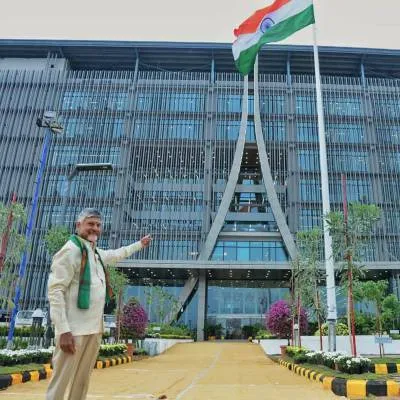
In a major boost to Amaravati’s development, the Union Government has approved Rs 2.79 billion for two key infrastructure projects in Andhra Pradesh’s capital region. The allocation includes Rs 1.33 billion for residential quarters for central government employees and Rs 1.46 billion for the Common Central Secretariat (CCS).

The Central Public Works Department (CPWD) will undertake both projects. This marks a significant milestone in Amaravati’s infrastructure revival and is the first major win for the new state coalition government led by Chief Minister N Chandrababu Naidu.

Union Minister of State for Rural Development and Communications, Dr Pemmasani Chandrasekhar, confirmed the approval on Tuesday. “We have secured Rs 2.79 billion from the Centre for the CCS and staff quarters. This is a major step forward in rebuilding the capital,” he said.

The Union Finance Ministry has issued administrative approvals to the Ministry of Housing and Urban Affairs, restarting proposals that had remained dormant since 2018. These plans were shelved following a change in government and did not advance during the five-year tenure of the YSRCP regime.

Dr Chandrasekhar noted that the renewed sanction is a turning point made possible by consistent coordination between ministries and direct administrative follow-up. He credited the revival to the combined efforts of Deputy Chief Minister Pawan Kalyan, Nara Lokesh, and the proactive role of the coalition government.

The Common Central Secretariat is envisioned to bring all central departments under one roof in Amaravati, enhancing administrative efficiency and reinforcing the city’s status as the state’s administrative capital.

“This decision reflects the Centre’s renewed confidence in Andhra Pradesh’s development under the current leadership,” said Dr Chandrasekhar, who also thanked Prime Minister Narendra Modi, Union Housing Minister Manohar Lal Khattar, and Finance Minister Nirmala Sitharaman for their support.

The move is widely seen as a political and infrastructural signal that the Centre is backing Amaravati’s resurgence as the planned capital of Andhra Pradesh.

In a major boost to Amaravati’s development, the Union Government has approved Rs 2.79 billion for two key infrastructure projects in Andhra Pradesh’s capital region. The allocation includes Rs 1.33 billion for residential quarters for central government employees and Rs 1.46 billion for the Common Central Secretariat (CCS).The Central Public Works Department (CPWD) will undertake both projects. This marks a significant milestone in Amaravati’s infrastructure revival and is the first major win for the new state coalition government led by Chief Minister N Chandrababu Naidu.Union Minister of State for Rural Development and Communications, Dr Pemmasani Chandrasekhar, confirmed the approval on Tuesday. “We have secured Rs 2.79 billion from the Centre for the CCS and staff quarters. This is a major step forward in rebuilding the capital,” he said.The Union Finance Ministry has issued administrative approvals to the Ministry of Housing and Urban Affairs, restarting proposals that had remained dormant since 2018. These plans were shelved following a change in government and did not advance during the five-year tenure of the YSRCP regime.Dr Chandrasekhar noted that the renewed sanction is a turning point made possible by consistent coordination between ministries and direct administrative follow-up. He credited the revival to the combined efforts of Deputy Chief Minister Pawan Kalyan, Nara Lokesh, and the proactive role of the coalition government.The Common Central Secretariat is envisioned to bring all central departments under one roof in Amaravati, enhancing administrative efficiency and reinforcing the city’s status as the state’s administrative capital.“This decision reflects the Centre’s renewed confidence in Andhra Pradesh’s development under the current leadership,” said Dr Chandrasekhar, who also thanked Prime Minister Narendra Modi, Union Housing Minister Manohar Lal Khattar, and Finance Minister Nirmala Sitharaman for their support.The move is widely seen as a political and infrastructural signal that the Centre is backing Amaravati’s resurgence as the planned capital of Andhra Pradesh.

Next Story
Infrastructure Urban

Implementation Status of Jal Jeevan Mission

Since August 2019 the Government has implemented Jal Jeevan Mission to provide assured potable water through household tap connections in rural India. At the start of the mission only 32.3 million (mn) rural households, representing 16.7 per cent, were reported to have tap water connections. States and union territories have reported that 125.8 mn additional rural households have since been provided with tap connections. As a result, of about 193.6 mn rural households roughly 158.2 mn, or 81.71 per cent, are reported to have tap water supply at home.\n\nThe State, district and village level st..

Next Story
Infrastructure Urban

Jal Jeevan Mission Reaches Eighty One Per Cent Rural Coverage

The Government reported substantial progress under the Jal Jeevan Mission, launched in August 2019 to provide tap water to every rural household. At launch only 32.3 million (mn) rural households had tap connections and states and Union territories reported provision of 125.8 mn additional households by March 2026. Consequently, out of about 193.6 mn rural households around 158.2 mn, or 81.71 per cent, are reported to have tap water at home. The Finance Minister announced extension of the mission until 2028 in the 2025-26 budget speech. The Swachh Bharat Mission Grameen, launched in October 20..

Next Story
Infrastructure Urban

Empowering Local Governance for Sustainable Rural Water Supply

The Ministry of Jal Shakti has aligned the Jal Jeevan Mission (JJM) with the 73rd Amendment to strengthen village level planning and community ownership of water supply. Gram Panchayats, village water and sanitation committees and Pani Samitis are to plan, implement, manage and maintain piped water systems, with gram sabha processes formalising handover and oversight. Implementation support agencies including non government organisations, community based organisations and self help groups have been empanelled to train local committees and promote women participation. Under JJM, the department ..

Advertisement

Subscribe to Our Newsletter

Get daily newsletters around different themes from Construction world.

STAY CONNECTED

Advertisement

Advertisement

Advertisement