Centre Removes Hospital Height Cap And Eases Vertical Expansion Norms
ECONOMY & POLICY

Centre Removes Hospital Height Cap And Eases Vertical Expansion Norms

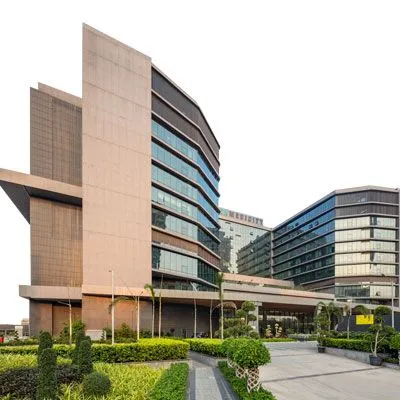
The central government has removed the previous cap on hospital building heights and has relaxed rules for vertical expansion, enabling existing hospitals to add floors subject to safety, structural and land use regulations. The decision is intended to make better use of scarce urban land and to speed up capacity increases without requiring new ground acquisitions. Authorities said the change will apply to both public and private hospitals and will be accompanied by revised procedural norms for approvals.

Officials framed the move as aimed at addressing persistent shortages of beds and speciality services in densely populated areas by facilitating upward growth of hospital campuses. The amended norms require hospitals to meet enhanced standards for fire safety, seismic resistance and patient access before additional storeys are sanctioned. Local building codes and medical land classification rules will continue to apply and will be harmonised with the new central guidelines.

Healthcare providers have been advised to commission structural audits and to integrate clinical workflows, vertical circulation and emergency evacuation into expansion designs. Planners said vertical expansion will reduce the need for acquiring new plots, lower project timelines and potentially ease capital requirements linked to land purchase. However, officials stressed that permission will be contingent on compliance with environmental clearances and urban infrastructure considerations.

The central agency will issue a model set of procedures to guide municipal authorities and state governments in implementing the change, while hospitals and investors will be required to follow prescribed documentation and engineering standards. Observers said the reform will reshape investment in urban healthcare capacity while keeping patient safety and regulatory oversight central to any expansion. States will be encouraged to streamline approval timelines and to adopt digital clearances to reduce administrative delays and to ensure consistency across jurisdictions.

The central government has removed the previous cap on hospital building heights and has relaxed rules for vertical expansion, enabling existing hospitals to add floors subject to safety, structural and land use regulations. The decision is intended to make better use of scarce urban land and to speed up capacity increases without requiring new ground acquisitions. Authorities said the change will apply to both public and private hospitals and will be accompanied by revised procedural norms for approvals. Officials framed the move as aimed at addressing persistent shortages of beds and speciality services in densely populated areas by facilitating upward growth of hospital campuses. The amended norms require hospitals to meet enhanced standards for fire safety, seismic resistance and patient access before additional storeys are sanctioned. Local building codes and medical land classification rules will continue to apply and will be harmonised with the new central guidelines. Healthcare providers have been advised to commission structural audits and to integrate clinical workflows, vertical circulation and emergency evacuation into expansion designs. Planners said vertical expansion will reduce the need for acquiring new plots, lower project timelines and potentially ease capital requirements linked to land purchase. However, officials stressed that permission will be contingent on compliance with environmental clearances and urban infrastructure considerations. The central agency will issue a model set of procedures to guide municipal authorities and state governments in implementing the change, while hospitals and investors will be required to follow prescribed documentation and engineering standards. Observers said the reform will reshape investment in urban healthcare capacity while keeping patient safety and regulatory oversight central to any expansion. States will be encouraged to streamline approval timelines and to adopt digital clearances to reduce administrative delays and to ensure consistency across jurisdictions.

Next Story
Infrastructure Urban

Meghalaya And Assam Hold Talks To End Transport Stoppages In Garo Hills

Meghalaya and Assam have opened talks aimed at ending recent stoppages of commodity transport in the Garo Hills, officials said. The deputy chief minister, in charge of home affairs, reported that both state governments are coordinating to resolve disruptions and to restore normal movement of goods. He acknowledged that misunderstandings may have contributed to the incidents and that clarification between administrative units is under way. The discussions are intended to produce practical arrangements that will allow consignments to move without hindrance while respecting local procedures. The..

Next Story
Infrastructure Transport

Kochi Metro Records 1.375 mn Rise In Passengers In FY26

Kochi Metro recorded a marginal rise in ridership in the financial year 2025-26, carrying 1.375 mn more passengers than in the previous year. The service carried 36.8 million (mn) passengers in 2025-26 compared with 35.5 mn in 2024-25, representing a year-on-year increase of 3.9 per cent. The growth was described as distributed rather than concentrated in isolated spikes. A month-wise analysis shows steady gains across quarters. In the first quarter, ridership increased from 8.57 mn to 8.84 mn, while the second quarter rose from 9.13 mn to 9.51 mn. These trends indicated broad-based improvemen..

Next Story
Infrastructure Transport

Ghaziabad Plans 16km Metro Link To Delhi Via Hindon Airport

Ghaziabad authorities are pursuing a 16 km metro link to Delhi that will run via Hindon Airport, and a detailed project report is under way. The plan is intended to improve connectivity between Ghaziabad and the national capital and to provide an interchange with the airport. Officials said the project is being studied to assess alignments, station locations and cost estimates ahead of formal approvals and tendering. The announcement follows the inauguration of the Delhi?Faridabad metro extension, which will offer hassle free travel for around 0.2 mn daily commuters between the national capita..

Advertisement

Subscribe to Our Newsletter

Get daily newsletters around different themes from Construction world.

STAY CONNECTED

Advertisement

Advertisement

Advertisement