+
Chumoukedima Bulk Waste Generators Told To Comply With Rules
ECONOMY & POLICY

Chumoukedima Bulk Waste Generators Told To Comply With Rules

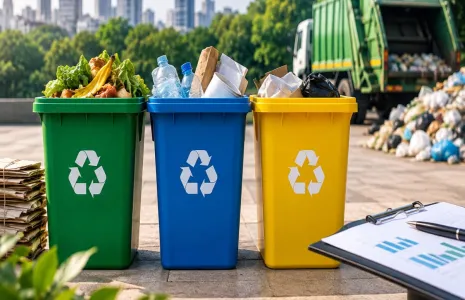
Bulk Waste Generators (BWGs) in Chumoukedima have been directed to assume immediate responsibility for managing and processing waste on their premises or face penalties and enforcement measures. The directive was issued at a one-day workshop held at the Deputy Commissioner's Office on September 8 and chaired by Sub-Divisional Officer Chumoukedima Shreyansee Jain, IAS. Deputy Commissioner Polan John NCS underlined that compliance will be monitored and enforced by the district administration.

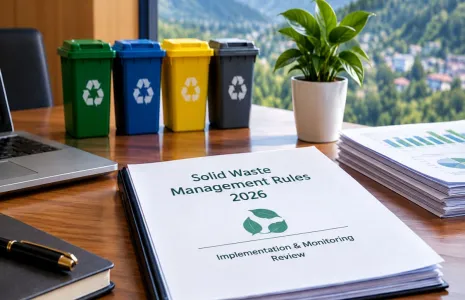
Polan John said effective solid waste management is not the sole duty of sanitary workers but a collective responsibility of individuals, households, institutions and establishments, and he called upon identified BWGs and stakeholders to comply with Supreme Court time-bound directions and the Solid Waste Management Rules, 2026. He cited constitutional obligations including Article 51A(g) and noted that the right to a clean and healthy environment is linked to the right to life under Article 21.

He explained that the revised rules apply to urban and rural areas and require segregation, storage and handover of waste to designated authorities in accordance with prescribed norms. John set out the criteria for bulk waste generators as establishments with a built-up area of 20,000 square metres, daily water consumption of 40,000 litres or waste generation of 100 kilogram (kg) per day, with any one criterion sufficing for classification. Identified BWGs must establish appropriate on-site waste management infrastructure, ensure processing and management of waste, register online and submit compliance reports, and will be subject to inspection.

The DC emphasised the need for BWGs to manage wet waste on their premises through suitable composting facilities and said technical assistance could be provided by the concerned departments and the Nagaland Pollution Control Board. He warned that non-compliance could invite penalties under the Polluter Pays principle and that persistent violations could lead to measures such as disconnection of electricity and water supply. A technical session by an environmental scientist and a group discussion on practical measures aimed to strengthen stakeholder coordination for a cleaner, greener and more sustainable Chumoukedima.

Bulk Waste Generators (BWGs) in Chumoukedima have been directed to assume immediate responsibility for managing and processing waste on their premises or face penalties and enforcement measures. The directive was issued at a one-day workshop held at the Deputy Commissioner's Office on September 8 and chaired by Sub-Divisional Officer Chumoukedima Shreyansee Jain, IAS. Deputy Commissioner Polan John NCS underlined that compliance will be monitored and enforced by the district administration. Polan John said effective solid waste management is not the sole duty of sanitary workers but a collective responsibility of individuals, households, institutions and establishments, and he called upon identified BWGs and stakeholders to comply with Supreme Court time-bound directions and the Solid Waste Management Rules, 2026. He cited constitutional obligations including Article 51A(g) and noted that the right to a clean and healthy environment is linked to the right to life under Article 21. He explained that the revised rules apply to urban and rural areas and require segregation, storage and handover of waste to designated authorities in accordance with prescribed norms. John set out the criteria for bulk waste generators as establishments with a built-up area of 20,000 square metres, daily water consumption of 40,000 litres or waste generation of 100 kilogram (kg) per day, with any one criterion sufficing for classification. Identified BWGs must establish appropriate on-site waste management infrastructure, ensure processing and management of waste, register online and submit compliance reports, and will be subject to inspection. The DC emphasised the need for BWGs to manage wet waste on their premises through suitable composting facilities and said technical assistance could be provided by the concerned departments and the Nagaland Pollution Control Board. He warned that non-compliance could invite penalties under the Polluter Pays principle and that persistent violations could lead to measures such as disconnection of electricity and water supply. A technical session by an environmental scientist and a group discussion on practical measures aimed to strengthen stakeholder coordination for a cleaner, greener and more sustainable Chumoukedima.

Related Stories

Gold Stories

Next Story
Infrastructure Urban

KONE Opens India's First Digital Experience Centre in Pune

KONE, a global elevator and escalator manufacturer, has inaugurated its first Digital Experience Centre (DEC) in India, located in Pune. The facility aims to showcase how artificial intelligence (AI), connectivity and data-driven technologies can enhance customer experiences and improve building operations.The centre was inaugurated by Jussi Herlin, Executive Vice Chair, KONE Corporation; Philippe Delorme, President and CEO, KONE; and Nandan Nilekani, Co-founder and Chairman of the Board, Infosys.Designed as an interactive customer environment, the facility demonstrates digital solutions cover..

Next Story
Infrastructure Urban

CII GreenCo Launches Circularity Guidelines for Indian Industry

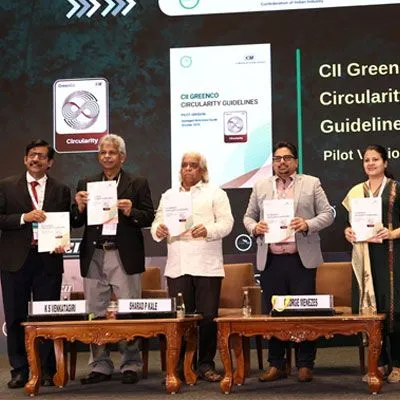
The Confederation of Indian Industry (CII) GreenCo Council has launched the CII GreenCo Circularity Guidelines – Pilot Version at the 17th CII GreenCo Waste & Resource Management Summit 2026 in Chennai. The initiative aims to strengthen resource efficiency, waste reduction and circular economy practices across Indian manufacturing and process industries.The guidelines introduce a structured framework with circularity indices covering raw materials, consumables, packaging and other resource inputs. These indicators will help industries assess existing practices, identify opportunities to ..

Next Story
Infrastructure Energy

Global Electronics Association Launches IPC-1783-CO2E Standard

The Global Electronics Association has introduced IPC-1783-CO2E, a new international standard aimed at improving consistency, transparency and comparability in product carbon footprint reporting across the electronics manufacturing industry.The standard, titled International Standard for Data Collection and Reporting of CO2 Equivalent (CO2e) Emissions for the Electronics Manufacturing Supply Chain, provides industry-specific guidance for collecting, estimating and reporting carbon emissions data.With increasing regulatory requirements and customer expectations, electronics manufacturers face c..

Advertisement

Subscribe to Our Newsletter

Get daily newsletters around different themes from Construction world.

STAY CONNECTED

Advertisement

SPECIAL OFFER
QR Code