+
CJI Surya Kant Calls for Preventive Justice to Avoid Infrastructure Disputes
ECONOMY & POLICY

CJI Surya Kant Calls for Preventive Justice to Avoid Infrastructure Disputes

Kant has urged the infrastructure ecosystem to design contractual and institutional frameworks that identify and address concerns early through communication and dispute-avoidance mechanisms.

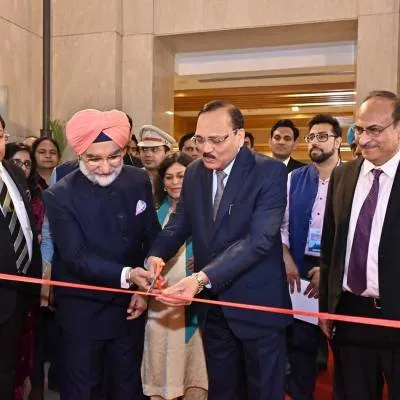
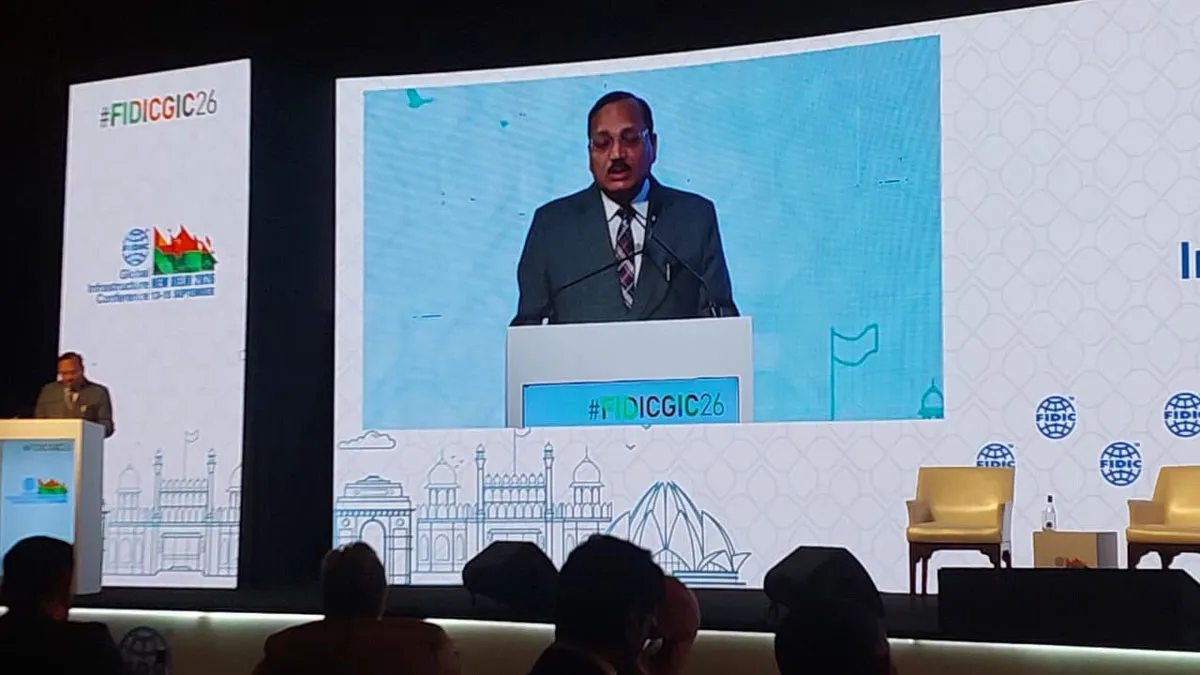
Chief Justice of India Surya Kant has urged India’s infrastructure ecosystem to move from retrospective justice to preventive justice, as the country undertakes projects at an unprecedented scale. Speaking at global engineering body FIDIC’s Global Infrastructure Conference 2026 in New Delhi, Kant said the true measure of a justice system’s success lies in ensuring mechanisms around infrastructure projects function pre-emptively to avoid disputes.

“A legal system should not measure its success only by how effectively it resolves disputes after they have arisen. It should also ask how effectively the institutions around a project prevent those disputes from arising in the first place,” Kant told delegates from more than 70 countries.

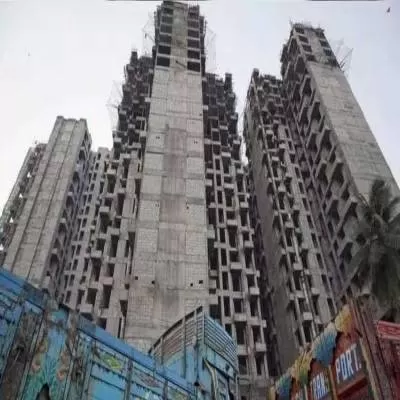
He stressed that infrastructure projects cannot afford delays caused by prolonged litigation. “A bridge cannot pause construction while an arbitration proceeds. A highway cannot wait for an appeal to run its course. And a power project cannot suspend its economic purpose while the parties debate the meaning of an unforeseen circumstance,” he said.

Kant argued that contractual and institutional frameworks must be designed to identify and address concerns early through communication and dispute-avoidance mechanisms.

Push for Standardisation
With global stakeholders increasingly involved in infrastructure delivery, Kant reinforced the importance of standardisation. “Infrastructure today rarely respects a single border. Capital may originate in one country, engineering expertise in another, construction capacity in the third, but while the asset itself rises in a country, in an environment as interconnected as this, standardisation becomes important,” he said.

He cautioned against reinventing provisions for payments, variations, extensions of time, unforeseen conditions and dispute resolution for every project, saying this only created uncertainty. While a single court could not be prescribed for all projects given local laws and circumstances, he said standardisation should ensure contracts share a familiar structure while leaving room for project-specific realities.

Role of Legal Profession
Kant said the legal profession had a critical role in improving processes. If disputes about variations, payments, extensions of time or changed site conditions kept recurring, contracts should be drafted differently in future.

“This has particular resonance for India at this moment in its history. We are undertaking infrastructure development at a scale and pace without real precedent in our own past. Our ambition cannot simply be to build more. It must be to build faster, more resiliently, more sustainably, and more productively,” he said.

He added that India needed contracts that create confidence rather than confrontation, procurement systems that reward genuine value rather than merely the lowest bid, and dispute frameworks that resolve disagreements at the pace projects require. He urged stakeholders to focus on clarity of obligations, balanced risk allocation, sensible standardisation, early dispute avoidance, and swift, independent resolution where disputes cannot be avoided.

FIDIC, or the International Federation of Consulting Engineers, headquartered in Geneva, represents national associations of consulting engineers across more than 100 countries and is best known for publishing standard forms of contract widely used in global infrastructure projects. The body is currently holding its annual conference in the national capital, in association with the Consulting Engineers Association of India (CEAI).

-Manish Pant

Kant has urged the infrastructure ecosystem to design contractual and institutional frameworks that identify and address concerns early through communication and dispute-avoidance mechanisms.Chief Justice of India Surya Kant has urged India’s infrastructure ecosystem to move from retrospective justice to preventive justice, as the country undertakes projects at an unprecedented scale. Speaking at global engineering body FIDIC’s Global Infrastructure Conference 2026 in New Delhi, Kant said the true measure of a justice system’s success lies in ensuring mechanisms around infrastructure projects function pre-emptively to avoid disputes.“A legal system should not measure its success only by how effectively it resolves disputes after they have arisen. It should also ask how effectively the institutions around a project prevent those disputes from arising in the first place,” Kant told delegates from more than 70 countries.He stressed that infrastructure projects cannot afford delays caused by prolonged litigation. “A bridge cannot pause construction while an arbitration proceeds. A highway cannot wait for an appeal to run its course. And a power project cannot suspend its economic purpose while the parties debate the meaning of an unforeseen circumstance,” he said.Kant argued that contractual and institutional frameworks must be designed to identify and address concerns early through communication and dispute-avoidance mechanisms.Push for StandardisationWith global stakeholders increasingly involved in infrastructure delivery, Kant reinforced the importance of standardisation. “Infrastructure today rarely respects a single border. Capital may originate in one country, engineering expertise in another, construction capacity in the third, but while the asset itself rises in a country, in an environment as interconnected as this, standardisation becomes important,” he said.He cautioned against reinventing provisions for payments, variations, extensions of time, unforeseen conditions and dispute resolution for every project, saying this only created uncertainty. While a single court could not be prescribed for all projects given local laws and circumstances, he said standardisation should ensure contracts share a familiar structure while leaving room for project-specific realities.Role of Legal ProfessionKant said the legal profession had a critical role in improving processes. If disputes about variations, payments, extensions of time or changed site conditions kept recurring, contracts should be drafted differently in future.“This has particular resonance for India at this moment in its history. We are undertaking infrastructure development at a scale and pace without real precedent in our own past. Our ambition cannot simply be to build more. It must be to build faster, more resiliently, more sustainably, and more productively,” he said.He added that India needed contracts that create confidence rather than confrontation, procurement systems that reward genuine value rather than merely the lowest bid, and dispute frameworks that resolve disagreements at the pace projects require. He urged stakeholders to focus on clarity of obligations, balanced risk allocation, sensible standardisation, early dispute avoidance, and swift, independent resolution where disputes cannot be avoided.FIDIC, or the International Federation of Consulting Engineers, headquartered in Geneva, represents national associations of consulting engineers across more than 100 countries and is best known for publishing standard forms of contract widely used in global infrastructure projects. The body is currently holding its annual conference in the national capital, in association with the Consulting Engineers Association of India (CEAI).-Manish Pant

Related Stories

Gold Stories

Next Story
Infrastructure Urban

Madhya Pradesh Secures Rs 530 Billion in Investment Proposals

Rupee (Rs) 530 billion (bn) in investment proposals were received by Madhya Pradesh on the third day of Chief Minister Mohan Yadav's visit to the United Arab Emirates, with major interest in green energy, artificial intelligence, data centres and advanced manufacturing. The delegation held engagements in Dubai and Sharjah to promote projects and secure commitments from global investors. State officials said the proposals represent a significant pipeline for industrial expansion and technology infrastructure. Rana Holdings Limited proposed a portfolio including a 2,000 MW solar energy project a..

Next Story
Infrastructure Energy

Shakti Pumps Wins Rs 2,359.2 Mn Maharashtra Order for 10,000 Solar Pumps

Shakti Pumps (India) has secured an order from Maharashtra State Electricity Distribution Company Ltd. (MSEDCL) to supply and install 10,000 solar water pumping systems across the state. The contract is valued at Rs 2,359.2 million (mn) including GST, covering pumps with capacities of three horsepower, five horsepower and seven point five horsepower. The award has been made under Maharashtra's Magel Tyala Saur Krushi Pump Yojana and is intended to expand off grid irrigation options for farmers. The firm will undertake end to end responsibilities, including designing and manufacturing the pumps..

Next Story
Infrastructure Energy

PM KUSUM 2.0 To Enable Farmers To Generate Renewable Energy

The Union government will launch the second edition of the PM-KUSUM scheme to enable farmers to generate renewable energy alongside crops, Union Minister Pralhad Joshi said on Thursday. PM-KUSUM 2.0 will introduce a model for decentralised renewable energy generation in rural India and is intended to allow continued agricultural activity on the same land. The minister made the remarks on the sidelines of a curtain-raiser for the seventh Agrivoltaics World Conference 2026, scheduled in New Delhi from October 21 to 23. An official indicated that PM-KUSUM 2.0 is expected to include a dedicated 10..

Advertisement

Subscribe to Our Newsletter

Get daily newsletters around different themes from Construction world.

STAY CONNECTED

Advertisement

SPECIAL OFFER
QR Code