CloudFront Blocks Access With 403 Error Affecting Article Retrieval
ECONOMY & POLICY

CloudFront Blocks Access With 403 Error Affecting Article Retrieval

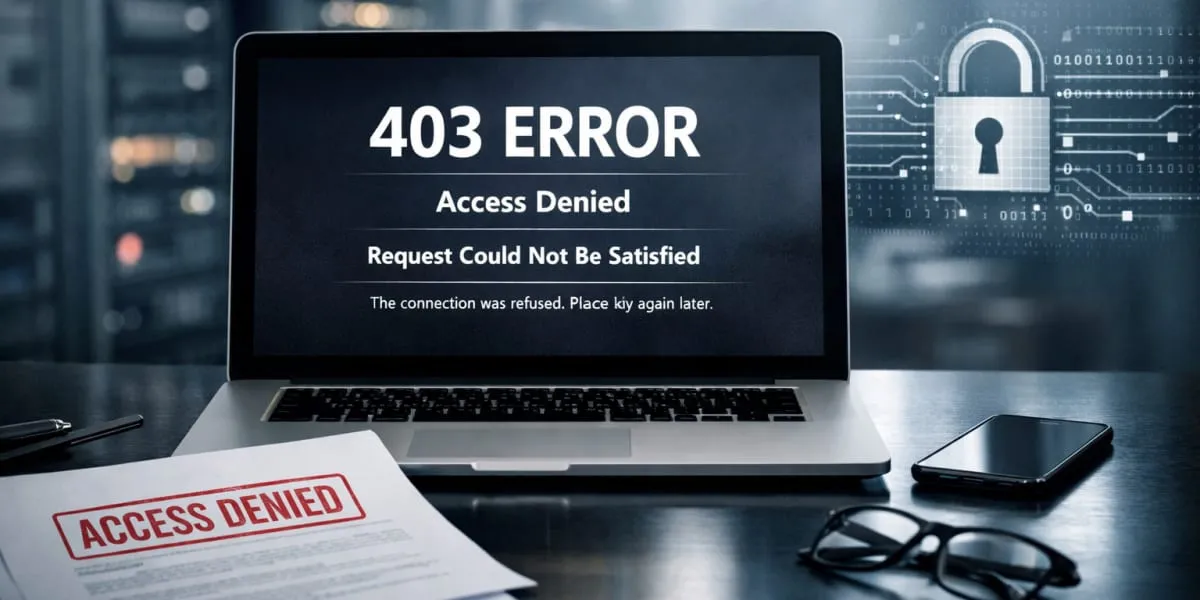
A request to access an online news article was blocked by CloudFront, returning a 403 error and a message that the request could not be satisfied. The service indicated that the connection was refused for the app or website at this time. The notice attributed the failure to excessive traffic or a configuration issue and advised trying again later or contacting the app or website owner for assistance. Technical teams were urged to capture request headers.

The advisory recommended reviewing CloudFront documentation for steps to troubleshoot and to help prevent the error if content is delivered through the service. It explained that owners can review configuration settings and rate limits, examine access policies and origin server responses, and update distribution settings to resolve denial responses. Operators were prompted to inspect logs and error identifiers to trace the request path and identify misconfigurations. Documentation links and recommended commands were noted for reference.

The generated error included a Request ID that was appended to the notification to aid diagnosis. Networking teams were advised to correlate the identifier with server logs and distribution metrics to determine whether the denial was transient or systemic. Where traffic spikes are implicated, rate limiting and caching policies were cited as mitigation levers, while configuration faults require adjustments to origin permissions or routing rules. Engineers were asked to verify certificate and domain records.

The blocked request prevented retrieval of the underlying article at the supplied URL and left the content inaccessible until the issue is resolved. Readers and editors were directed to attempt another access after a pause or to contact the publisher if the problem persists. The incident highlights the dependency of online publishing on content delivery settings and the need for monitoring to ensure continuous availability. Publishers should monitor alerts and implement contingency plans.

A request to access an online news article was blocked by CloudFront, returning a 403 error and a message that the request could not be satisfied. The service indicated that the connection was refused for the app or website at this time. The notice attributed the failure to excessive traffic or a configuration issue and advised trying again later or contacting the app or website owner for assistance. Technical teams were urged to capture request headers. The advisory recommended reviewing CloudFront documentation for steps to troubleshoot and to help prevent the error if content is delivered through the service. It explained that owners can review configuration settings and rate limits, examine access policies and origin server responses, and update distribution settings to resolve denial responses. Operators were prompted to inspect logs and error identifiers to trace the request path and identify misconfigurations. Documentation links and recommended commands were noted for reference. The generated error included a Request ID that was appended to the notification to aid diagnosis. Networking teams were advised to correlate the identifier with server logs and distribution metrics to determine whether the denial was transient or systemic. Where traffic spikes are implicated, rate limiting and caching policies were cited as mitigation levers, while configuration faults require adjustments to origin permissions or routing rules. Engineers were asked to verify certificate and domain records. The blocked request prevented retrieval of the underlying article at the supplied URL and left the content inaccessible until the issue is resolved. Readers and editors were directed to attempt another access after a pause or to contact the publisher if the problem persists. The incident highlights the dependency of online publishing on content delivery settings and the need for monitoring to ensure continuous availability. Publishers should monitor alerts and implement contingency plans.

Next Story
Infrastructure Urban

SCLR Extension Nears Completion Linking BKC With Signal-Free Route

The Santacruz-Chembur Link Road (SCLR) extension towards Bandra-Kurla Complex (BKC) via the Mumbai University campus has entered its final stage, bringing motorists closer to a direct, signal-free connection between the Western Express Highway and the city’s commercial district. The elevated connector is being built as an arm from the SCLR alignment and will link the western suburbs with BKC without surface signals. The link is designed to reduce journey times for commuters travelling from the western suburbs to BKC and to improve access to eastern Mumbai. By carrying through traffic above s..

Next Story
Infrastructure Transport

Raiganj MP Seeks Bengal Only Highway Link To Siliguri

Raiganj Member of Parliament Kartik Chandra Paul met Union Minister for Road Transport and Highways Nitin Gadkari in New Delhi to press for a new stretch of national highway in North Dinajpur district. He urged approval for a Bengal-to-Bengal link that would connect National Highways 12 and 27 to allow vehicles bound for Siliguri to avoid the current route through Kishanganj in neighbouring Bihar. He also submitted a proposed alignment of the new road to the ministry for consideration. At present vehicles from Raiganj travel along NH-12 and join NH-27 at Purnia More in Dalkhola, a route that p..

Next Story
Infrastructure Transport

Airport Kilambakkam Metro Line To Be Extended To Chengalpattu

Chennai Metro Rail (CMRL) has invited tenders for two detailed project reports that would extend its rail network to Chengalpattu in the south and extend Corridor-5 to Wimco Nagar in the north as part of a second wave of expansion beyond the operator's corridors under construction. The move signals an acceleration of planning for suburban links and interchange nodes. The larger of the two studies covers a roughly 27km extension from the planned Kilambakkam metro station to Chengalpattu under Corridor-1, Phase I. CMRL floated the tender at an estimated cost of Rs 21.6 mn. The proposed line woul..

Advertisement

Subscribe to Our Newsletter

Get daily newsletters around different themes from Construction world.

STAY CONNECTED

Advertisement

Advertisement

Advertisement