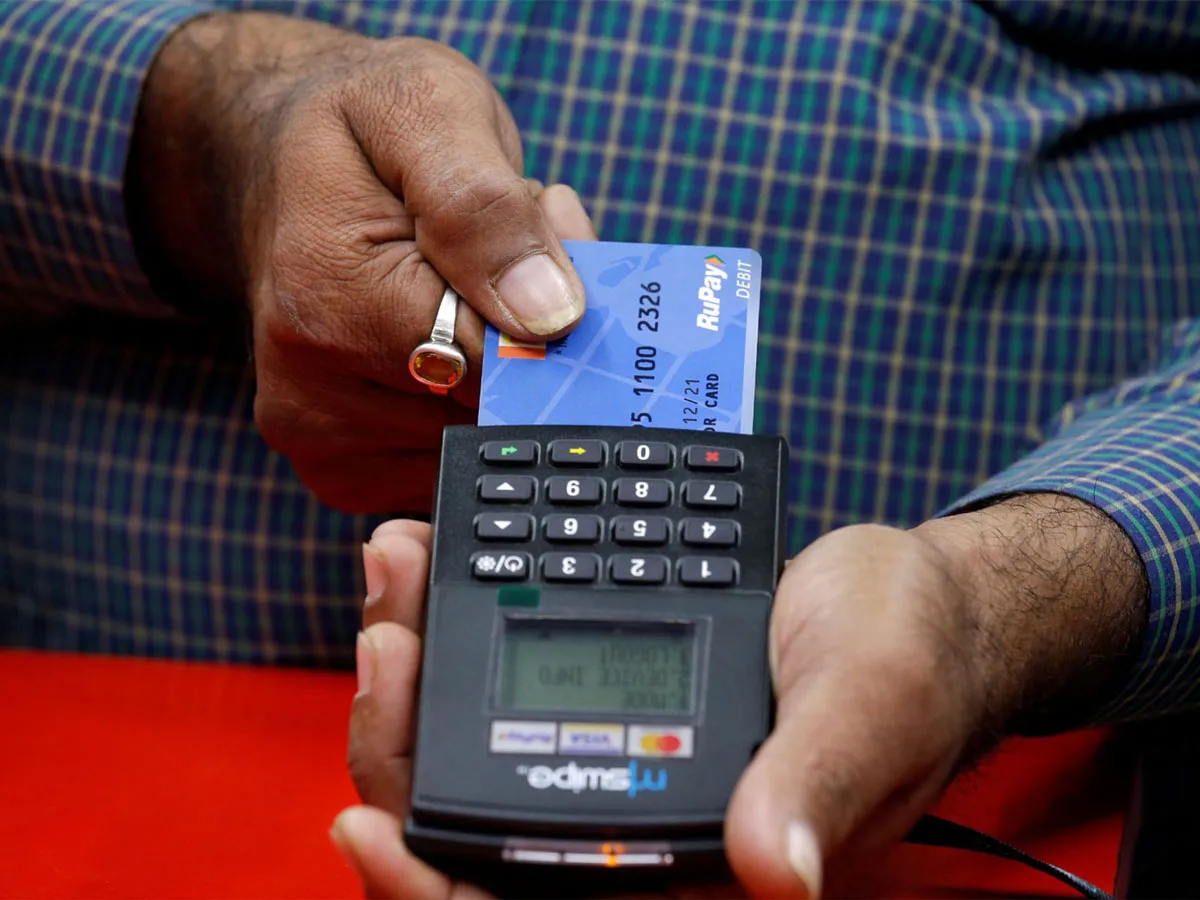
Credit Card Growth Slows as Private Banks Tighten Grip
ECONOMY & POLICY

Credit Card Growth Slows as Private Banks Tighten Grip

India’s credit card industry is seeing a clear slowdown in growth, with new card issuance declining sharply even as private sector banks consolidate their dominance, according to a report by JM Financial Institutional Securities.

The number of new credit cards issued fell to 4.4 million in the second quarter of FY26, marking a steep 28 per cent year-on-year decline from 6.1 million in the same period last year. As a result, growth in cards in circulation remained subdued at 6 per cent year-on-year, pointing to a broader moderation in consumer credit expansion.

Outstanding credit card balances also reflected the slowdown, with growth easing to 9 per cent year-on-year in the second quarter of FY26, compared with 20 per cent growth recorded in FY25. The deceleration was largely attributed to weaker trends in new card issuance.

Despite the overall slowdown, private sector banks continued to strengthen their position. Nearly 78 per cent of all new credit cards issued during the quarter came from private banks, while NBFCs and other players continued to lose market share. Private banks’ share in new card issuance rose by around 730 basis points compared with FY25 levels.

Asset quality indicators showed a mixed trend. Late-stage delinquencies (PAR 90+) had surged to 15 per cent in FY25 but moderated to 8.9 per cent by the second quarter of FY26. Early-stage delinquencies also improved, although mid-stage delinquencies for private banks edged up during the same period.

On spending trends, leading issuers continued to gain ground. Citing RBI data, the report said SBI Cards and HDFC Bank gained 172 basis points and 96 basis points, respectively, in credit card spending market share in FY26 year-to-date. In contrast, ICICI Bank, Kotak Mahindra Bank, RBL Bank and IndusInd Bank ceded share.

Across key retail loan segments such as personal loans, home loans and auto loans, public sector banks (PSBs) continued to gain market share from private lenders. JM Financial noted that PSBs improved their disbursement market share across both unsecured and secured segments, supported by higher average ticket sizes, improving asset quality and a gradual recovery in loan growth during the first half and second quarter of FY26.

India’s credit card industry is seeing a clear slowdown in growth, with new card issuance declining sharply even as private sector banks consolidate their dominance, according to a report by JM Financial Institutional Securities. The number of new credit cards issued fell to 4.4 million in the second quarter of FY26, marking a steep 28 per cent year-on-year decline from 6.1 million in the same period last year. As a result, growth in cards in circulation remained subdued at 6 per cent year-on-year, pointing to a broader moderation in consumer credit expansion. Outstanding credit card balances also reflected the slowdown, with growth easing to 9 per cent year-on-year in the second quarter of FY26, compared with 20 per cent growth recorded in FY25. The deceleration was largely attributed to weaker trends in new card issuance. Despite the overall slowdown, private sector banks continued to strengthen their position. Nearly 78 per cent of all new credit cards issued during the quarter came from private banks, while NBFCs and other players continued to lose market share. Private banks’ share in new card issuance rose by around 730 basis points compared with FY25 levels. Asset quality indicators showed a mixed trend. Late-stage delinquencies (PAR 90+) had surged to 15 per cent in FY25 but moderated to 8.9 per cent by the second quarter of FY26. Early-stage delinquencies also improved, although mid-stage delinquencies for private banks edged up during the same period. On spending trends, leading issuers continued to gain ground. Citing RBI data, the report said SBI Cards and HDFC Bank gained 172 basis points and 96 basis points, respectively, in credit card spending market share in FY26 year-to-date. In contrast, ICICI Bank, Kotak Mahindra Bank, RBL Bank and IndusInd Bank ceded share. Across key retail loan segments such as personal loans, home loans and auto loans, public sector banks (PSBs) continued to gain market share from private lenders. JM Financial noted that PSBs improved their disbursement market share across both unsecured and secured segments, supported by higher average ticket sizes, improving asset quality and a gradual recovery in loan growth during the first half and second quarter of FY26.

Next Story
Infrastructure Transport

NHAI gets SEBI nod for Raajmarg Infra InvIT

The National Highways Authority of India (NHAI) has received approval from the Securities and Exchange Board of India for its sponsored Raajmarg Infra Investment Trust (RIIT) to operate as a public Infrastructure Investment Trust (InvIT), marking a key milestone in its asset monetisation programme.The public InvIT is aimed at unlocking value from national highway assets while creating a long-term investment instrument targeted primarily at retail and domestic investors. NHAI said the move would broaden public participation in India’s highway infrastructure growth story and support sustainabl..

Next Story
Infrastructure Transport

Great Nicobar Airport to Boost Defence and Tourism

The government has begun work on a new airport at the southernmost tip of India on Great Nicobar Island, a move expected to significantly strengthen India’s defence preparedness while accelerating tourism-led development in the region, according to official documents accessed by ANI. The proposed airport will enable operations of larger military aircraft and sharply cut response times for defence forces in the Indian Ocean Region, a critical consideration for national security. The nearest major airport, Veer Savarkar International Airport in Port Blair, is located more than 500 kilometres ..

Next Story
Infrastructure Transport

Navi Mumbai Airport Opens for Commercial Operations

After decades of planning, the greenfield Navi Mumbai International Airport (NMIA) is set to commence commercial operations from Thursday, a milestone expected to cut travel time, boost tourism and attract large-scale investment across the Mumbai Metropolitan Region. The City and Industrial Development Corporation (CIDCO), the implementing agency for the project, said the airport will handle 30 air traffic movements, including arrivals and departures, on its first day of operations. The launch is expected to significantly ease congestion at the existing Mumbai international airport while esta..

Advertisement

Subscribe to Our Newsletter

Get daily newsletters around different themes from Construction world.

STAY CONNECTED

Advertisement

Advertisement

Advertisement

Advertisement

Open In App