DAY-NRLM Launches National Compendium on Rural Livelihoods
ECONOMY & POLICY

DAY-NRLM Launches National Compendium on Rural Livelihoods

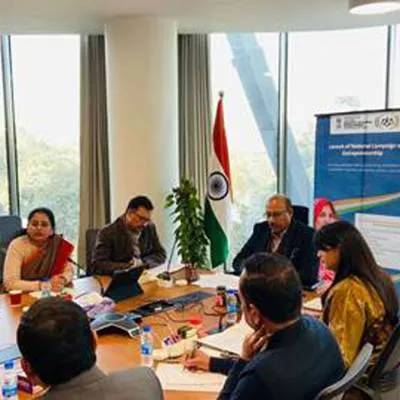
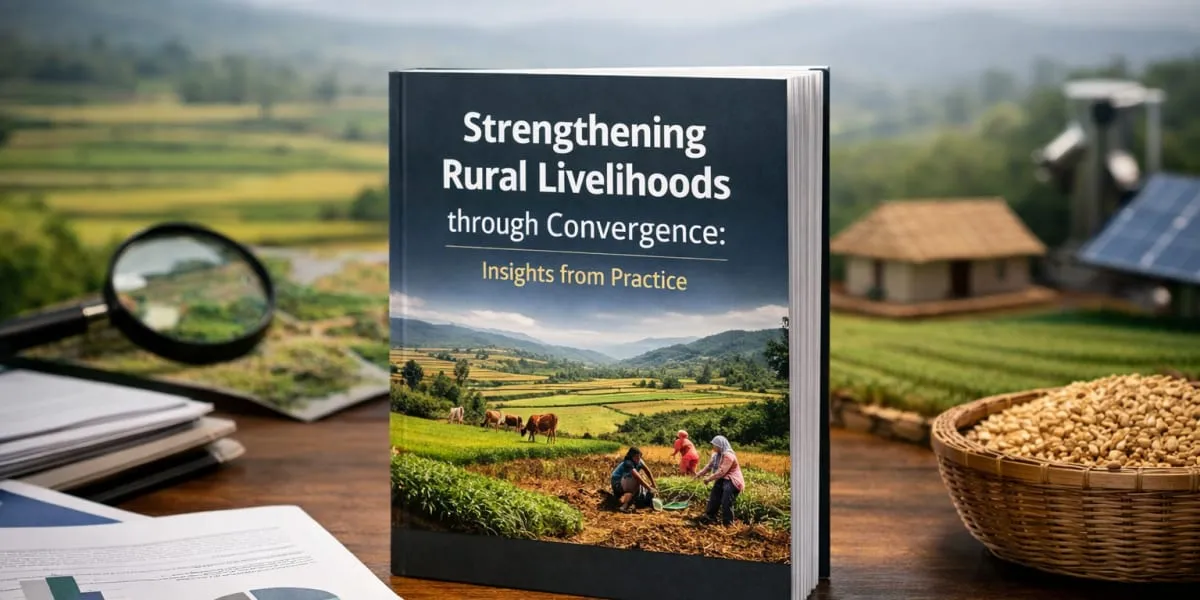
The Deendayal Antyodaya Yojana–National Rural Livelihoods Mission (DAY-NRLM), under the Ministry of Rural Development, together with PRADAN and State Rural Livelihoods Missions and with support from Axis Bank Foundation, launched a National Compendium titled Strengthening Rural Livelihoods through Convergence: Insights from Practice. The compendium is the outcome of a nationwide write-shop process involving 24 SRLMs and presents 67 curated stories from 19 states that document field experiences of convergence. The narratives show how community institutions and cross-sector partnerships are enabling sustainable livelihood opportunities for rural women.

The release was accompanied by remarks from senior officials who described convergence as central to achieving sustainable outcomes and noted sustained efforts to align ministries, states and programmes despite inherent complexities. Officials underlined the need to strengthen institutional leadership for convergence through emerging platforms such as the rural stack and called for replication of successful state-level models. They also highlighted the importance of strategic investments in Cluster Level Federations (CLFs) as self-sustaining institutions capable of driving local area development.

Officials recalled that DAY-NRLM has mobilised nearly 100 million (mn) women and has facilitated bank linkages amounting to Rs12 trillion (tn). The NRLM 2.0 strategy seeks to scale the Lakhpati Didi model to 60 million (mn) women through intensive grassroots support driven by institutions of the poor supported by professionals. Speakers emphasised that sustainable livelihoods rest on three pillars—programmes, institutions and convergence—and urged treating convergence as a core strategy rather than a conceptual aim.

A structured panel discussion addressed scaling livelihood prototypes and the role of social capital in effective scheme utilisation, while proponents outlined frameworks to expand convergence, including a six point approach covering income diversification, infrastructure and institutional integration. State representatives shared successful convergence models from Jharkhand and Assam and affirmed ongoing efforts to compile field experiences from farm and non-farm interventions. The event concluded with a collective commitment to deepen convergence, scale proven models, strengthen partnerships and enhance monitoring and learning systems to ensure inclusive and sustainable rural livelihoods.

The Deendayal Antyodaya Yojana–National Rural Livelihoods Mission (DAY-NRLM), under the Ministry of Rural Development, together with PRADAN and State Rural Livelihoods Missions and with support from Axis Bank Foundation, launched a National Compendium titled Strengthening Rural Livelihoods through Convergence: Insights from Practice. The compendium is the outcome of a nationwide write-shop process involving 24 SRLMs and presents 67 curated stories from 19 states that document field experiences of convergence. The narratives show how community institutions and cross-sector partnerships are enabling sustainable livelihood opportunities for rural women. The release was accompanied by remarks from senior officials who described convergence as central to achieving sustainable outcomes and noted sustained efforts to align ministries, states and programmes despite inherent complexities. Officials underlined the need to strengthen institutional leadership for convergence through emerging platforms such as the rural stack and called for replication of successful state-level models. They also highlighted the importance of strategic investments in Cluster Level Federations (CLFs) as self-sustaining institutions capable of driving local area development. Officials recalled that DAY-NRLM has mobilised nearly 100 million (mn) women and has facilitated bank linkages amounting to Rs12 trillion (tn). The NRLM 2.0 strategy seeks to scale the Lakhpati Didi model to 60 million (mn) women through intensive grassroots support driven by institutions of the poor supported by professionals. Speakers emphasised that sustainable livelihoods rest on three pillars—programmes, institutions and convergence—and urged treating convergence as a core strategy rather than a conceptual aim. A structured panel discussion addressed scaling livelihood prototypes and the role of social capital in effective scheme utilisation, while proponents outlined frameworks to expand convergence, including a six point approach covering income diversification, infrastructure and institutional integration. State representatives shared successful convergence models from Jharkhand and Assam and affirmed ongoing efforts to compile field experiences from farm and non-farm interventions. The event concluded with a collective commitment to deepen convergence, scale proven models, strengthen partnerships and enhance monitoring and learning systems to ensure inclusive and sustainable rural livelihoods.

Next Story
Real Estate

North India Leads Green Building Growth Surge

North India has emerged as a major hub for green building development, with 2,475 projects spanning 2.81 billion sq ft across the National Capital Region (NCR), as highlighted at the IGBC GreenTech Summit 2026 held in New Delhi.Organised by the CII Indian Green Building Council, the summit brought together policymakers, industry leaders and technology experts to accelerate the adoption of climate technologies in the built environment.Uttar Pradesh ranked second nationally with 1,673 IGBC-registered projects covering 1.78 billion sq ft, while Delhi accounted for 794 projects spanning 0.63 billi..

Next Story
Real Estate

Yamuna Expressway Property Prices Jump Sharply in Five Years

The Yamuna Expressway has emerged as one of NCR’s strongest real estate corridors, with sharp price appreciation across both apartments and plots between 2020 and 2025, according to the latest ‘RealX Stats’ report by InvestoXpert Advisors.The report states that average apartment prices along the corridor increased from Rs 3,950 per sq ft in 2020 to Rs 10,200 per sq ft in 2025, reflecting an overall appreciation of 158.2 per cent. In 2025 alone, apartment prices rose 7.37 per cent year on year, indicating sustained end-user demand and continued investor interest.Plots and land parcels rec..

Next Story
Real Estate

Homeland, VRC Acquire Mohali Land for Mixed-Use Projects

Homeland Group, in collaboration with VRC, has acquired two prime mixed land-use parcels in Mohali through a GMADA e-auction, marking some of the highest bids recorded for such developments. A 5.5-acre parcel near the Chandigarh border was acquired at approximately Rs 700 million per acre, generating around Rs 4 billion for the Greater Mohali Area Development Authority. Additionally, a 13-acre site in Sector 62 was secured at about Rs 470 million per acre, with the total deal value exceeding Rs 6 billion. The projects will be developed jointly, featuring premium residential apartments integr..

Advertisement

Subscribe to Our Newsletter

Get daily newsletters around different themes from Construction world.

STAY CONNECTED

Advertisement

Advertisement

Advertisement