Delhi To Modernise Streetlights On Monthly Instalment Model
ECONOMY & POLICY

Delhi To Modernise Streetlights On Monthly Instalment Model

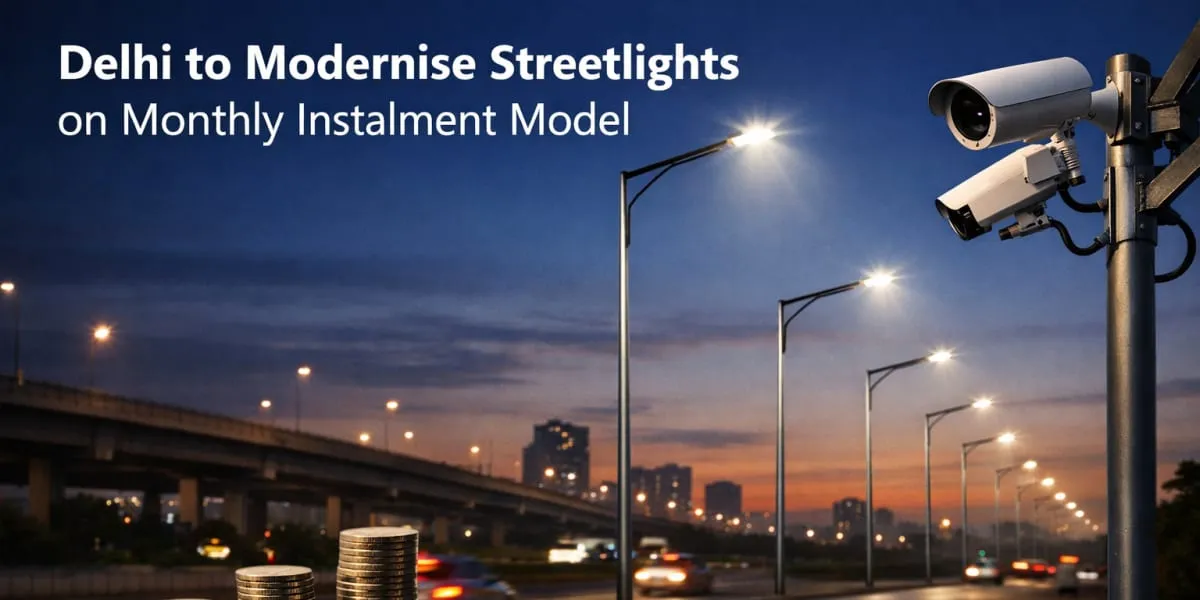
The Delhi government will fund modernisation of the streetlight network and expansion of the CCTV camera network through a monthly instalment-based payment model tied to performance rather than upfront payments. The plan covers the conversion of around 93,000 streetlights on main roads at a cost of Rs 4.73 billion (bn). Payments will be divided into 60 instalments over five years, the public works department minister said.

Under the scheme the installing agency will assume responsibility for maintenance and must submit monthly reports on functionality and removal of dark spots. Maintenance will not be a separate provision and a penalty of Rs 2,000 per day will apply if operators fail to repair lights within a fixed time. The model aims to reduce service lapses and enhance accountability.

Illumination levels of 10–15 LUX on many stretches will be raised to almost 40 LUX and the network will be remotely controlled from a central control room to allow dimming during low use hours and cut power consumption. The minister estimated overall savings over the five year period were likely to be around Rs 3 billion (bn). A control and command centre will be set up at PWD headquarters at ITO to monitor streetlight status in real time.

The project will include dimmable and individually controlled streetlights with the capacity to synchronise blinking for special occasions, officials said. Model tender documents are being prepared to standardise conditions, restrict participation to reputed firms and improve implementation across entire zones rather than piecemeal contracts.

A similar instalment approach will be used for a phased CCTV replacement and expansion, beginning with 50,000 cameras in the first year and further annual quotas thereafter. The department has installed around 280,000 cameras across the city, with nearly half expected to reach the end of operational life by next year, and an additional 50,000 new cameras will be added alongside replacements. Relevant departments will float tenders on a zonal basis to streamline procurement.

"Join industry leaders at RAHSTA Expo, India's premier platform for roads, highways and traffic infrastructure. Register now to explore innovations, network with experts and shape the future of mobility."

The Delhi government will fund modernisation of the streetlight network and expansion of the CCTV camera network through a monthly instalment-based payment model tied to performance rather than upfront payments. The plan covers the conversion of around 93,000 streetlights on main roads at a cost of Rs 4.73 billion (bn). Payments will be divided into 60 instalments over five years, the public works department minister said. Under the scheme the installing agency will assume responsibility for maintenance and must submit monthly reports on functionality and removal of dark spots. Maintenance will not be a separate provision and a penalty of Rs 2,000 per day will apply if operators fail to repair lights within a fixed time. The model aims to reduce service lapses and enhance accountability. Illumination levels of 10–15 LUX on many stretches will be raised to almost 40 LUX and the network will be remotely controlled from a central control room to allow dimming during low use hours and cut power consumption. The minister estimated overall savings over the five year period were likely to be around Rs 3 billion (bn). A control and command centre will be set up at PWD headquarters at ITO to monitor streetlight status in real time. The project will include dimmable and individually controlled streetlights with the capacity to synchronise blinking for special occasions, officials said. Model tender documents are being prepared to standardise conditions, restrict participation to reputed firms and improve implementation across entire zones rather than piecemeal contracts. A similar instalment approach will be used for a phased CCTV replacement and expansion, beginning with 50,000 cameras in the first year and further annual quotas thereafter. The department has installed around 280,000 cameras across the city, with nearly half expected to reach the end of operational life by next year, and an additional 50,000 new cameras will be added alongside replacements. Relevant departments will float tenders on a zonal basis to streamline procurement.

Next Story
Infrastructure Energy

Centre Prioritising Energy Security With Coal Gasification

Union minister for Coal and Mines G Kishan Reddy said the Centre is prioritising energy security through a strategic shift to coal gasification and has announced incentives totalling Rs 460 billion (bn) to support the effort. He said more than 35 companies will start coal gasification activities in India within two months and that the government is encouraging firms that bring technology to close the domestic technology gap. The minister described the initiative as aimed at reducing import dependence and developing indigenous capacity. India has the fifth-largest coal reserve in the world, and..

Next Story
Infrastructure Urban

BHEL and Coal India Invest Rs 250 bn in Odisha Gasification

Bharat Heavy Electricals (BHEL) and Coal India (CIL) are jointly investing Rs 250 billion in a coal gasification project in Odisha, with the Prime Minister laying the foundation stone in Jharsuguda. Union Coal and Mines Minister G Kishan Reddy described the initiative as a transformative shift in coal utilisation that will open industrial avenues for the state. The project moves coal beyond conventional power generation to industrial feedstocks. Coal gasification will convert coal into synthesis gas, a versatile feedstock for chemicals, fertilisers and synthetic fuels, and the technology is ex..

Next Story
Infrastructure Energy

BCCL Hands Over Dugdha Coal Washery To JSW Steel

Bharat Coking Coal has handed over the Dugdha Coal Washery to JSW Steel, marking the first coal washery asset monetisation under the Ministry of Coal's asset monetisation programme. The handover took place in the presence of senior officials from Bharat Coking Coal Ltd, JSW Steel and JSW Energy. The washery has a capacity of two million tonnes per annum (mn t per annum), and its transfer is intended to introduce private sector practices into coal beneficiation operations. The monetisation is aimed at modernising coal sector assets, improving operational efficiency and enhancing resource utilis..

Advertisement

Subscribe to Our Newsletter

Get daily newsletters around different themes from Construction world.

STAY CONNECTED

Advertisement

Advertisement

Advertisement