

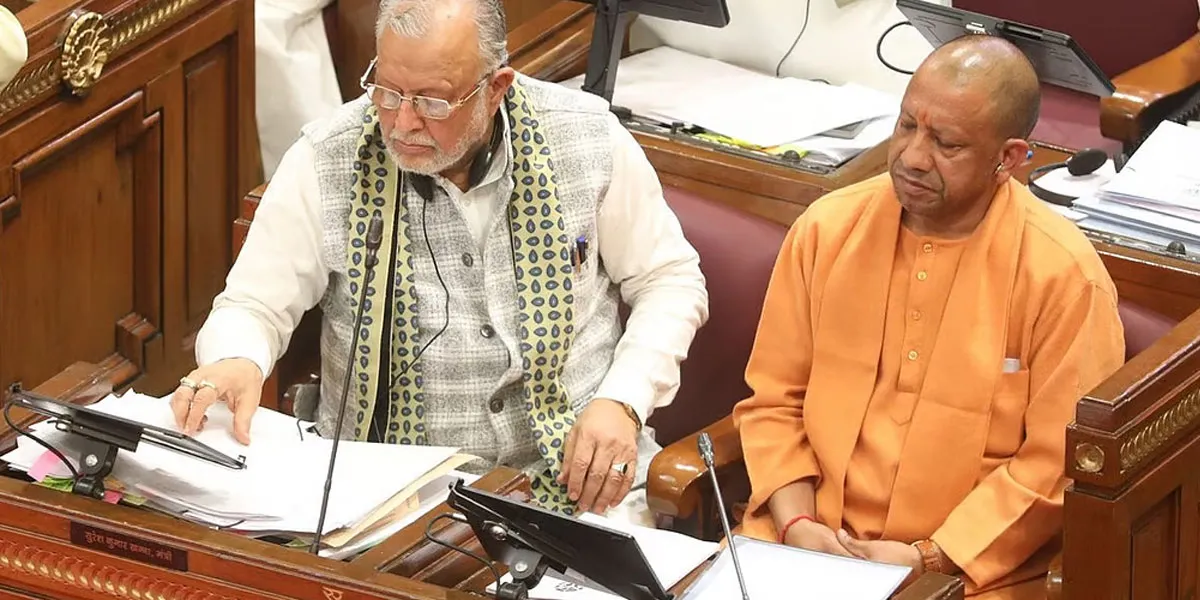




Delhi to Roll Out DARPAN 2.0 Governance Dashboard
ECONOMY & POLICY

Delhi to Roll Out DARPAN 2.0 Governance Dashboard

In a move aimed at strengthening transparent and efficient governance, the Delhi government plans to roll out DARPAN 2.0, an advanced unified performance-monitoring dashboard developed by the National Informatics Centre under the Ministry of Electronics and Information Technology, according to an official statement issued on Monday. Designed as a real-time, analytics-driven platform, DARPAN 2.0 will provide decision-makers and government departments with a consolidated view of key schemes and public services, enabling faster and evidence-based decision-making. The platform seeks to address the long-standing issue of siloed and inconsistent data by integrating multiple management information systems into a single, visually intuitive interface.

DARPAN 2.0 will feature department-wise Key Performance Indicators, live progress tracking, early-warning indicators and comparative analytics, aimed at improving accountability and inter-departmental coordination. The existing centralised DARPAN model will be customised for Delhi, with priority schemes integrated through secure application programming interfaces. The rollout is planned in phases over 12–16 weeks, followed by comprehensive training for nodal officers across all departments.

Commenting on the initiative, Delhi IT Minister Pankaj Kumar Singh said DARPAN 2.0 represents a significant step towards accountable and data-driven governance in the national capital. He noted that by breaking down data silos and providing real-time insights into departmental performance, the platform would empower decision-makers to act swiftly and enhance service delivery. Under the guidance of Chief Minister Rekha Gupta, he added, the government will use the tool to ensure that welfare schemes reach citizens in an effective and transparent manner. The key features of DARPAN 2.0 include real-time performance insights to improve governance, faster decision-making through integrated analytics, stronger cross-departmental coordination, and enhanced accountability via KPI-based monitoring and early identification of implementation bottlenecks.

In a move aimed at strengthening transparent and efficient governance, the Delhi government plans to roll out DARPAN 2.0, an advanced unified performance-monitoring dashboard developed by the National Informatics Centre under the Ministry of Electronics and Information Technology, according to an official statement issued on Monday. Designed as a real-time, analytics-driven platform, DARPAN 2.0 will provide decision-makers and government departments with a consolidated view of key schemes and public services, enabling faster and evidence-based decision-making. The platform seeks to address the long-standing issue of siloed and inconsistent data by integrating multiple management information systems into a single, visually intuitive interface. DARPAN 2.0 will feature department-wise Key Performance Indicators, live progress tracking, early-warning indicators and comparative analytics, aimed at improving accountability and inter-departmental coordination. The existing centralised DARPAN model will be customised for Delhi, with priority schemes integrated through secure application programming interfaces. The rollout is planned in phases over 12–16 weeks, followed by comprehensive training for nodal officers across all departments. Commenting on the initiative, Delhi IT Minister Pankaj Kumar Singh said DARPAN 2.0 represents a significant step towards accountable and data-driven governance in the national capital. He noted that by breaking down data silos and providing real-time insights into departmental performance, the platform would empower decision-makers to act swiftly and enhance service delivery. Under the guidance of Chief Minister Rekha Gupta, he added, the government will use the tool to ensure that welfare schemes reach citizens in an effective and transparent manner. The key features of DARPAN 2.0 include real-time performance insights to improve governance, faster decision-making through integrated analytics, stronger cross-departmental coordination, and enhanced accountability via KPI-based monitoring and early identification of implementation bottlenecks.

Next Story
Infrastructure Transport

NHAI gets SEBI nod for Raajmarg Infra InvIT

The National Highways Authority of India (NHAI) has received approval from the Securities and Exchange Board of India for its sponsored Raajmarg Infra Investment Trust (RIIT) to operate as a public Infrastructure Investment Trust (InvIT), marking a key milestone in its asset monetisation programme.The public InvIT is aimed at unlocking value from national highway assets while creating a long-term investment instrument targeted primarily at retail and domestic investors. NHAI said the move would broaden public participation in India’s highway infrastructure growth story and support sustainabl..

Next Story
Infrastructure Transport

Great Nicobar Airport to Boost Defence and Tourism

The government has begun work on a new airport at the southernmost tip of India on Great Nicobar Island, a move expected to significantly strengthen India’s defence preparedness while accelerating tourism-led development in the region, according to official documents accessed by ANI. The proposed airport will enable operations of larger military aircraft and sharply cut response times for defence forces in the Indian Ocean Region, a critical consideration for national security. The nearest major airport, Veer Savarkar International Airport in Port Blair, is located more than 500 kilometres ..

Next Story
Infrastructure Transport

Navi Mumbai Airport Opens for Commercial Operations

After decades of planning, the greenfield Navi Mumbai International Airport (NMIA) is set to commence commercial operations from Thursday, a milestone expected to cut travel time, boost tourism and attract large-scale investment across the Mumbai Metropolitan Region. The City and Industrial Development Corporation (CIDCO), the implementing agency for the project, said the airport will handle 30 air traffic movements, including arrivals and departures, on its first day of operations. The launch is expected to significantly ease congestion at the existing Mumbai international airport while esta..

Advertisement

Subscribe to Our Newsletter

Get daily newsletters around different themes from Construction world.

STAY CONNECTED

Advertisement

Advertisement

Advertisement

Advertisement

Open In App














