Hitachi's €1.7B Thales GTS purchase approved with conditions
RAILWAYS & METRO RAIL

Hitachi's €1.7B Thales GTS purchase approved with conditions

The Competition and Markets Authority (CMA) has reached a final decision regarding Hitachi's proposed acquisition of Thales Ground Transportation (GTS), valued at Rs.1.7 billion. This decision comes after an extensive and thorough investigation into the implications of the merger.

Signalling systems play a pivotal role in railway infrastructure, as they are responsible for ensuring passenger safety, controlling train movements, and optimising capacity on railway networks. Both Hitachi Rail Ltd (Hitachi) and Thales SA's Ground Transportation business (Thales GTS) are prominent global suppliers of signalling systems for both mainline and urban railway networks.

The CMA's independent Inquiry Group has determined that the merger could potentially give rise to competition concerns, particularly in the domain of digital mainline signalling systems. These systems are increasingly integral to the operation of the country's primary railway networks. The Inquiry Group found that both Thales and Hitachi are well-positioned to supply these systems and that if the merger proceeds, there would be a limited number of credible competitors left in the market.

In response to the CMA's findings, Hitachi has proposed to divest its existing mainline signalling business in the United Kingdom, France, and Germany. This divestiture will require approval from the Group, and it will also necessitate the agreement of Hitachi's key customers in these countries for the transfer of relevant signalling contracts. The CMA views this proposed remedy as effective and proportionate, aimed at preserving competition and ensuring that customers, including Network Rail, are not adversely affected by the merger.

Crucially, based on newly revealed evidence that surfaced after the CMA's initial provisional findings, the Inquiry Group no longer holds competition concerns regarding the supply of Communications Based Train Control (CBTC) signalling systems. These systems are commonly used in urban rail networks such as the London Underground. The Group's analysis revealed that while Thales plays a vital role as a supplier to the London Underground, which happens to be the only urban rail network in Great Britain with plans for new CBTC projects in the foreseeable future, Hitachi would be unlikely to meet TfL's stringent requirements for these projects.

Renewing signalling systems on the London Underground poses unique challenges compared to most other metro systems due to the network's size, complexity, and age. Successful execution demands suppliers with substantial expertise in delivering CBTC projects on similarly vast, intricate networks. The Inquiry Group has concluded that Hitachi is unlikely to have attained the necessary level of experience by the time of the next significant TfL signalling tenders.

Stuart McIntosh, the chair of the independent Inquiry Group, emphasised the importance of effective signalling for safe and reliable rail travel. He highlighted that the merger would not impede competition in providing CBTC signalling systems, especially those required on the London Underground. However, when it comes to digital mainline signalling, competition concerns exist, and Hitachi's proposed divestiture aims to address these concerns by ensuring competition, cost-efficiency, high-quality service, and innovation remain paramount.

The Competition and Markets Authority (CMA) has reached a final decision regarding Hitachi's proposed acquisition of Thales Ground Transportation (GTS), valued at Rs.1.7 billion. This decision comes after an extensive and thorough investigation into the implications of the merger. Signalling systems play a pivotal role in railway infrastructure, as they are responsible for ensuring passenger safety, controlling train movements, and optimising capacity on railway networks. Both Hitachi Rail Ltd (Hitachi) and Thales SA's Ground Transportation business (Thales GTS) are prominent global suppliers of signalling systems for both mainline and urban railway networks. The CMA's independent Inquiry Group has determined that the merger could potentially give rise to competition concerns, particularly in the domain of digital mainline signalling systems. These systems are increasingly integral to the operation of the country's primary railway networks. The Inquiry Group found that both Thales and Hitachi are well-positioned to supply these systems and that if the merger proceeds, there would be a limited number of credible competitors left in the market. In response to the CMA's findings, Hitachi has proposed to divest its existing mainline signalling business in the United Kingdom, France, and Germany. This divestiture will require approval from the Group, and it will also necessitate the agreement of Hitachi's key customers in these countries for the transfer of relevant signalling contracts. The CMA views this proposed remedy as effective and proportionate, aimed at preserving competition and ensuring that customers, including Network Rail, are not adversely affected by the merger. Crucially, based on newly revealed evidence that surfaced after the CMA's initial provisional findings, the Inquiry Group no longer holds competition concerns regarding the supply of Communications Based Train Control (CBTC) signalling systems. These systems are commonly used in urban rail networks such as the London Underground. The Group's analysis revealed that while Thales plays a vital role as a supplier to the London Underground, which happens to be the only urban rail network in Great Britain with plans for new CBTC projects in the foreseeable future, Hitachi would be unlikely to meet TfL's stringent requirements for these projects. Renewing signalling systems on the London Underground poses unique challenges compared to most other metro systems due to the network's size, complexity, and age. Successful execution demands suppliers with substantial expertise in delivering CBTC projects on similarly vast, intricate networks. The Inquiry Group has concluded that Hitachi is unlikely to have attained the necessary level of experience by the time of the next significant TfL signalling tenders. Stuart McIntosh, the chair of the independent Inquiry Group, emphasised the importance of effective signalling for safe and reliable rail travel. He highlighted that the merger would not impede competition in providing CBTC signalling systems, especially those required on the London Underground. However, when it comes to digital mainline signalling, competition concerns exist, and Hitachi's proposed divestiture aims to address these concerns by ensuring competition, cost-efficiency, high-quality service, and innovation remain paramount.

Next Story
Infrastructure Urban

Meghalaya And Assam Hold Talks To End Transport Stoppages In Garo Hills

Meghalaya and Assam have opened talks aimed at ending recent stoppages of commodity transport in the Garo Hills, officials said. The deputy chief minister, in charge of home affairs, reported that both state governments are coordinating to resolve disruptions and to restore normal movement of goods. He acknowledged that misunderstandings may have contributed to the incidents and that clarification between administrative units is under way. The discussions are intended to produce practical arrangements that will allow consignments to move without hindrance while respecting local procedures. The..
Next Story
Infrastructure Transport

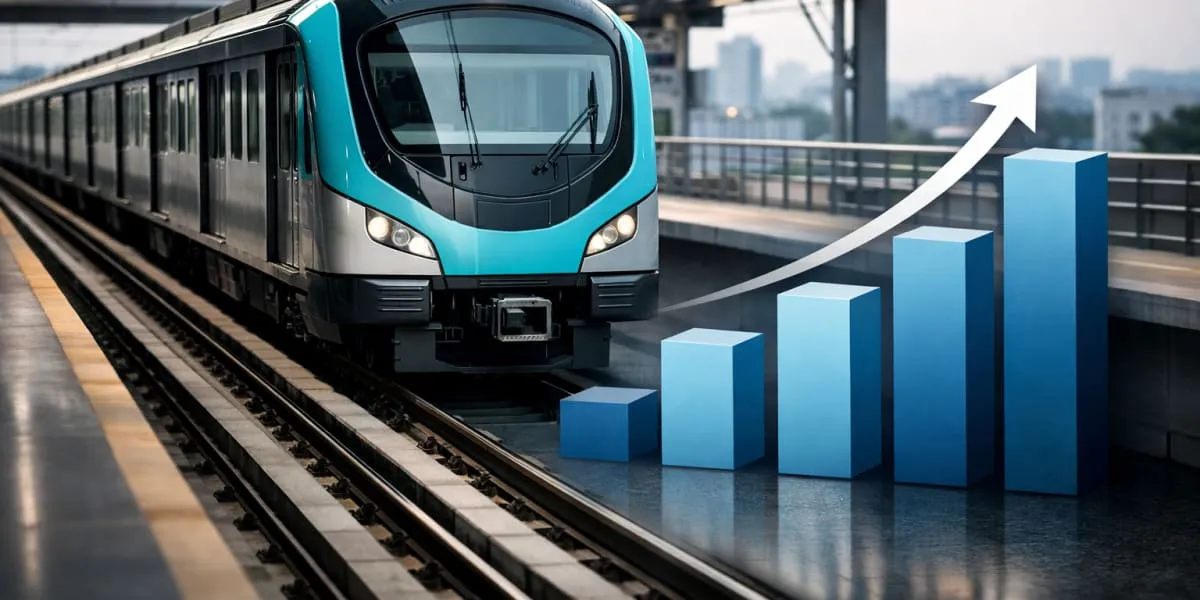
Kochi Metro Records 1.375 mn Rise In Passengers In FY26

Kochi Metro recorded a marginal rise in ridership in the financial year 2025-26, carrying 1.375 mn more passengers than in the previous year. The service carried 36.8 million (mn) passengers in 2025-26 compared with 35.5 mn in 2024-25, representing a year-on-year increase of 3.9 per cent. The growth was described as distributed rather than concentrated in isolated spikes. A month-wise analysis shows steady gains across quarters. In the first quarter, ridership increased from 8.57 mn to 8.84 mn, while the second quarter rose from 9.13 mn to 9.51 mn. These trends indicated broad-based improvemen..
Next Story
Infrastructure Transport

Ghaziabad Plans 16km Metro Link To Delhi Via Hindon Airport

Ghaziabad authorities are pursuing a 16 km metro link to Delhi that will run via Hindon Airport, and a detailed project report is under way. The plan is intended to improve connectivity between Ghaziabad and the national capital and to provide an interchange with the airport. Officials said the project is being studied to assess alignments, station locations and cost estimates ahead of formal approvals and tendering. The announcement follows the inauguration of the Delhi?Faridabad metro extension, which will offer hassle free travel for around 0.2 mn daily commuters between the national capita..

Advertisement

Subscribe to Our Newsletter

Get daily newsletters around different themes from Construction world.

STAY CONNECTED

Advertisement

Advertisement

Advertisement