HPERC Proposes Digital Reforms To Simplify Rooftop Solar Connections
ECONOMY & POLICY

HPERC Proposes Digital Reforms To Simplify Rooftop Solar Connections

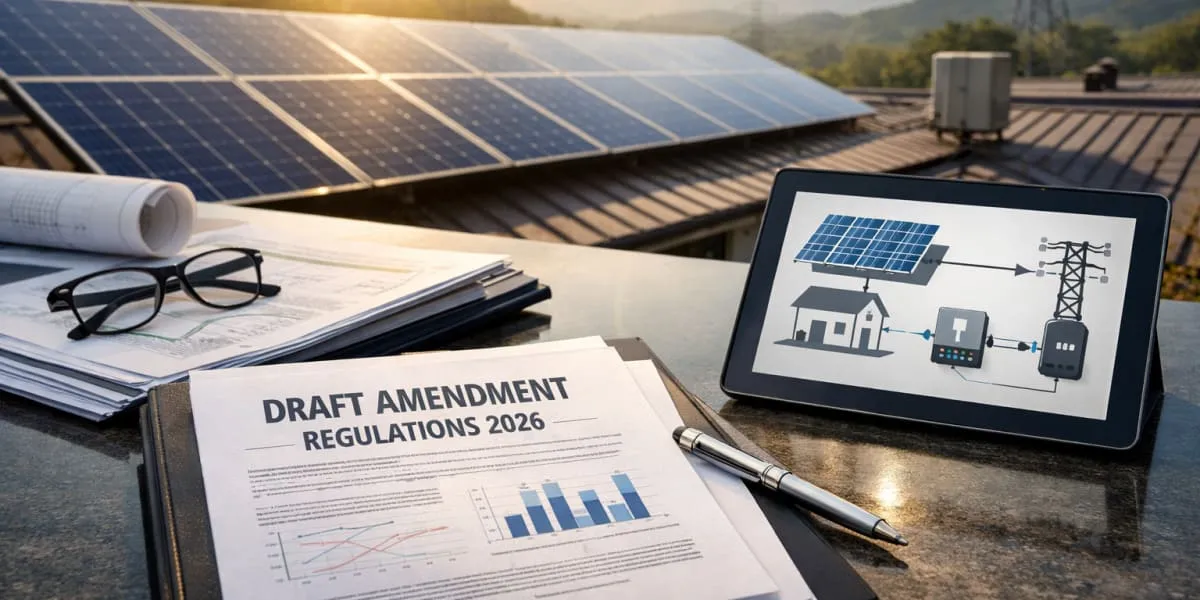
The Himachal Pradesh Electricity Regulatory Commission (HPERC) has circulated a draft notification dated July 14, 2026 proposing the HPERC (Rooftop Solar Photovoltaic Grid Interactive System) (Fourth Amendment) Regulations, 2026 to simplify rooftop solar installations. The commission framed the amendments to reduce paperwork, streamline approval procedures and promote faster adoption of rooftop systems among residential consumers across the state. The proposal is presented as part of broader efforts to modernise application workflows and bring greater transparency to connection processes.

The draft explicitly aligns with the central government scheme PM Surya Ghar: Muft Bijli Yojana, approved in February 2024, and notes that the Himachal Pradesh State Electricity Board Limited (HPSEBL) has been designated as the state implementation agency. The document also follows an advisory issued by the Union Ministry of Power in August 2025 that encouraged distribution utilities to dispense with separate physical Net Metering Agreements and adopt digital agreements integrated into online application portals. The commission described the measures as intended to improve user convenience and reduce administrative friction.

A key amendment targets Regulation seven of the existing 2015 rooftop solar regulations by enabling eligible consumers to submit applications through multiple channels, including online portals, email, postal services or direct hand delivery. Despite the availability of physical submission options, the draft requires all distribution licensees to process applications electronically through a web based platform, with utilities obliged to upload any physical application into the system. The proposed digital workflow is designed to enable application tracking and better record keeping while improving accessibility for urban and rural applicants alike.

The draft further proposes the use of digital Solar Metering Connection Agreements completed via central or state government portals to replace paper based accords and reduce administrative delays. HPERC has published the draft on its official website and invited comments to the Secretary of the Commission at Shimla within 30 days from publication in the Himachal Pradesh Rajpatra. Following the consultation period the commission will review submissions and finalise the regulations before bringing them into force, with the aim of strengthening digital governance and supporting elevated rooftop solar participation across the state.

The Himachal Pradesh Electricity Regulatory Commission (HPERC) has circulated a draft notification dated July 14, 2026 proposing the HPERC (Rooftop Solar Photovoltaic Grid Interactive System) (Fourth Amendment) Regulations, 2026 to simplify rooftop solar installations. The commission framed the amendments to reduce paperwork, streamline approval procedures and promote faster adoption of rooftop systems among residential consumers across the state. The proposal is presented as part of broader efforts to modernise application workflows and bring greater transparency to connection processes. The draft explicitly aligns with the central government scheme PM Surya Ghar: Muft Bijli Yojana, approved in February 2024, and notes that the Himachal Pradesh State Electricity Board Limited (HPSEBL) has been designated as the state implementation agency. The document also follows an advisory issued by the Union Ministry of Power in August 2025 that encouraged distribution utilities to dispense with separate physical Net Metering Agreements and adopt digital agreements integrated into online application portals. The commission described the measures as intended to improve user convenience and reduce administrative friction. A key amendment targets Regulation seven of the existing 2015 rooftop solar regulations by enabling eligible consumers to submit applications through multiple channels, including online portals, email, postal services or direct hand delivery. Despite the availability of physical submission options, the draft requires all distribution licensees to process applications electronically through a web based platform, with utilities obliged to upload any physical application into the system. The proposed digital workflow is designed to enable application tracking and better record keeping while improving accessibility for urban and rural applicants alike. The draft further proposes the use of digital Solar Metering Connection Agreements completed via central or state government portals to replace paper based accords and reduce administrative delays. HPERC has published the draft on its official website and invited comments to the Secretary of the Commission at Shimla within 30 days from publication in the Himachal Pradesh Rajpatra. Following the consultation period the commission will review submissions and finalise the regulations before bringing them into force, with the aim of strengthening digital governance and supporting elevated rooftop solar participation across the state.

Related Stories

Gold Stories

Next Story
Infrastructure Urban

KONE Opens India's First Digital Experience Centre in Pune

KONE, a global elevator and escalator manufacturer, has inaugurated its first Digital Experience Centre (DEC) in India, located in Pune. The facility aims to showcase how artificial intelligence (AI), connectivity and data-driven technologies can enhance customer experiences and improve building operations.The centre was inaugurated by Jussi Herlin, Executive Vice Chair, KONE Corporation; Philippe Delorme, President and CEO, KONE; and Nandan Nilekani, Co-founder and Chairman of the Board, Infosys.Designed as an interactive customer environment, the facility demonstrates digital solutions cover..

Next Story
Infrastructure Urban

CII GreenCo Launches Circularity Guidelines for Indian Industry

The Confederation of Indian Industry (CII) GreenCo Council has launched the CII GreenCo Circularity Guidelines – Pilot Version at the 17th CII GreenCo Waste & Resource Management Summit 2026 in Chennai. The initiative aims to strengthen resource efficiency, waste reduction and circular economy practices across Indian manufacturing and process industries.The guidelines introduce a structured framework with circularity indices covering raw materials, consumables, packaging and other resource inputs. These indicators will help industries assess existing practices, identify opportunities to ..

Next Story
Infrastructure Energy

Global Electronics Association Launches IPC-1783-CO2E Standard

The Global Electronics Association has introduced IPC-1783-CO2E, a new international standard aimed at improving consistency, transparency and comparability in product carbon footprint reporting across the electronics manufacturing industry.The standard, titled International Standard for Data Collection and Reporting of CO2 Equivalent (CO2e) Emissions for the Electronics Manufacturing Supply Chain, provides industry-specific guidance for collecting, estimating and reporting carbon emissions data.With increasing regulatory requirements and customer expectations, electronics manufacturers face c..

Advertisement

Subscribe to Our Newsletter

Get daily newsletters around different themes from Construction world.

STAY CONNECTED

Advertisement

SPECIAL OFFER
QR Code