India Must Strengthen Grid, Battery Storage for Clean Energy Goals
ECONOMY & POLICY

India Must Strengthen Grid, Battery Storage for Clean Energy Goals

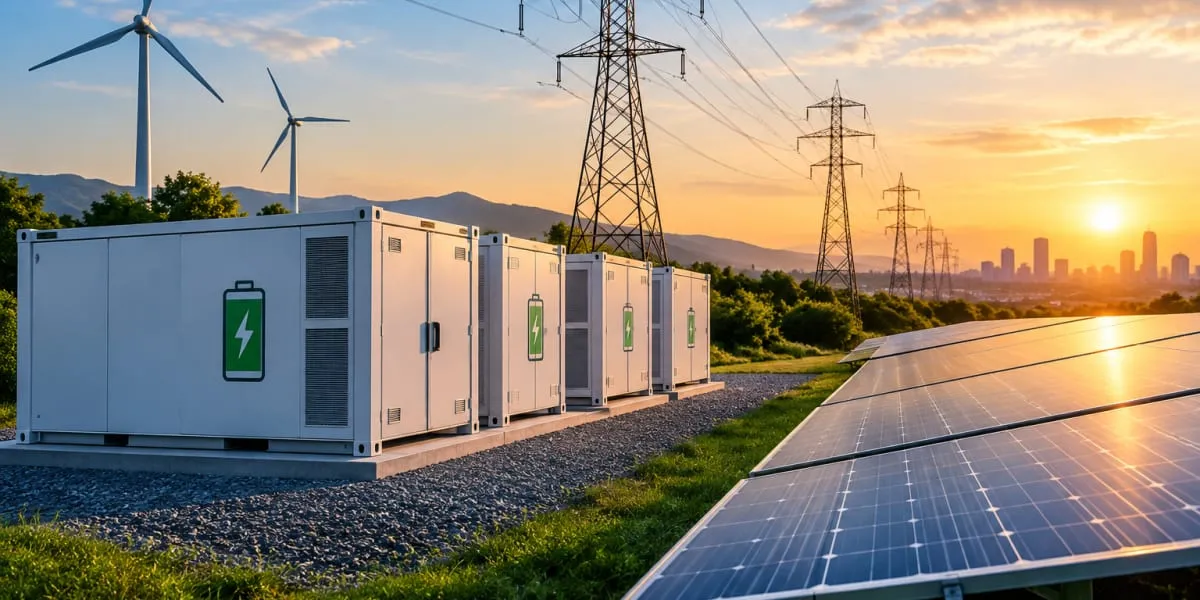
India must strengthen its electricity grid infrastructure, expand battery storage capacity and ensure the commercial viability of clean power to achieve its climate goals, industry body ASSOCHAM said ahead of the COP31 climate summit in Türkiye, scheduled for November 9-20.

ASSOCHAM said India had made significant progress in expanding non-fossil fuel-based power capacity, but greater investment in supporting infrastructure would be essential to ensure reliable electricity supply. The industry body said clean energy capacity needed to be connected to the grid, supported by storage and made commercially viable rather than simply installed.

India’s non-fossil fuel-based power capacity reached 300.5 gigawatts (GW) in July 2026 after a record addition of 55.29 GW during FY2025-26. Solar power accounted for 44.6 GW of the addition, while non-fossil sources represented more than 54 per cent of the country’s total installed electricity capacity.

This share has surpassed India’s 2030 target of 50 per cent five years ahead of schedule. ASSOCHAM said the country’s clean energy transition would require an estimated USD 2.5 tn to achieve its 2030 climate goals, while battery storage requirements were projected to rise from 37 GWh by 2027 to 236 GWh by 2031-32.

The industry body is submitting a report titled From Pledges to Projects: India’s Agenda for COP31 to the Prime Minister’s Office, NITI Aayog and relevant climate-action groups. The report contains recommendations to mobilise climate finance, accelerate industrial decarbonisation and convert India’s climate commitments into investment and implementation.

ASSOCHAM will also advance industry engagement through an Industry Task Force, a Business Climate Investment Agenda and representations to ministries. The initiatives are intended to support clean energy investment and implementation, with industry and government working together to translate installed capacity into reliable electricity and measurable climate action.

India must strengthen its electricity grid infrastructure, expand battery storage capacity and ensure the commercial viability of clean power to achieve its climate goals, industry body ASSOCHAM said ahead of the COP31 climate summit in Türkiye, scheduled for November 9-20. ASSOCHAM said India had made significant progress in expanding non-fossil fuel-based power capacity, but greater investment in supporting infrastructure would be essential to ensure reliable electricity supply. The industry body said clean energy capacity needed to be connected to the grid, supported by storage and made commercially viable rather than simply installed. India’s non-fossil fuel-based power capacity reached 300.5 gigawatts (GW) in July 2026 after a record addition of 55.29 GW during FY2025-26. Solar power accounted for 44.6 GW of the addition, while non-fossil sources represented more than 54 per cent of the country’s total installed electricity capacity. This share has surpassed India’s 2030 target of 50 per cent five years ahead of schedule. ASSOCHAM said the country’s clean energy transition would require an estimated USD 2.5 tn to achieve its 2030 climate goals, while battery storage requirements were projected to rise from 37 GWh by 2027 to 236 GWh by 2031-32. The industry body is submitting a report titled From Pledges to Projects: India’s Agenda for COP31 to the Prime Minister’s Office, NITI Aayog and relevant climate-action groups. The report contains recommendations to mobilise climate finance, accelerate industrial decarbonisation and convert India’s climate commitments into investment and implementation. ASSOCHAM will also advance industry engagement through an Industry Task Force, a Business Climate Investment Agenda and representations to ministries. The initiatives are intended to support clean energy investment and implementation, with industry and government working together to translate installed capacity into reliable electricity and measurable climate action.

Related Stories

Gold Stories

Next Story
Infrastructure Urban

Jupiter Wagons Wins Rs. 3.24 bn ACT2 Wagon Orders from Private Firms

Jupiter Wagons has secured private-sector orders worth more than Rs. 3.24 bn from GATX India and Chetak International for its ACT2 automobile carrier wagons. The company announced the orders on 2 November 2026, saying the contracts would strengthen its business with private wagon-leasing and logistics operators. GATX India has issued a Letter of Intent (LOI) for the manufacture and supply of 10 rakes comprising 270 ACT2 wagons. The LOI is valued at Rs. 2.15 bn and covers the production and delivery of the company’s new-design automobile carrier platform. Chetak International has separately p..

Next Story
Infrastructure Urban

Tata Motors Takes Control of Iveco with 89.42 Per Cent Stake

Tata Motors has taken control of Italian commercial-vehicle maker Iveco after acquiring an 89.42 per cent stake for approximately €3.43 bn, or Rs. 363.87 bn. The transaction gives India’s largest commercial-vehicle manufacturer control of a European business with annual revenue of Rs. 1.42 tn, while shifting attention to integration, cash-flow generation and repayment of acquisition debt. TML CV Holdings B.V., Tata Motors’ indirect wholly owned subsidiary, acquired 238.16 mn common shares at €14.40 apiece. The holding represents 89.42 per cent of Iveco’s common share capital, excludi..

Next Story
Building Material

Ambuja Cements to Invest Rs. 145 bn to Raise Capacity by FY30

Ambuja Cements will invest Rs. 145 bn to expand its cement capacity to 155 mn tonnes per annum by fiscal 2030. The planned investment, equivalent to $1.53 bn, will increase production capacity from the company’s current level of 113.5 MTPA. The company expects capacity to reach 119 MTPA by March 2027, with the wider expansion programme adding facilities across several major cement markets. The investment is intended to support the company’s long-term growth and strengthen its manufacturing network in India. The new capacity will be developed across Assam, Bihar, Jharkhand, Gujarat, Maharas..

Advertisement

Subscribe to Our Newsletter

Get daily newsletters around different themes from Construction world.

STAY CONNECTED

Advertisement

SPECIAL OFFER
QR Code