India-UK Strengthen Ties in Telecom, AI & Space Collaboration
ECONOMY & POLICY

India-UK Strengthen Ties in Telecom, AI & Space Collaboration

India’s Secretary (Telecom) visited the United Kingdom to engage with the Department of Science, Innovation and Technology (DSIT) and explore collaboration opportunities in next-generation telecommunications, artificial intelligence (AI), and space technology. The visit reinforced Indo-UK partnerships in these cutting-edge fields.

During the visit, the Secretary met with Mr. Chris Johnson, National Scientific Adviser, and Mr. Dave Smith, National Technology Adviser of DSIT. Discussions focused on emerging technologies, including 5G, 6G, and digital infrastructure security. Additionally, the Secretary met Mr. Geoff Huggins, Director of the Digital Directorate, Government of Scotland, to discuss telecom security, digital transformation, and innovation in telecom technologies.

Federated Telecom Hubs & AI Innovations The Secretary toured one of the six Federated Telecom Hubs (FTH) in the UK, specialising in Cloud and Distributed Computing (CHEDDAR). This hub spearheads research in 6G distributed cloud, AI for 6G, green 6G, and advanced sensing technologies. Furthering AI collaboration, the Secretary met Ms. Jean Innes, CEO of the Alan Turing Institute, to discuss digital twins, AI-driven telecom security, ethical AI, and fostering an AI innovation ecosystem.

Advancing 6G & Research Collaborations The Secretary also visited Scotland’s 5G Centre at the University of Strathclyde and the 6G Research Centre at the University of Glasgow’s James Watt School of Engineering. These visits focused on collaborative research in 6G innovations, future sensing technologies, technology exchange (5G stack), and student exchange programs. The Scotland 5G Centre also showcased a remote dental surgery demonstration using 6G technology.

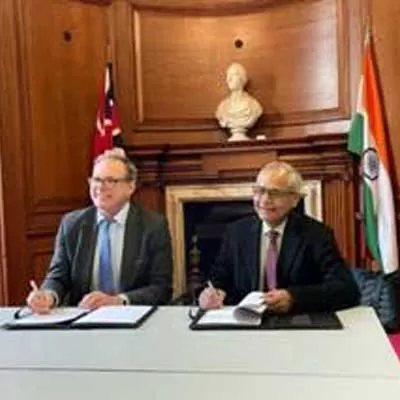
UK-India Telecom Roundtable & MoU Signing A high-profile UK-India Telecom Roundtable was organised by the High Commission of India (HCI) and UK Technology Innovation Network (UKTIN). The event, aligned with the UK-India Technology Security Initiative (TSI), included key stakeholders from DSIT, BT, Ericsson, SONIC Labs, UK Telecom Labs, TITAN, JOINER, UK Space Agency, European Space Agency, and Innovate UK.

During the roundtable, Dr. Neeraj Mittal highlighted India’s leadership in the telecom sector and rapid advancements in next-generation networks. The event culminated in discussions on strengthening mutual cooperation, technology sharing, and innovation-led partnerships.

This visit underscored the growing Indo-UK strategic collaboration in telecom, AI, and space technology, paving the way for joint innovations and academic-industry partnerships.

India’s Secretary (Telecom) visited the United Kingdom to engage with the Department of Science, Innovation and Technology (DSIT) and explore collaboration opportunities in next-generation telecommunications, artificial intelligence (AI), and space technology. The visit reinforced Indo-UK partnerships in these cutting-edge fields. During the visit, the Secretary met with Mr. Chris Johnson, National Scientific Adviser, and Mr. Dave Smith, National Technology Adviser of DSIT. Discussions focused on emerging technologies, including 5G, 6G, and digital infrastructure security. Additionally, the Secretary met Mr. Geoff Huggins, Director of the Digital Directorate, Government of Scotland, to discuss telecom security, digital transformation, and innovation in telecom technologies. Federated Telecom Hubs & AI Innovations The Secretary toured one of the six Federated Telecom Hubs (FTH) in the UK, specialising in Cloud and Distributed Computing (CHEDDAR). This hub spearheads research in 6G distributed cloud, AI for 6G, green 6G, and advanced sensing technologies. Furthering AI collaboration, the Secretary met Ms. Jean Innes, CEO of the Alan Turing Institute, to discuss digital twins, AI-driven telecom security, ethical AI, and fostering an AI innovation ecosystem. Advancing 6G & Research Collaborations The Secretary also visited Scotland’s 5G Centre at the University of Strathclyde and the 6G Research Centre at the University of Glasgow’s James Watt School of Engineering. These visits focused on collaborative research in 6G innovations, future sensing technologies, technology exchange (5G stack), and student exchange programs. The Scotland 5G Centre also showcased a remote dental surgery demonstration using 6G technology. UK-India Telecom Roundtable & MoU Signing A high-profile UK-India Telecom Roundtable was organised by the High Commission of India (HCI) and UK Technology Innovation Network (UKTIN). The event, aligned with the UK-India Technology Security Initiative (TSI), included key stakeholders from DSIT, BT, Ericsson, SONIC Labs, UK Telecom Labs, TITAN, JOINER, UK Space Agency, European Space Agency, and Innovate UK. During the roundtable, Dr. Neeraj Mittal highlighted India’s leadership in the telecom sector and rapid advancements in next-generation networks. The event culminated in discussions on strengthening mutual cooperation, technology sharing, and innovation-led partnerships. This visit underscored the growing Indo-UK strategic collaboration in telecom, AI, and space technology, paving the way for joint innovations and academic-industry partnerships.

Next Story
Infrastructure Urban

India Expands Semiconductor Training To 500 Institutions

Under the Chips to Startups programme of the India Semiconductor Mission, the Union minister responsible for Railways, Information and Broadcasting, and Electronics and IT reported notable progress in talent development. He indicated that over the past four years substantial steps have been taken towards a 10-year target of training 85,000 engineers in semiconductor design. World-class EDA tools have been deployed in 315 academic institutions across the country to provide students with practical exposure to chip design. These EDA tools are supported by leading global firms and are accessible t..

Next Story
Infrastructure Urban

Delhi Institutions Support India Semiconductor Mission

The Government of India has prioritised talent development through training, upskilling and workforce development under the Chips to Startups initiative of the India Semiconductor Mission, with officials noting progress in four years towards a 10-year target of training 85,000 engineers in semiconductor design. Electronic design automation tools provided by Synopsys, Cadence, Siemens, Renesas, Ansys and AMD have been deployed in 315 academic institutions, enabling students to gain practical chip design experience. Chips have been fabricated and tested at the Semiconductor Laboratory, Mohali, a..

Next Story
Infrastructure Urban

NHA Announces Winners Of NHCX Hackathon At IIT Hyderabad

The National Health Authority (NHA) has concluded the NHCX Hackathon under the Ayushman Bharat Digital Mission (ABDM) to stimulate innovation around the National Health Claims Exchange (NHCX). The winning teams presented their solutions at the NHCX Innovation Meet held at IIT Hyderabad during a two-day event in March 2026 that also served as the hackathon grand finale. The hackathon itself ran from 22 to 28 February 2026 and aimed to accelerate paperless, transparent claims processing across India. The event was organised with a range of ecosystem partners, including the Insurance Regulatory a..

Advertisement

Subscribe to Our Newsletter

Get daily newsletters around different themes from Construction world.

STAY CONNECTED

Advertisement

Advertisement

Advertisement