India Uzbekistan Commission Agrees To Deepen Trade And Address Barriers
ECONOMY & POLICY

India Uzbekistan Commission Agrees To Deepen Trade And Address Barriers

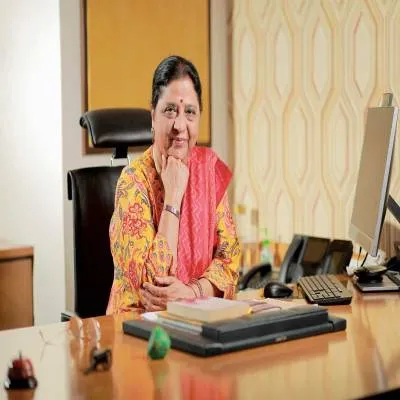
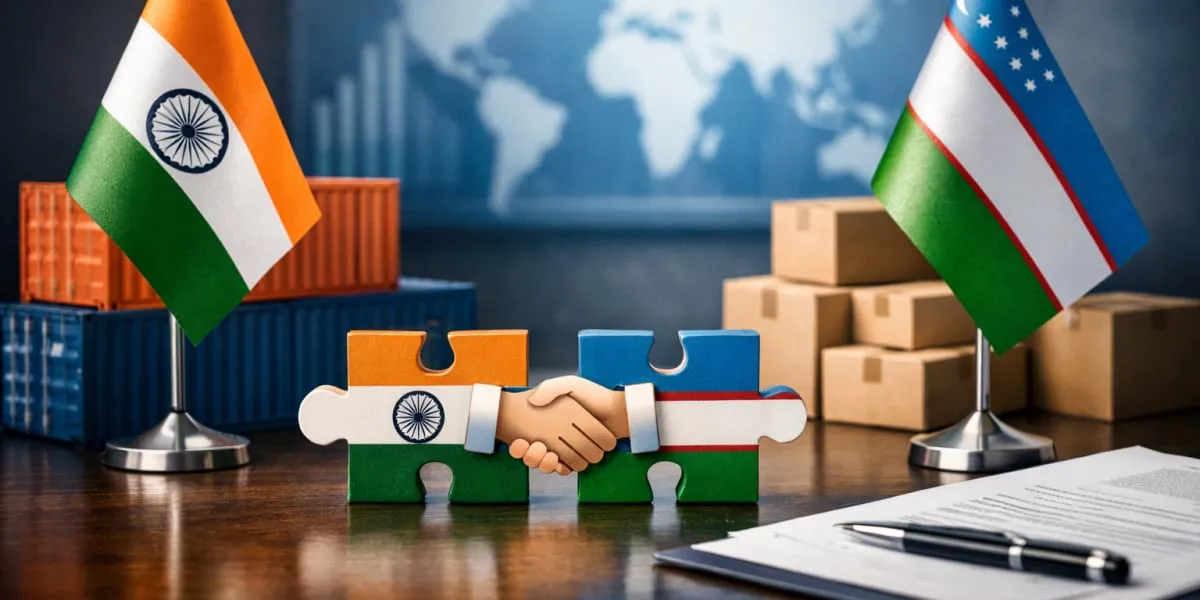
India and Uzbekistan held the 14th Session of the India-Uzbekistan Intergovernmental Commission on Trade, Economic, Scientific and Technological Cooperation, co-chaired by Commerce Secretary Rajesh Agrawal and Deputy Minister Shokhrukh Gulamov in Tashkent, with the Indian co-chair participating by video conference. The commission reviewed bilateral economic engagement and reaffirmed the strategic character of relations rooted in historical and civilisational ties and strengthened by the leadership of Prime Minister Narendra Modi and President Shavkat Mirziyoyev.

The Indian side reported that India’s total exports of goods and services in FY 2025-26 were US$ 860.09 billion (US$ 860.09 bn) and that cumulative exports during April-May 2026-27 reached US$ 162.69 bn, showing growth of 14.66 per cent year on year. Merchandise exports rose by 16.09 per cent led by engineering and electronic goods, chemicals, petroleum products and gems and jewellery. Uzbekistan reported bilateral trade turnover of US$ 1.3 bn in 2025, with exports to India at US$ 164.6 million (US$ 164.6 mn) and imports from India at US$ 1.15 bn.

The commission identified a broader trade basket to expand supplies into Uzbekistan, citing pharmaceuticals, medical devices, agricultural and processed food products, agricultural machinery, engineering goods, electrical machinery, electronics and smartphones, automobiles and auto components, textile machinery, chemicals and services such as healthcare, education, tourism, logistics and other business services. Pharmaceuticals were singled out as a priority given India’s capacity to supply affordable, quality-assured medicines, vaccines and active pharmaceutical ingredients. The two sides also explored cooperation in information and communications technology and digital public infrastructure, including customs data exchange and interlinking of payment infrastructure to support tourism, trade and commerce.

The Commerce Secretary emphasised the need for a time-bound mechanism to address non-tariff barriers related to approvals, standards, testing, certification and customs procedures so as to provide predictability for businesses and regulators. Both sides agreed on the importance of improving transport and logistics connectivity and on sharing experience in digital logistics platforms and customs facilitation. The commission invited greater participation by Uzbek businesses in Indian trade fairs, buyer-seller meets and investment forums and agreed to hold the 15th meeting in India on a mutually convenient date.

"Join industry leaders at RAHSTA Expo, India's premier platform for roads, highways and traffic infrastructure. Register now to explore innovations, network with experts and shape the future of mobility."

India and Uzbekistan held the 14th Session of the India-Uzbekistan Intergovernmental Commission on Trade, Economic, Scientific and Technological Cooperation, co-chaired by Commerce Secretary Rajesh Agrawal and Deputy Minister Shokhrukh Gulamov in Tashkent, with the Indian co-chair participating by video conference. The commission reviewed bilateral economic engagement and reaffirmed the strategic character of relations rooted in historical and civilisational ties and strengthened by the leadership of Prime Minister Narendra Modi and President Shavkat Mirziyoyev. The Indian side reported that India’s total exports of goods and services in FY 2025-26 were US$ 860.09 billion (US$ 860.09 bn) and that cumulative exports during April-May 2026-27 reached US$ 162.69 bn, showing growth of 14.66 per cent year on year. Merchandise exports rose by 16.09 per cent led by engineering and electronic goods, chemicals, petroleum products and gems and jewellery. Uzbekistan reported bilateral trade turnover of US$ 1.3 bn in 2025, with exports to India at US$ 164.6 million (US$ 164.6 mn) and imports from India at US$ 1.15 bn. The commission identified a broader trade basket to expand supplies into Uzbekistan, citing pharmaceuticals, medical devices, agricultural and processed food products, agricultural machinery, engineering goods, electrical machinery, electronics and smartphones, automobiles and auto components, textile machinery, chemicals and services such as healthcare, education, tourism, logistics and other business services. Pharmaceuticals were singled out as a priority given India’s capacity to supply affordable, quality-assured medicines, vaccines and active pharmaceutical ingredients. The two sides also explored cooperation in information and communications technology and digital public infrastructure, including customs data exchange and interlinking of payment infrastructure to support tourism, trade and commerce. The Commerce Secretary emphasised the need for a time-bound mechanism to address non-tariff barriers related to approvals, standards, testing, certification and customs procedures so as to provide predictability for businesses and regulators. Both sides agreed on the importance of improving transport and logistics connectivity and on sharing experience in digital logistics platforms and customs facilitation. The commission invited greater participation by Uzbek businesses in Indian trade fairs, buyer-seller meets and investment forums and agreed to hold the 15th meeting in India on a mutually convenient date.

Next Story
Infrastructure Energy

Centre Prioritising Energy Security With Coal Gasification

Union minister for Coal and Mines G Kishan Reddy said the Centre is prioritising energy security through a strategic shift to coal gasification and has announced incentives totalling Rs 460 billion (bn) to support the effort. He said more than 35 companies will start coal gasification activities in India within two months and that the government is encouraging firms that bring technology to close the domestic technology gap. The minister described the initiative as aimed at reducing import dependence and developing indigenous capacity. India has the fifth-largest coal reserve in the world, and..

Next Story
Infrastructure Urban

BHEL and Coal India Invest Rs 250 bn in Odisha Gasification

Bharat Heavy Electricals (BHEL) and Coal India (CIL) are jointly investing Rs 250 billion in a coal gasification project in Odisha, with the Prime Minister laying the foundation stone in Jharsuguda. Union Coal and Mines Minister G Kishan Reddy described the initiative as a transformative shift in coal utilisation that will open industrial avenues for the state. The project moves coal beyond conventional power generation to industrial feedstocks. Coal gasification will convert coal into synthesis gas, a versatile feedstock for chemicals, fertilisers and synthetic fuels, and the technology is ex..

Next Story
Infrastructure Energy

BCCL Hands Over Dugdha Coal Washery To JSW Steel

Bharat Coking Coal has handed over the Dugdha Coal Washery to JSW Steel, marking the first coal washery asset monetisation under the Ministry of Coal's asset monetisation programme. The handover took place in the presence of senior officials from Bharat Coking Coal Ltd, JSW Steel and JSW Energy. The washery has a capacity of two million tonnes per annum (mn t per annum), and its transfer is intended to introduce private sector practices into coal beneficiation operations. The monetisation is aimed at modernising coal sector assets, improving operational efficiency and enhancing resource utilis..

Advertisement

Subscribe to Our Newsletter

Get daily newsletters around different themes from Construction world.

STAY CONNECTED

Advertisement

Advertisement

Advertisement