India's Electricity Demand To Rise By 12 Per Cent By 2050
ECONOMY & POLICY

India's Electricity Demand To Rise By 12 Per Cent By 2050

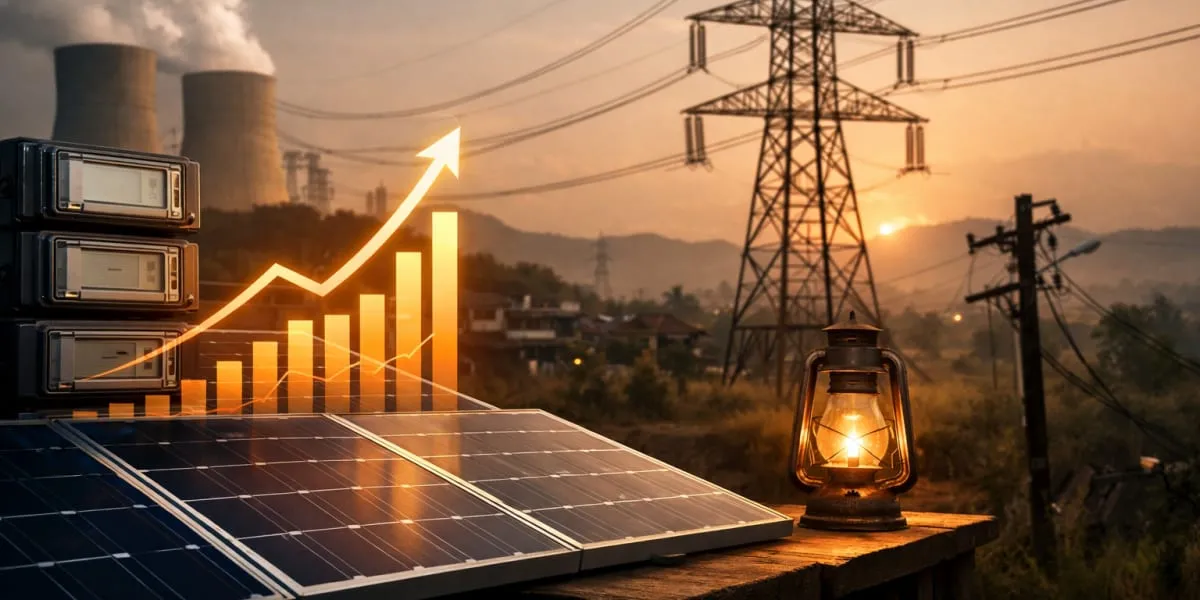
A study by the Climate Impact Lab at the University of Chicago projects that India's electricity demand will rise by 12 per cent by 2050, increasing pressure on networks already beset by frequent outages in rural areas. The report notes that over half of rural Indian households experience electricity interruptions multiple times per day and warns that even a modest rise in demand will compound problems unless infrastructure is upgraded. The analysis situates the Indian outlook within wider regional shifts in cooling requirements driven by rising temperatures.

The study finds that roughly five per cent of households currently own air conditioning and that ownership is considerably higher in urban locations, around 13 per cent, than in rural areas where it is about one per cent. Researchers project rapid growth in air conditioning adoption, forecasting that penetration will exceed 50 per cent by 2050, which will channel a substantial share of additional electricity consumption into cooling homes and offices. The paper highlights unequal access to cooling across income groups.

The research warns that climate-driven temperature changes may cause about 430,000 more deaths annually by 2050, with far higher mortality increases concentrated in poorer nations. It identifies 18 countries that are trapped in a deadly combination of extreme heat and limited cooling capacity, home to 676 million (mn) people, and projects that around 377,000 people in those areas could die each year by 2050. Most of the affected populations live in northern sub-Saharan Africa and parts of Southern Asia, including Niger, Mali, Burkina Faso, Chad, Pakistan, Bangladesh, Nepal and Myanmar.

Authors urge policymakers to scale up adaptation measures such as expanded health care access for vulnerable rural populations and short term guaranteed employment schemes to reduce heat mortality. The study notes that wealthier neighbours consuming more electricity for cooling will see far fewer heat deaths.

A study by the Climate Impact Lab at the University of Chicago projects that India's electricity demand will rise by 12 per cent by 2050, increasing pressure on networks already beset by frequent outages in rural areas. The report notes that over half of rural Indian households experience electricity interruptions multiple times per day and warns that even a modest rise in demand will compound problems unless infrastructure is upgraded. The analysis situates the Indian outlook within wider regional shifts in cooling requirements driven by rising temperatures. The study finds that roughly five per cent of households currently own air conditioning and that ownership is considerably higher in urban locations, around 13 per cent, than in rural areas where it is about one per cent. Researchers project rapid growth in air conditioning adoption, forecasting that penetration will exceed 50 per cent by 2050, which will channel a substantial share of additional electricity consumption into cooling homes and offices. The paper highlights unequal access to cooling across income groups. The research warns that climate-driven temperature changes may cause about 430,000 more deaths annually by 2050, with far higher mortality increases concentrated in poorer nations. It identifies 18 countries that are trapped in a deadly combination of extreme heat and limited cooling capacity, home to 676 million (mn) people, and projects that around 377,000 people in those areas could die each year by 2050. Most of the affected populations live in northern sub-Saharan Africa and parts of Southern Asia, including Niger, Mali, Burkina Faso, Chad, Pakistan, Bangladesh, Nepal and Myanmar. Authors urge policymakers to scale up adaptation measures such as expanded health care access for vulnerable rural populations and short term guaranteed employment schemes to reduce heat mortality. The study notes that wealthier neighbours consuming more electricity for cooling will see far fewer heat deaths.

Next Story
Infrastructure Urban

SCLR Extension Nears Completion Linking BKC With Signal-Free Route

The Santacruz-Chembur Link Road (SCLR) extension towards Bandra-Kurla Complex (BKC) via the Mumbai University campus has entered its final stage, bringing motorists closer to a direct, signal-free connection between the Western Express Highway and the city’s commercial district. The elevated connector is being built as an arm from the SCLR alignment and will link the western suburbs with BKC without surface signals. The link is designed to reduce journey times for commuters travelling from the western suburbs to BKC and to improve access to eastern Mumbai. By carrying through traffic above s..

Next Story
Infrastructure Transport

Raiganj MP Seeks Bengal Only Highway Link To Siliguri

Raiganj Member of Parliament Kartik Chandra Paul met Union Minister for Road Transport and Highways Nitin Gadkari in New Delhi to press for a new stretch of national highway in North Dinajpur district. He urged approval for a Bengal-to-Bengal link that would connect National Highways 12 and 27 to allow vehicles bound for Siliguri to avoid the current route through Kishanganj in neighbouring Bihar. He also submitted a proposed alignment of the new road to the ministry for consideration. At present vehicles from Raiganj travel along NH-12 and join NH-27 at Purnia More in Dalkhola, a route that p..

Next Story
Infrastructure Transport

Airport Kilambakkam Metro Line To Be Extended To Chengalpattu

Chennai Metro Rail (CMRL) has invited tenders for two detailed project reports that would extend its rail network to Chengalpattu in the south and extend Corridor-5 to Wimco Nagar in the north as part of a second wave of expansion beyond the operator's corridors under construction. The move signals an acceleration of planning for suburban links and interchange nodes. The larger of the two studies covers a roughly 27km extension from the planned Kilambakkam metro station to Chengalpattu under Corridor-1, Phase I. CMRL floated the tender at an estimated cost of Rs 21.6 mn. The proposed line woul..

Advertisement

Subscribe to Our Newsletter

Get daily newsletters around different themes from Construction world.

STAY CONNECTED

Advertisement

Advertisement

Advertisement