India's EV Charging Market Set to Reach $3.7 Billion by 2030
ECONOMY & POLICY

India's EV Charging Market Set to Reach $3.7 Billion by 2030

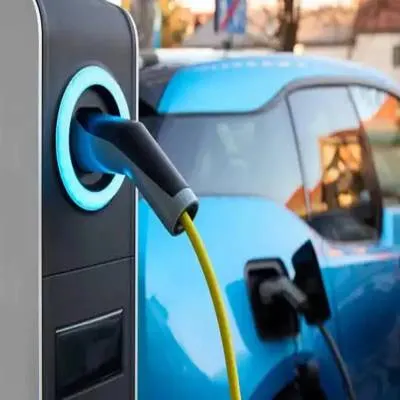
India’s electric vehicle (EV) charging market is projected to grow to $3.7 billion by 2030, driven by increasing EV adoption and the need for efficient charging solutions. The sector is expected to expand at a compound annual growth rate (CAGR) of 16%, supported by environmental concerns and fluctuating fuel prices.

Globally, the EV charging infrastructure market is also experiencing significant growth, with revenues forecast to surge from $25.9 billion in 2023 to $164 billion by 2030, reflecting a CAGR of approximately 12%.

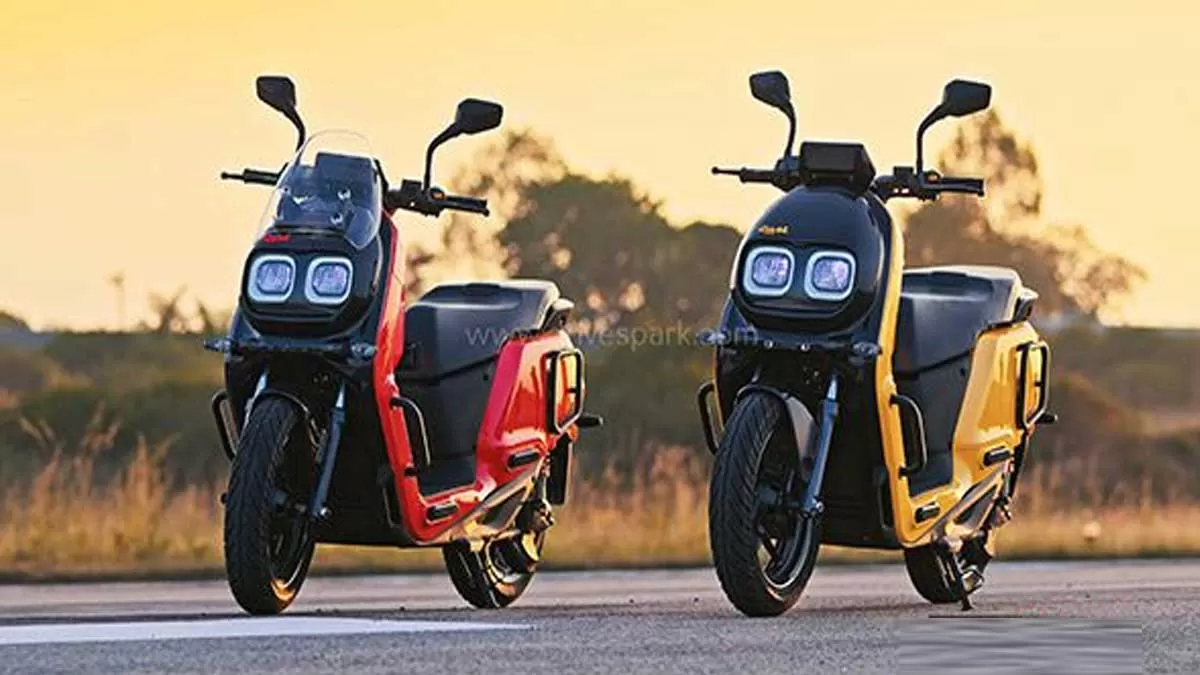
"Fast-charging technologies and battery-swapping solutions are essential to address range anxiety and facilitate everyday EV use," said Abhishek Maiti, Director-Industrial Goods and Services at 1Lattice. Battery swapping is particularly gaining traction in India for two- and three-wheelers, with major automakers investing in the technology to enhance affordability and accessibility.

Investment in India’s EV charging infrastructure grew at a CAGR of 35% between 2018 and 2023, surpassing the global investment growth rate of 30% during the same period. The Indian government is also pushing for increased EV production and localizing supply chains to meet its target of 30% EV penetration by 2030, as noted by an S&P Global Ratings report.

To further boost the sector, the government recently introduced the PM Electric Drive Revolution in Innovative Vehicle Enhancement (PM E-DRIVE) schemE to accelerate EV adoption and establish critical charging infrastructure across the country. The initiative is seen as a crucial step toward a cleaner, more sustainable future.

India’s electric vehicle (EV) charging market is projected to grow to $3.7 billion by 2030, driven by increasing EV adoption and the need for efficient charging solutions. The sector is expected to expand at a compound annual growth rate (CAGR) of 16%, supported by environmental concerns and fluctuating fuel prices. Globally, the EV charging infrastructure market is also experiencing significant growth, with revenues forecast to surge from $25.9 billion in 2023 to $164 billion by 2030, reflecting a CAGR of approximately 12%. Fast-charging technologies and battery-swapping solutions are essential to address range anxiety and facilitate everyday EV use, said Abhishek Maiti, Director-Industrial Goods and Services at 1Lattice. Battery swapping is particularly gaining traction in India for two- and three-wheelers, with major automakers investing in the technology to enhance affordability and accessibility. Investment in India’s EV charging infrastructure grew at a CAGR of 35% between 2018 and 2023, surpassing the global investment growth rate of 30% during the same period. The Indian government is also pushing for increased EV production and localizing supply chains to meet its target of 30% EV penetration by 2030, as noted by an S&P Global Ratings report. To further boost the sector, the government recently introduced the PM Electric Drive Revolution in Innovative Vehicle Enhancement (PM E-DRIVE) schemE to accelerate EV adoption and establish critical charging infrastructure across the country. The initiative is seen as a crucial step toward a cleaner, more sustainable future.

Next Story
Infrastructure Urban

Teknovace, Remmers Forge Rs 3 Bn Deal for Global Coatings Hub

Teknovace has entered into a strategic global partnership with Germany-based Remmers Gruppe SE to build a large-scale, export-oriented wood coatings manufacturing platform in India. As part of the alliance, Remmers will make a strategic equity investment of Rs 3 billion to acquire a 50.01 per cent stake in Teknovace in two tranches, marking one of the largest foreign strategic investments in India’s wood coatings sector.The partnership comes at a time when India’s wood coatings market, valued at around $1.3 billion (Rs 100 billion), is growing at an estimated 11% annually, driven by demand..

Next Story
Infrastructure Urban

Jyoti Structures Commissions Galvanisation at Second Nashik Unit

Jyoti Structures has commissioned galvanisation operations at its second tower manufacturing unit in Nashik, strengthening its in-house capabilities across critical stages of power transmission infrastructure production. The listed Engineering, Procurement and Construction (EPC) company operates globally and has delivered projects for customers across more than 50 countries.The second Nashik unit, with an annual manufacturing capacity of 36,000 metric tonnes, has become operational following the completion of installation, testing and readiness of the new galvanising facilities. With this deve..

Next Story
Infrastructure Energy

Rosatom Connects First Kursk NPP-2 Unit to National Grid

Rosatom has launched the first power unit of the Kursk Nuclear Power Plant-2 (Kursk NPP-2) into Russia’s Unified Energy System, marking a key milestone in the country’s nuclear energy programme. The initial grid connection took place at the end of the year, bringing a new source of low-carbon electricity online for the Kursk region and the broader Central Energy System.The newly commissioned unit is the first implementation of the VVER-TOI reactor design, which incorporates advanced safety and performance features. With an installed capacity of 1,250 MW, it is the most powerful nuclear pow..

Advertisement

Subscribe to Our Newsletter

Get daily newsletters around different themes from Construction world.

STAY CONNECTED

Advertisement

Advertisement

Advertisement

Advertisement

Open In App