India's pioneering bamboo biorefinery launches in March
ECONOMY & POLICY

India's pioneering bamboo biorefinery launches in March

Bhaskar Phukan, Managing Director, India's Numaligarh Refinery (NRL), announced that the company, a subsidiary of explorer Oil India, plans to commence ethanol production at its biorefinery in the northeastern state of Assam starting from March. India, the world's third-largest consumer and importer of oil, aims to reduce its crude oil consumption by transitioning to sustainable alternatives like biofuels. The country has set a goal to double the blending of ethanol with gasoline to 20% by 2025.

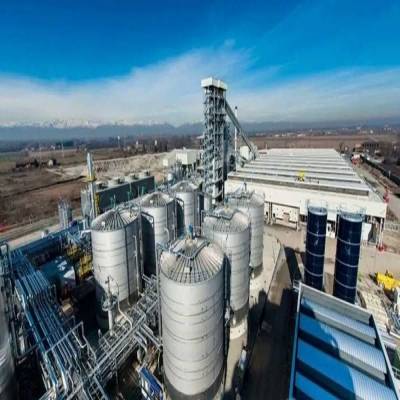
The Assam biorefinery, a project that cost NRL and its Finnish partners Chempolis and Fortum Rs 40 billion, stands as India's pioneering initiative to utilise bamboo as feedstock. It is anticipated to produce 50,000 tonne of ethanol, 16,000 tonne of furfural, and 11,000 tonne of acetic acid annually. Furfural, a substance used for binding components such as adhesive, plays a significant role in this innovative endeavour. India's northeastern region is abundant in bamboo cultivation, making it an ideal source for this sustainable venture.

NRL holds a 50% stake in this ground breaking project, reflecting the collaborative efforts of both Indian and international partners in the pursuit of eco-friendly energy solutions.

Bhaskar Phukan, Managing Director, India's Numaligarh Refinery (NRL), announced that the company, a subsidiary of explorer Oil India, plans to commence ethanol production at its biorefinery in the northeastern state of Assam starting from March. India, the world's third-largest consumer and importer of oil, aims to reduce its crude oil consumption by transitioning to sustainable alternatives like biofuels. The country has set a goal to double the blending of ethanol with gasoline to 20% by 2025. The Assam biorefinery, a project that cost NRL and its Finnish partners Chempolis and Fortum Rs 40 billion, stands as India's pioneering initiative to utilise bamboo as feedstock. It is anticipated to produce 50,000 tonne of ethanol, 16,000 tonne of furfural, and 11,000 tonne of acetic acid annually. Furfural, a substance used for binding components such as adhesive, plays a significant role in this innovative endeavour. India's northeastern region is abundant in bamboo cultivation, making it an ideal source for this sustainable venture. NRL holds a 50% stake in this ground breaking project, reflecting the collaborative efforts of both Indian and international partners in the pursuit of eco-friendly energy solutions.

Next Story
Infrastructure Urban

Implementation Status of Jal Jeevan Mission

Since August 2019 the Government has implemented Jal Jeevan Mission to provide assured potable water through household tap connections in rural India. At the start of the mission only 32.3 million (mn) rural households, representing 16.7 per cent, were reported to have tap water connections. States and union territories have reported that 125.8 mn additional rural households have since been provided with tap connections. As a result, of about 193.6 mn rural households roughly 158.2 mn, or 81.71 per cent, are reported to have tap water supply at home.\n\nThe State, district and village level st..

Next Story
Infrastructure Urban

Jal Jeevan Mission Reaches Eighty One Per Cent Rural Coverage

The Government reported substantial progress under the Jal Jeevan Mission, launched in August 2019 to provide tap water to every rural household. At launch only 32.3 million (mn) rural households had tap connections and states and Union territories reported provision of 125.8 mn additional households by March 2026. Consequently, out of about 193.6 mn rural households around 158.2 mn, or 81.71 per cent, are reported to have tap water at home. The Finance Minister announced extension of the mission until 2028 in the 2025-26 budget speech. The Swachh Bharat Mission Grameen, launched in October 20..

Next Story
Infrastructure Urban

Empowering Local Governance for Sustainable Rural Water Supply

The Ministry of Jal Shakti has aligned the Jal Jeevan Mission (JJM) with the 73rd Amendment to strengthen village level planning and community ownership of water supply. Gram Panchayats, village water and sanitation committees and Pani Samitis are to plan, implement, manage and maintain piped water systems, with gram sabha processes formalising handover and oversight. Implementation support agencies including non government organisations, community based organisations and self help groups have been empanelled to train local committees and promote women participation. Under JJM, the department ..

Advertisement

Subscribe to Our Newsletter

Get daily newsletters around different themes from Construction world.

STAY CONNECTED

Advertisement

Advertisement

Advertisement