Maharashtra Deputy Chief Minister Orders Action On Kanjurmarg Odour
WATER & WASTE

Maharashtra Deputy Chief Minister Orders Action On Kanjurmarg Odour

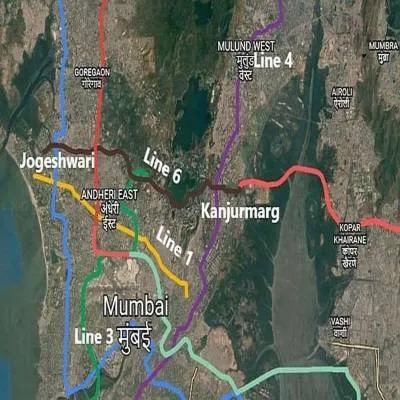
Maharashtra Deputy Chief Minister Eknath Shinde has ordered a series of strengthened measures to curb foul odour from the Kanjurmarg dumping ground following resident complaints. He chaired a high level review at Mantralaya and instructed urban development officials and the Brihanmumbai Municipal Corporation commissioner to intensify odour control and monitoring. The directions emphasised compliance with Bombay High Court mandates on environmental safeguards and the need for coordinated oversight.

Officials reported that the Kanjurmarg waste processing facility handles nearly 6,200 tonnes (t) of waste daily through landfilling, composting and segregation. They stated that around 190 million metric tonnes (190 mn t) of material have been processed at the site to date and that improved monitoring systems are required to track emissions and operational performance. The meeting noted the scale of operations and the impact on adjacent residential areas.

Shinde directed expansion of odour mitigation measures, including increased use of bio enzyme spraying, systematic soil layering, landfill gas management systems and misting technology, together with enhanced surveillance. He asked for the large scale plantation of bamboo within the premises to create a dense green buffer that can help absorb odour and improve local air quality. The deputy chief minister also instructed that activities generating strong odour, such as composting and refuse derived fuel production, be shifted at least 500 metres away from inhabited localities.

Long term action centred on immediate progress on a waste to energy project at Kanjurmarg, with the Brihanmumbai Municipal Corporation directed to examine technical options and expedite implementation so that waste can be converted into electricity and landfill burden reduced. The instructions responded to persistent complaints and sought to balance operational needs with public health protection. Officials were asked to report back with timelines and monitoring protocols to ensure effective execution.

Maharashtra Deputy Chief Minister Eknath Shinde has ordered a series of strengthened measures to curb foul odour from the Kanjurmarg dumping ground following resident complaints. He chaired a high level review at Mantralaya and instructed urban development officials and the Brihanmumbai Municipal Corporation commissioner to intensify odour control and monitoring. The directions emphasised compliance with Bombay High Court mandates on environmental safeguards and the need for coordinated oversight. Officials reported that the Kanjurmarg waste processing facility handles nearly 6,200 tonnes (t) of waste daily through landfilling, composting and segregation. They stated that around 190 million metric tonnes (190 mn t) of material have been processed at the site to date and that improved monitoring systems are required to track emissions and operational performance. The meeting noted the scale of operations and the impact on adjacent residential areas. Shinde directed expansion of odour mitigation measures, including increased use of bio enzyme spraying, systematic soil layering, landfill gas management systems and misting technology, together with enhanced surveillance. He asked for the large scale plantation of bamboo within the premises to create a dense green buffer that can help absorb odour and improve local air quality. The deputy chief minister also instructed that activities generating strong odour, such as composting and refuse derived fuel production, be shifted at least 500 metres away from inhabited localities. Long term action centred on immediate progress on a waste to energy project at Kanjurmarg, with the Brihanmumbai Municipal Corporation directed to examine technical options and expedite implementation so that waste can be converted into electricity and landfill burden reduced. The instructions responded to persistent complaints and sought to balance operational needs with public health protection. Officials were asked to report back with timelines and monitoring protocols to ensure effective execution.

Next Story
Infrastructure Transport

MMRDA Removes 1.14 lakh m of Metro Barricades

In a bid to ease congestion and improve urban mobility during monsoon, MMRDA has undertaken one of the largest coordinated barricade removal and monsoon preparedness drives across its ongoing metro and infrastructure projects.With substantial progress achieved in viaduct and structural works across multiple metro corridors, barricades from completed stretches beneath metro viaducts are being systematically removed, restoring maximum possible road space before the monsoon. Wider carriageways across key arterial roads are expected to improve traffic flow, reduce congestion, support better rainwa..

Next Story
Infrastructure Transport

Pune Division to Remove All Diamond Crossings by Year-End

The Pune railway division has announced plans to remove all 16 diamond crossings by the end of 2026 as part of a major yard remodelling project following the derailment of a Vande Bharat Express at Pune Junction on April 27. Railway authorities said the replacements aim to improve safety and streamline train operations across the busy station. The decision followed a Central Railway finding that the accident involved a non-standard diamond crossing and highlighted the need for replacement. Regular maintenance of existing crossings will continue until the replacement work is completed. Official..

Next Story
Infrastructure Urban

Goa Declares 80 Million Square Metres No Development Zone

The Goa state government has declared 80 million square metres (mn) of land a no development zone, designating the area as protected from new construction. The notification reclassifies tracts across the state under a no development category for planning and regulatory purposes. The declaration signals a formal halt to new building permits within the defined zone. Authorities indicated that maps will be issued to show broad boundaries while detailed surveys will refine precise limits. The move transfers responsibility for enforcement to local planning authorities and relevant departments, whic..

Advertisement

Subscribe to Our Newsletter

Get daily newsletters around different themes from Construction world.

STAY CONNECTED

Advertisement

Advertisement

Advertisement