Delhi Metro Expansion to Include Seven Corridors and 65 Stations
RAILWAYS & METRO RAIL

Delhi Metro Expansion to Include Seven Corridors and 65 Stations

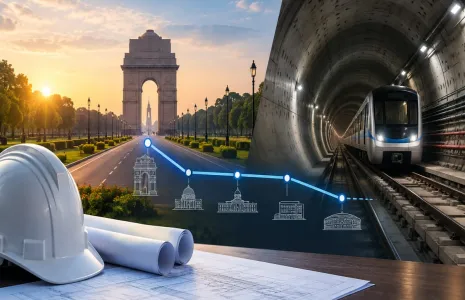
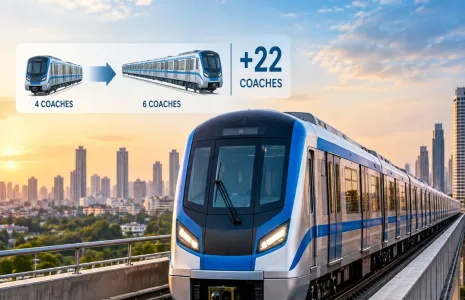
The Delhi Metro will get seven new corridors with 65 stations under a project valued at Rs 48,204 crore, Chief Minister Rekha Gupta announced. She described the investment as equal to Rs 482.04 billion (bn) and said it will materially expand the city's rapid transit footprint. The plan is intended to close gaps in the existing network and to extend services to underserved neighbourhoods. Officials portrayed the measure as central to broader urban mobility and sustainability objectives.

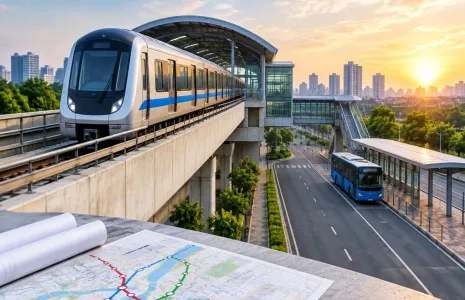
Authorities said the corridors will deliver improved connectivity across residential and commercial areas and are expected to reduce citywide journey times for commuters. Station design will emphasise accessibility and integration with other modes, including feeder bus services and pedestrian links, to ease last mile travel. The initiative is projected to enhance safety and passenger experience through modernised amenities and operational standards. Planners indicated that interchange nodes will be optimised to smooth transfers and reduce congestion at key junctions.

Funding arrangements were described as a combination of government budgetary allocations and structured investments, with officials noting scope for private-sector participation in non-core areas. A phased implementation approach will be adopted to manage construction impact and to allow sections to open progressively for public use. Government agencies will coordinate land acquisition, regulatory clearances and utility diversion to keep timelines on track. Project management will focus on cost control, quality assurance and minimising disruption to existing services.

The expansion is expected to support higher ridership and to contribute to reduced vehicular emissions by shifting modal share towards mass transit. Job creation during construction and operation was highlighted as a consequential benefit for local economies. Detailed project reports and tender schedules will be prepared and subjected to departmental review before contracts are awarded. Officials presented the announcement as a step towards meeting the metropolitan area's growing transport needs.

The Delhi Metro will get seven new corridors with 65 stations under a project valued at Rs 48,204 crore, Chief Minister Rekha Gupta announced. She described the investment as equal to Rs 482.04 billion (bn) and said it will materially expand the city's rapid transit footprint. The plan is intended to close gaps in the existing network and to extend services to underserved neighbourhoods. Officials portrayed the measure as central to broader urban mobility and sustainability objectives. Authorities said the corridors will deliver improved connectivity across residential and commercial areas and are expected to reduce citywide journey times for commuters. Station design will emphasise accessibility and integration with other modes, including feeder bus services and pedestrian links, to ease last mile travel. The initiative is projected to enhance safety and passenger experience through modernised amenities and operational standards. Planners indicated that interchange nodes will be optimised to smooth transfers and reduce congestion at key junctions. Funding arrangements were described as a combination of government budgetary allocations and structured investments, with officials noting scope for private-sector participation in non-core areas. A phased implementation approach will be adopted to manage construction impact and to allow sections to open progressively for public use. Government agencies will coordinate land acquisition, regulatory clearances and utility diversion to keep timelines on track. Project management will focus on cost control, quality assurance and minimising disruption to existing services. The expansion is expected to support higher ridership and to contribute to reduced vehicular emissions by shifting modal share towards mass transit. Job creation during construction and operation was highlighted as a consequential benefit for local economies. Detailed project reports and tender schedules will be prepared and subjected to departmental review before contracts are awarded. Officials presented the announcement as a step towards meeting the metropolitan area's growing transport needs.

Next Story
Infrastructure Transport

Pune To Build Nine Km Link Road Between Highways

The Pune Municipal Corporation (PMC) has decided to appoint an expert to plan the development of a nine km long, 60 metre wide road from Khadi Machine chowk to Wadki chowk as an extension to the Katraj-Kondhwa road to link the Mumbai-Satara and Pune-Solapur national highways. The scheme is intended to divert heavy vehicle traffic away from the city and improve access between the two arterial routes. The project has been prioritised by the PMC and forms part of a larger set of schemes in which 19 roads have been identified for development at a combined cost of Rs 9.82 billion (bn) to address c..

Next Story
Infrastructure Transport

Barabanki Bahraich Six Lane Highway Approved in Uttar Pradesh

The Uttar Pradesh government has approved construction of a new six-lane highway linking Barabanki and Bahraich as part of National Highway 927, and the cabinet has cleared the project. The alignment will pass through Mustafabad and Kaiserganj and extend for about 101.5 km, creating a key corridor for local and long-distance movement. The National Highways Authority of India will oversee the work and has signalled the scheme is intended to strengthen regional connectivity and cross-border access to Nepal. The project carries an estimated total cost of Rs 69,690 million, equivalent to Rs 69.69..

Next Story
Infrastructure Transport

Toll At Kharegaon Likely As Highway Upgrade Nears Completion

A section of the highway at Kharegaon has undergone an upgrade and is approaching completion, and authorities have indicated plans for a toll to be introduced once works finish. The project has focused on strengthening the carriageway, improving drainage and upgrading intersections to enhance safety and capacity. Officials have said the toll will be used to recover construction costs and fund ongoing maintenance. The upgrade included resurfacing of the pavement, widening of certain stretches and installation of modern signage and lighting to reduce accident risk. Contractors completed most ma..

Advertisement

Subscribe to Our Newsletter

Get daily newsletters around different themes from Construction world.

STAY CONNECTED

Advertisement

Advertisement

Advertisement