+
International Conference on Dam Safety Convenes in Bengaluru
ECONOMY & POLICY

International Conference on Dam Safety Convenes in Bengaluru

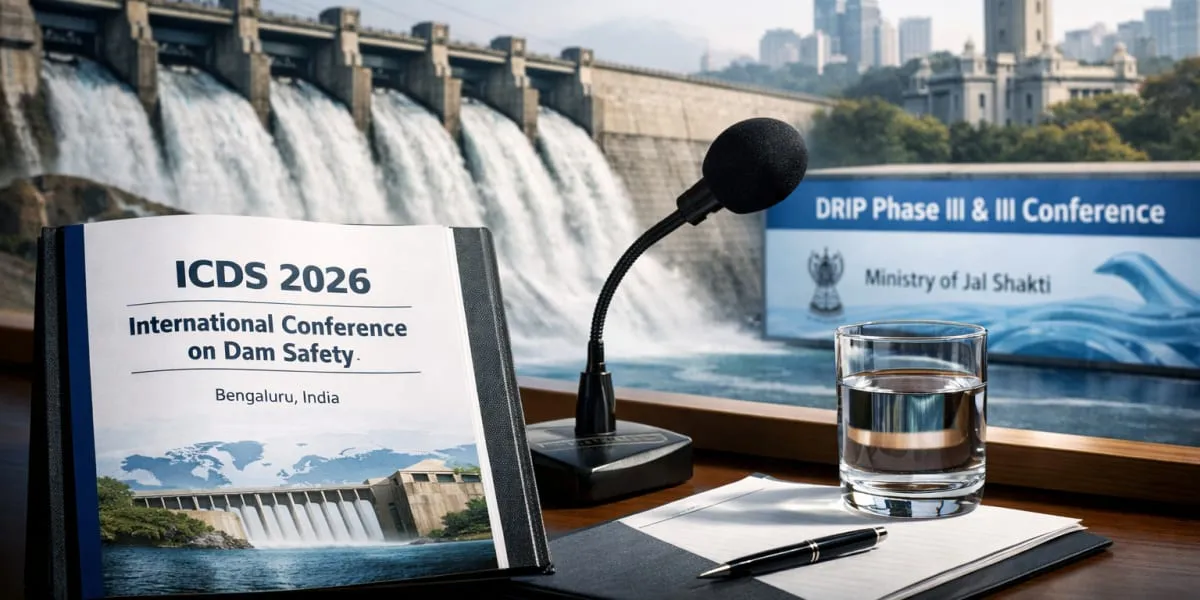
The International Conference on Dam Safety (ICDS 2026) opened at the J.N. Tata Auditorium, Indian Institute of Science (IISc), Bengaluru, on 13 February under the Dam Rehabilitation and Improvement Project (DRIP) Phase II and Phase III. The event is organised by the Department of Water Resources, River Development and Ganga Rejuvenation (DoWR, RD&GR), Ministry of Jal Shakti, with the Water Resources Department, Government of Karnataka, and collaborators including the Central Water Commission (CWC) and the World Bank. The two-day conference addresses risks to ageing water infrastructure.

The conference was inaugurated by the Chief Minister of Karnataka and presided over by the Deputy Chief Minister. Senior national and international officials and experts attended the inaugural session. The Chief Minister emphasised that dam safety is a national security imperative requiring science-based collaborative action and collective responsibility, and the Deputy Chief Minister called for bold reforms and transparent policies to protect farmers, energy supplies and public investments.

A suite of digital and technical resources was launched, including DAMCHAT, an AI-powered platform developed by the International Centre of Excellence for Dams (ICED), IIT Roorkee, and the Jal Shakti Data Management platform of the National Water Informatics Centre (NWIC). Publications from the Advanced Centre for Integrated Water Resources Management (ACIWRM), Karnataka, and design flood estimation guidelines published by the CWC were released. Organisers said these tools will strengthen data-driven decision making for dam safety.

Deliberations covered regulatory frameworks, innovations in structural health assessment, sediment management, risk-informed decision making and coordinated reservoir operations for flood control. More than 750 delegates and representatives from 12 countries attended the first day, while an exhibition of 25 exhibitors showcased monitoring systems, rehabilitation materials and digital solutions. The Minister of State highlighted the urgent need for rehabilitation and modernisation of more than 6,500 specified dams and urged timely implementation of the Dam Safety Act, 2021 by states and dam-owning agencies. Organisers said the conference is expected to support implementation of the Act and enhance India's leadership in dam safety governance and climate resilience.

The International Conference on Dam Safety (ICDS 2026) opened at the J.N. Tata Auditorium, Indian Institute of Science (IISc), Bengaluru, on 13 February under the Dam Rehabilitation and Improvement Project (DRIP) Phase II and Phase III. The event is organised by the Department of Water Resources, River Development and Ganga Rejuvenation (DoWR, RD&GR), Ministry of Jal Shakti, with the Water Resources Department, Government of Karnataka, and collaborators including the Central Water Commission (CWC) and the World Bank. The two-day conference addresses risks to ageing water infrastructure. The conference was inaugurated by the Chief Minister of Karnataka and presided over by the Deputy Chief Minister. Senior national and international officials and experts attended the inaugural session. The Chief Minister emphasised that dam safety is a national security imperative requiring science-based collaborative action and collective responsibility, and the Deputy Chief Minister called for bold reforms and transparent policies to protect farmers, energy supplies and public investments. A suite of digital and technical resources was launched, including DAMCHAT, an AI-powered platform developed by the International Centre of Excellence for Dams (ICED), IIT Roorkee, and the Jal Shakti Data Management platform of the National Water Informatics Centre (NWIC). Publications from the Advanced Centre for Integrated Water Resources Management (ACIWRM), Karnataka, and design flood estimation guidelines published by the CWC were released. Organisers said these tools will strengthen data-driven decision making for dam safety. Deliberations covered regulatory frameworks, innovations in structural health assessment, sediment management, risk-informed decision making and coordinated reservoir operations for flood control. More than 750 delegates and representatives from 12 countries attended the first day, while an exhibition of 25 exhibitors showcased monitoring systems, rehabilitation materials and digital solutions. The Minister of State highlighted the urgent need for rehabilitation and modernisation of more than 6,500 specified dams and urged timely implementation of the Dam Safety Act, 2021 by states and dam-owning agencies. Organisers said the conference is expected to support implementation of the Act and enhance India's leadership in dam safety governance and climate resilience.

Next Story
Equipment

Kabelschlepp India Installs Robotic VMC in Bengaluru

Kabelschlepp India, part of the Tsubaki Group, has installed a state-of-the-art Vertical Machining Center (VMC) integrated with robotic automation at its Bengaluru facility. The inauguration was held in the presence of Henning Preis, President & CEO, Kabelschlepp Group, Jörg Schulz, Vice President – Production, and Srinivas P. Kamisetty, Managing Director, Kabelschlepp India.The high-precision CNC VMC is designed for advanced milling, drilling, tapping and multi-axis machining. Equipped with a vertical spindle orientation, automatic tool changer and intelligent CNC control system, it en..

Next Story
Infrastructure Transport

Highway Delivery Reset!

Project delays and inefficiencies continue to bedevil the progress of India’s National Highways network. A multi-pronged reform agenda is needed to inject greater transparency and accountability at every stage – from planning and procurement to execution, maintenance and oversight. This article offers key recommendations and reform strategies that government stakeholders – from the Ministry of Road Transport & Highways (MoRTH) and the National Highways Authority of India (NHAI) to state agencies and oversight bodies – should pursue to put highway development on a better track.Decen..

Next Story
Infrastructure Transport

MSIDC Executes ₹37,000 Crore Road Programme

With Rs 37,000 crore worth of road projects under execution across Maharashtra, Maharashtra State Infrastructure Development Corporation (MSIDC) is driving one of the state’s largest infrastructure programmes. Dr Brijesh Dixit, Managing Director, discusses the institutional reforms, execution frameworks, financing strategies and technology adoption enabling timely, high-quality delivery, in conversation with PRATAP PADODE, Editor-in-Chief, CW.With over Rs 37,000 crore worth of road projects underway across districts – many under tight timelines – what institutional and executio..

Advertisement

Subscribe to Our Newsletter

Get daily newsletters around different themes from Construction world.

STAY CONNECTED

Advertisement

Advertisement

Advertisement

Open In App