+
JKRTC Proposes Procurement of 200 E-Buses Under PM E-Drive Scheme
ECONOMY & POLICY

JKRTC Proposes Procurement of 200 E-Buses Under PM E-Drive Scheme

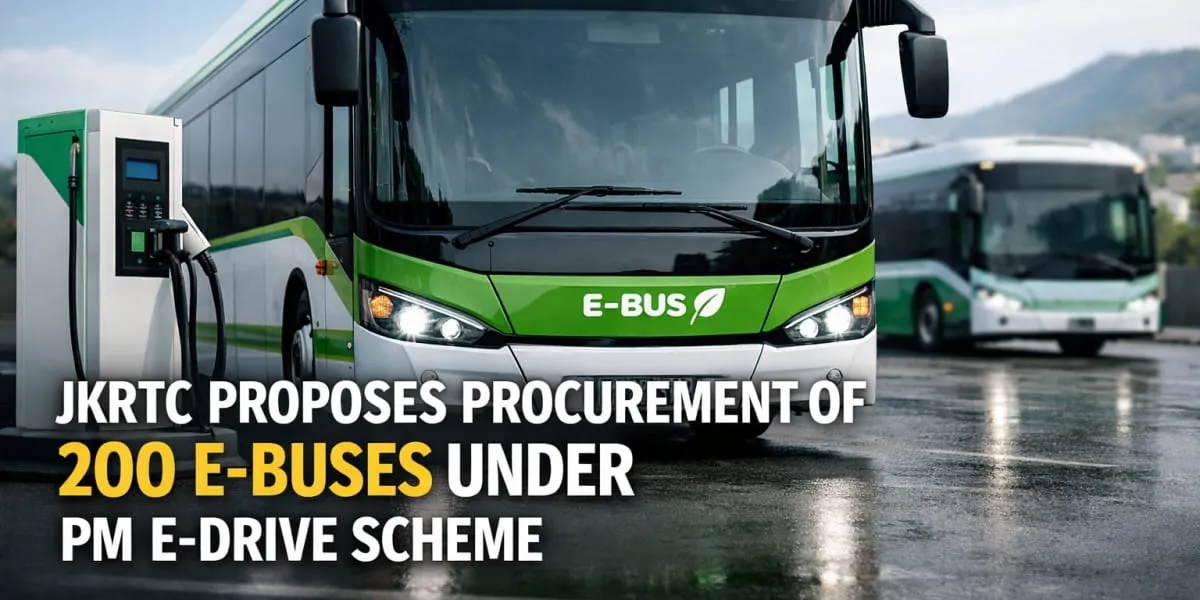
Jammu and Kashmir Road Transport Corporation has proposed the procurement of 200 e-buses under the Prime Minister's PM e-Drive Scheme as part of a plan to modernise the public transport fleet and reduce vehicular emissions. The proposal seeks to introduce battery electric buses across urban and intercity routes to improve air quality and lower operating costs relative to diesel vehicles. Officials indicated that the move forms part of a broader push to transition to cleaner mobility in the region and consultations with stakeholders are planned.

The corporation intends to deploy the new e-buses on major routes serving Jammu and Srinagar as well as other district connections to enhance frequency and reliability of services. The plan envisages the phased induction of vehicles with concurrent establishment of charging infrastructure at depots and select transit hubs to support daily operations. Technical specifications, fleet management systems and safety features will be evaluated during the tendering process. Operators will consider route optimisation and passenger information systems to improve uptake.

Procurement is proposed under the central PM e-Drive Scheme which provides financial and technical support for electric mobility initiatives, and funding arrangements will follow the scheme guidelines. The corporation plans to issue formal tenders and invites expressions of interest from manufacturers and operators with experience in electric bus deployment and maintenance. Emphasis will be placed on lifecycle costs, battery performance, warranty terms and local serviceability to ensure sustainability.

The anticipated expansion of the electric fleet is expected to reduce dependence on fossil fuels and contribute to quieter, cleaner streets while potentially lowering long term operating expenses and support for renewable energy charging is under consideration soon. Training for drivers and maintenance staff will be integral to the rollout to ensure safety and reliability of services. Further announcements will follow as procurement advances and contracts are awarded.

Jammu and Kashmir Road Transport Corporation has proposed the procurement of 200 e-buses under the Prime Minister's PM e-Drive Scheme as part of a plan to modernise the public transport fleet and reduce vehicular emissions. The proposal seeks to introduce battery electric buses across urban and intercity routes to improve air quality and lower operating costs relative to diesel vehicles. Officials indicated that the move forms part of a broader push to transition to cleaner mobility in the region and consultations with stakeholders are planned. The corporation intends to deploy the new e-buses on major routes serving Jammu and Srinagar as well as other district connections to enhance frequency and reliability of services. The plan envisages the phased induction of vehicles with concurrent establishment of charging infrastructure at depots and select transit hubs to support daily operations. Technical specifications, fleet management systems and safety features will be evaluated during the tendering process. Operators will consider route optimisation and passenger information systems to improve uptake. Procurement is proposed under the central PM e-Drive Scheme which provides financial and technical support for electric mobility initiatives, and funding arrangements will follow the scheme guidelines. The corporation plans to issue formal tenders and invites expressions of interest from manufacturers and operators with experience in electric bus deployment and maintenance. Emphasis will be placed on lifecycle costs, battery performance, warranty terms and local serviceability to ensure sustainability. The anticipated expansion of the electric fleet is expected to reduce dependence on fossil fuels and contribute to quieter, cleaner streets while potentially lowering long term operating expenses and support for renewable energy charging is under consideration soon. Training for drivers and maintenance staff will be integral to the rollout to ensure safety and reliability of services. Further announcements will follow as procurement advances and contracts are awarded.

Next Story
Infrastructure Transport

Nashik Airport To Get Rs 5.72 Billion (bn) Upgrade Ahead Of Kumbh

Nashik airport will undergo a Rs 5.72 billion (bn) infrastructure upgrade intended to triple passenger handling capacity as the city prepares to host the Kumbh Mela next year. The expansion includes construction of a new 18,250 square metre terminal building with twenty four check-in counters and enhanced passenger facilities. Upon completion the airport's handling capacity is expected to rise to 1,000 passengers per hour. A new apron will double aircraft parking bays to 12 and is expected to improve aircraft handling and ease congestion during peak periods. Maharashtra Chief Minister Devendra..

Next Story
Infrastructure Transport

Noida International Airport Set For Major Expansion

The completion of phase one at Noida International Airport marks a significant milestone in regional aviation infrastructure development and sets the site on course for a major expansion programme. Located in Noida, Uttar Pradesh, the airport has established an initial operational footprint that is intended to support growing passenger and cargo demand in the National Capital Region. Government bodies and project stakeholders have indicated that subsequent phases will be prioritised to build on the foundations laid in the initial stage. The phase one works have provided basic operational capab..

Next Story
Infrastructure Transport

Maharashtra Cabinet Approves Rs 60 Billion Loan For Purandar Airport

The Maharashtra cabinet has approved a proposal to raise a loan of Rs 6,000 crore to finance the Purandar airport project. The decision authorises the state government to secure long term funding to support construction and related infrastructure for the airport near Pune. Officials indicated the measure is intended to accelerate development and strengthen regional connectivity by creating additional aviation capacity. The approval sets the financial framework for the next phase of project planning and implementation. The loan amount of Rs 6,000 crore is equivalent to Rs 60 billion (Rs 60 bn) ..

Advertisement

Subscribe to Our Newsletter

Get daily newsletters around different themes from Construction world.

STAY CONNECTED

Advertisement

Advertisement

Advertisement

Open In App