+
Nashik Airport To Get Rs 5.72 Billion (bn) Upgrade Ahead Of Kumbh
AVIATION & AIRPORTS

Nashik Airport To Get Rs 5.72 Billion (bn) Upgrade Ahead Of Kumbh

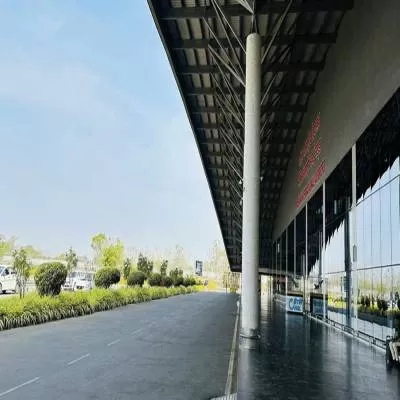
Nashik airport will undergo a Rs 5.72 billion (bn) infrastructure upgrade intended to triple passenger handling capacity as the city prepares to host the Kumbh Mela next year. The expansion includes construction of a new 18,250 square metre terminal building with twenty four check-in counters and enhanced passenger facilities. Upon completion the airport's handling capacity is expected to rise to 1,000 passengers per hour.

A new apron will double aircraft parking bays to 12 and is expected to improve aircraft handling and ease congestion during peak periods. Maharashtra Chief Minister Devendra Fadnavis performed the ground-breaking ceremony for the terminal following a memorandum of understanding between the state government and Hindustan Aeronautics Limited (HAL) which owns the airport. Nashik Divisional Commissioner Praveen Gedam said the Maharashtra government will fully fund the project and that construction is expected to be completed within one year.

Passenger traffic recorded steady growth between April and December 2025 when the airport handled zero point three million (mn) passengers, reflecting a year on year increase of 23 per cent. Currently IndiGo remains the only airline operating scheduled commercial services from Nashik with flights linking Ahmedabad, Bengaluru, Delhi, Goa and Hyderabad. The airport has also seen activity in cargo movement and from April to November last year it handled more than 6,400 metric tonne (t) of international cargo, with goat exports to West Asia accounting for a major share.

The upgrade is being carried out ahead of the Kumbh Mela and is expected to support a sharp increase in passenger numbers during the event. During the previous Kumbh the Prayagraj airport raised passenger handling capacity from 350 per hour to 850 per hour by operating additional flights and increasing non-scheduled services. With construction underway Nashik's expanded facilities are expected to support higher passenger throughput and flight operations in the lead up to the festival.

Nashik airport will undergo a Rs 5.72 billion (bn) infrastructure upgrade intended to triple passenger handling capacity as the city prepares to host the Kumbh Mela next year. The expansion includes construction of a new 18,250 square metre terminal building with twenty four check-in counters and enhanced passenger facilities. Upon completion the airport's handling capacity is expected to rise to 1,000 passengers per hour. A new apron will double aircraft parking bays to 12 and is expected to improve aircraft handling and ease congestion during peak periods. Maharashtra Chief Minister Devendra Fadnavis performed the ground-breaking ceremony for the terminal following a memorandum of understanding between the state government and Hindustan Aeronautics Limited (HAL) which owns the airport. Nashik Divisional Commissioner Praveen Gedam said the Maharashtra government will fully fund the project and that construction is expected to be completed within one year. Passenger traffic recorded steady growth between April and December 2025 when the airport handled zero point three million (mn) passengers, reflecting a year on year increase of 23 per cent. Currently IndiGo remains the only airline operating scheduled commercial services from Nashik with flights linking Ahmedabad, Bengaluru, Delhi, Goa and Hyderabad. The airport has also seen activity in cargo movement and from April to November last year it handled more than 6,400 metric tonne (t) of international cargo, with goat exports to West Asia accounting for a major share. The upgrade is being carried out ahead of the Kumbh Mela and is expected to support a sharp increase in passenger numbers during the event. During the previous Kumbh the Prayagraj airport raised passenger handling capacity from 350 per hour to 850 per hour by operating additional flights and increasing non-scheduled services. With construction underway Nashik's expanded facilities are expected to support higher passenger throughput and flight operations in the lead up to the festival.

Next Story
Infrastructure Urban

Implementation Status of Jal Jeevan Mission

Since August 2019 the Government has implemented Jal Jeevan Mission to provide assured potable water through household tap connections in rural India. At the start of the mission only 32.3 million (mn) rural households, representing 16.7 per cent, were reported to have tap water connections. States and union territories have reported that 125.8 mn additional rural households have since been provided with tap connections. As a result, of about 193.6 mn rural households roughly 158.2 mn, or 81.71 per cent, are reported to have tap water supply at home.\n\nThe State, district and village level st..

Next Story
Infrastructure Urban

Jal Jeevan Mission Reaches Eighty One Per Cent Rural Coverage

The Government reported substantial progress under the Jal Jeevan Mission, launched in August 2019 to provide tap water to every rural household. At launch only 32.3 million (mn) rural households had tap connections and states and Union territories reported provision of 125.8 mn additional households by March 2026. Consequently, out of about 193.6 mn rural households around 158.2 mn, or 81.71 per cent, are reported to have tap water at home. The Finance Minister announced extension of the mission until 2028 in the 2025-26 budget speech. The Swachh Bharat Mission Grameen, launched in October 20..

Next Story
Infrastructure Urban

Empowering Local Governance for Sustainable Rural Water Supply

The Ministry of Jal Shakti has aligned the Jal Jeevan Mission (JJM) with the 73rd Amendment to strengthen village level planning and community ownership of water supply. Gram Panchayats, village water and sanitation committees and Pani Samitis are to plan, implement, manage and maintain piped water systems, with gram sabha processes formalising handover and oversight. Implementation support agencies including non government organisations, community based organisations and self help groups have been empanelled to train local committees and promote women participation. Under JJM, the department ..

Advertisement

Subscribe to Our Newsletter

Get daily newsletters around different themes from Construction world.

STAY CONNECTED

Advertisement

Advertisement

Advertisement