Madras HC Halts Constructions at Tiruvannamalai Temple
ECONOMY & POLICY

Madras HC Halts Constructions at Tiruvannamalai Temple

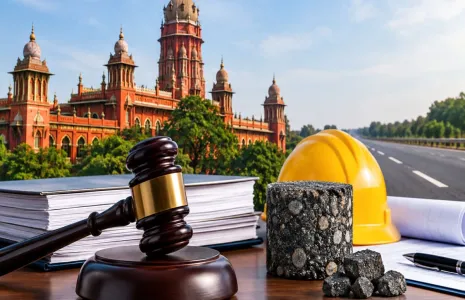
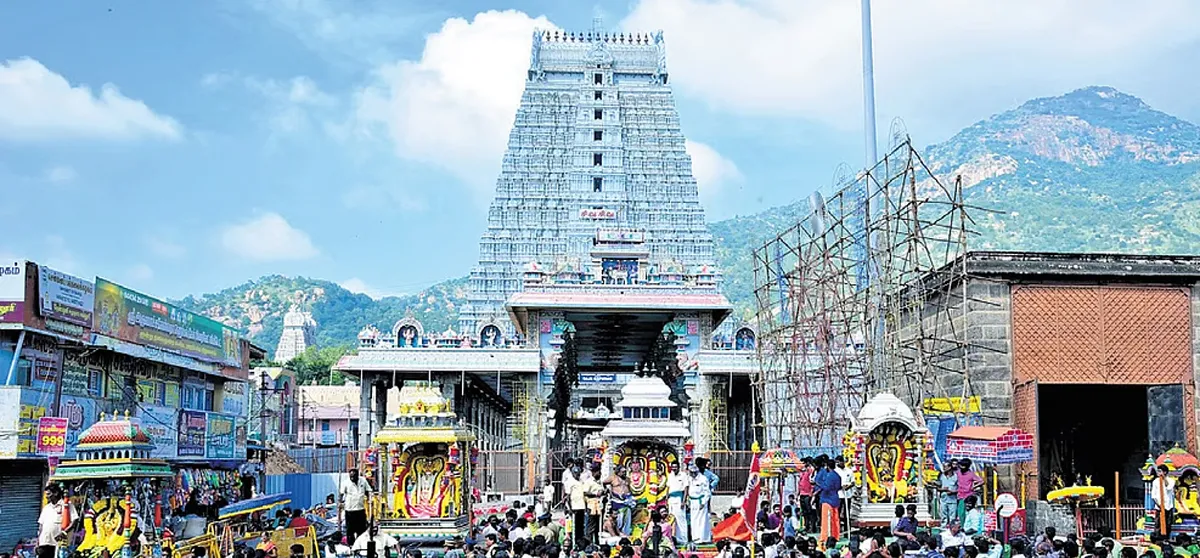
The Madras High Court has temporarily restrained the Hindu Religious and Charitable Endowments (HR&CE) department from continuing construction works within the premises and periphery of the Arunachaleswarar temple at Tiruvannamalai. The bench observed that the new works could compromise the temple’s heritage value.
A special division bench of Justices R Suresh Kumar and S Sounthar issued the interim injunction while hearing petitions challenging the construction of a queue complex and basic amenities for devotees.
Photographs submitted by petitioner and temple activist T. R. Ramesh showed permanent structures with concrete beams and pillars being built very close to the temple’s compound wall. The judges said such proximity would diminish the temple’s archaeological importance and aesthetic beauty.
The bench also questioned whether construction outside the temple was permissible, noting that the matter had been under judicial consideration for some time. The state pleader for HR&CE informed the court that a proposed row shop complex outside the temple had been shelved, but a queue complex with waiting halls was being built for devotees instead.
However, the court pointed out that the narrow gap between the heritage wall and the new complex could prove more of a hindrance than a help to worshippers, besides harming the temple’s visual appeal.
The HR&CE department has been directed to file a detailed justification report with supporting documents. Until then, the court has barred further construction inside or outside the temple precincts. The bench also indicated plans to inspect the site on 5 October and adjourned the hearing to 16 October.

The Madras High Court has temporarily restrained the Hindu Religious and Charitable Endowments (HR&CE) department from continuing construction works within the premises and periphery of the Arunachaleswarar temple at Tiruvannamalai. The bench observed that the new works could compromise the temple’s heritage value.A special division bench of Justices R Suresh Kumar and S Sounthar issued the interim injunction while hearing petitions challenging the construction of a queue complex and basic amenities for devotees.Photographs submitted by petitioner and temple activist T. R. Ramesh showed permanent structures with concrete beams and pillars being built very close to the temple’s compound wall. The judges said such proximity would diminish the temple’s archaeological importance and aesthetic beauty.The bench also questioned whether construction outside the temple was permissible, noting that the matter had been under judicial consideration for some time. The state pleader for HR&CE informed the court that a proposed row shop complex outside the temple had been shelved, but a queue complex with waiting halls was being built for devotees instead.However, the court pointed out that the narrow gap between the heritage wall and the new complex could prove more of a hindrance than a help to worshippers, besides harming the temple’s visual appeal.The HR&CE department has been directed to file a detailed justification report with supporting documents. Until then, the court has barred further construction inside or outside the temple precincts. The bench also indicated plans to inspect the site on 5 October and adjourned the hearing to 16 October.

Next Story
Infrastructure Transport

India Becomes First to Produce Bio-Bitumen for Roads

India has become the first country in the world to commercially produce bio-bitumen for use in road construction, according to Road, Transport and Highways Minister Nitin Gadkari. Bitumen, a black and viscous hydrocarbon derived from crude oil, is a key binding material in road building, and the bio-based alternative is expected to significantly improve the sector’s environmental footprint.Addressing the CSIR Technology Transfer Ceremony in New Delhi, Mr Gadkari congratulated Council of Scientific and Industrial Research on achieving the milestone, noting that the initiative would help curb ..

Next Story
Infrastructure Urban

HILT Policy Seen Boosting Telangana Revenue Sharply

The Hyderabad Industrial Land Transformation (HILT) Policy is expected to generate around Rs 1.08 billion in revenue for the Telangana state exchequer, according to Deputy Chief Minister Bhatti Vikramarka Mallu. Speaking in the Telangana Legislative Assembly, he said the policy would be implemented within a six-month timeframe in a transparent manner, with uniform rules applicable to all stakeholders. Mr Vikramarka noted that without the HILT Policy, the state would have earned only about Rs 1.2 million per acre. Under the new framework, however, revenue is projected to rise sharply to Rs 70 ..

Next Story
Infrastructure Urban

India Post, MoRD Tie Up to Boost Rural Inclusion

The Department of Posts and the Ministry of Rural Development have signed a Memorandum of Understanding to accelerate rural transformation and expand financial, digital and logistics services for Self-Help Groups (SHGs) and rural households across India. The agreement was signed in the presence of Union Minister of Communications and Development of North Eastern Region Jyotiraditya M. Scindia and Union Minister of Rural Development and Agriculture and Farmers’ Welfare Shivraj Singh Chouhan. The collaboration aligns with the government’s “Dak Sewa, Jan Sewa” vision and seeks to repositi..

Advertisement

Subscribe to Our Newsletter

Get daily newsletters around different themes from Construction world.

STAY CONNECTED

Advertisement

Advertisement

Advertisement

Advertisement

Open In App