+
Maharashtra, Lodha Sign Rs 1 Trillion Data Centre MoU
ECONOMY & POLICY

Maharashtra, Lodha Sign Rs 1 Trillion Data Centre MoU

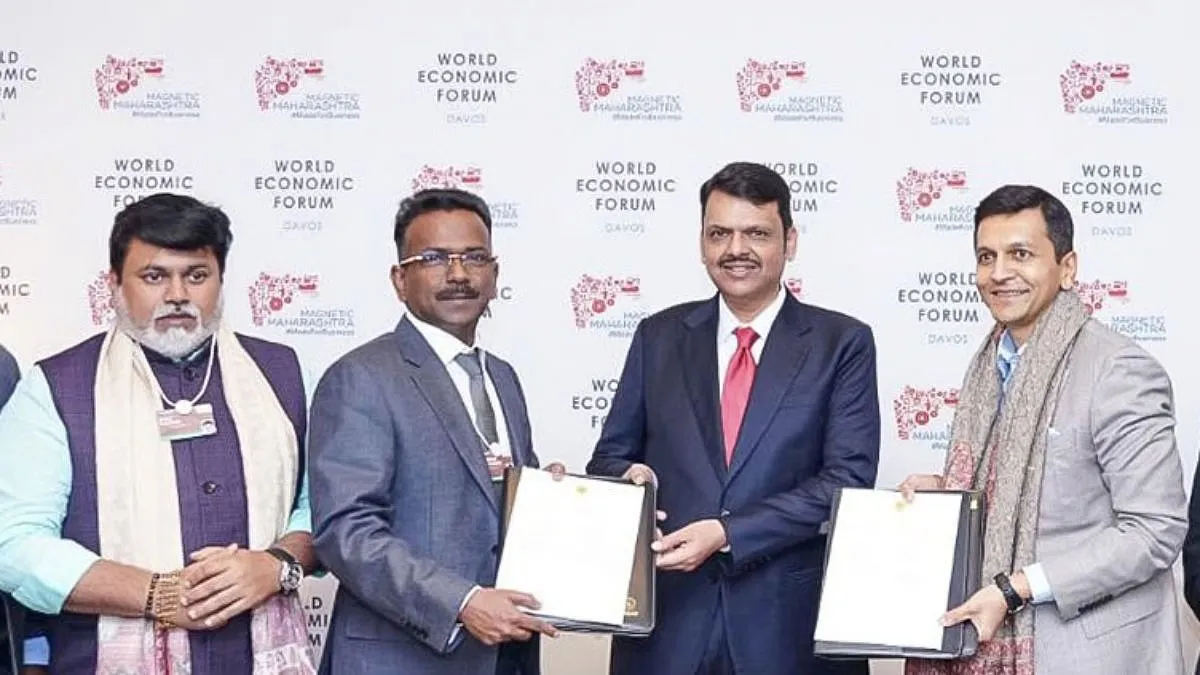
The Government of Maharashtra has signed a landmark memorandum of understanding with Lodha Developers Ltd at the World Economic Forum 2026 in Davos, reinforcing the state’s ambition to emerge as a leading digital and technology hub.

The agreement, valued at Rs 1,000 billion, was formalised in the presence of Chief Minister Devendra Fadnavis and Abhishek Lodha, Managing Director and Chief Executive Officer of Lodha Group, during a session at the Maharashtra Pavilion. The investment is targeted at the information technology and IT-enabled services sector, with a strong focus on the development of large-scale data centres.

These state-of-the-art facilities are planned within the Mumbai Metropolitan Region, leveraging the area’s strong connectivity and the state’s ‘Green Integrated Data Centre’ policy framework. The project will integrate sustainable energy solutions, aligning with global environmental standards while providing the backend infrastructure required to support India’s growing demand for artificial intelligence and cloud computing.

A key highlight of the MoU is its employment potential. The investment is expected to create around 150,000 jobs, including both direct technical roles and indirect service positions across the region. State officials said the influx of high-value employment will support local economic growth and strengthen Mumbai’s position as a global technology centre alongside its role as India’s financial capital.

For Lodha Developers, which has traditionally focused on residential and commercial real estate, the project marks a strategic diversification into high-growth digital infrastructure, reflecting a broader shift among leading Indian corporate groups towards technology-led assets.

The agreement was part of a broader set of investment commitments secured by the Maharashtra delegation at Davos, with total pledges exceeding Rs 14,500 billion across multiple sunrise sectors. With Maharashtra already hosting nearly 60 per cent of India’s existing data centre capacity, the Lodha investment is expected to further consolidate the Mumbai Metropolitan Region’s role at the centre of the country’s digital transformation.

The Government of Maharashtra has signed a landmark memorandum of understanding with Lodha Developers Ltd at the World Economic Forum 2026 in Davos, reinforcing the state’s ambition to emerge as a leading digital and technology hub. The agreement, valued at Rs 1,000 billion, was formalised in the presence of Chief Minister Devendra Fadnavis and Abhishek Lodha, Managing Director and Chief Executive Officer of Lodha Group, during a session at the Maharashtra Pavilion. The investment is targeted at the information technology and IT-enabled services sector, with a strong focus on the development of large-scale data centres. These state-of-the-art facilities are planned within the Mumbai Metropolitan Region, leveraging the area’s strong connectivity and the state’s ‘Green Integrated Data Centre’ policy framework. The project will integrate sustainable energy solutions, aligning with global environmental standards while providing the backend infrastructure required to support India’s growing demand for artificial intelligence and cloud computing. A key highlight of the MoU is its employment potential. The investment is expected to create around 150,000 jobs, including both direct technical roles and indirect service positions across the region. State officials said the influx of high-value employment will support local economic growth and strengthen Mumbai’s position as a global technology centre alongside its role as India’s financial capital. For Lodha Developers, which has traditionally focused on residential and commercial real estate, the project marks a strategic diversification into high-growth digital infrastructure, reflecting a broader shift among leading Indian corporate groups towards technology-led assets. The agreement was part of a broader set of investment commitments secured by the Maharashtra delegation at Davos, with total pledges exceeding Rs 14,500 billion across multiple sunrise sectors. With Maharashtra already hosting nearly 60 per cent of India’s existing data centre capacity, the Lodha investment is expected to further consolidate the Mumbai Metropolitan Region’s role at the centre of the country’s digital transformation.

Next Story
Infrastructure Urban

Implementation Status of Jal Jeevan Mission

Since August 2019 the Government has implemented Jal Jeevan Mission to provide assured potable water through household tap connections in rural India. At the start of the mission only 32.3 million (mn) rural households, representing 16.7 per cent, were reported to have tap water connections. States and union territories have reported that 125.8 mn additional rural households have since been provided with tap connections. As a result, of about 193.6 mn rural households roughly 158.2 mn, or 81.71 per cent, are reported to have tap water supply at home.\n\nThe State, district and village level st..

Next Story
Infrastructure Urban

Jal Jeevan Mission Reaches Eighty One Per Cent Rural Coverage

The Government reported substantial progress under the Jal Jeevan Mission, launched in August 2019 to provide tap water to every rural household. At launch only 32.3 million (mn) rural households had tap connections and states and Union territories reported provision of 125.8 mn additional households by March 2026. Consequently, out of about 193.6 mn rural households around 158.2 mn, or 81.71 per cent, are reported to have tap water at home. The Finance Minister announced extension of the mission until 2028 in the 2025-26 budget speech. The Swachh Bharat Mission Grameen, launched in October 20..

Next Story
Infrastructure Urban

Empowering Local Governance for Sustainable Rural Water Supply

The Ministry of Jal Shakti has aligned the Jal Jeevan Mission (JJM) with the 73rd Amendment to strengthen village level planning and community ownership of water supply. Gram Panchayats, village water and sanitation committees and Pani Samitis are to plan, implement, manage and maintain piped water systems, with gram sabha processes formalising handover and oversight. Implementation support agencies including non government organisations, community based organisations and self help groups have been empanelled to train local committees and promote women participation. Under JJM, the department ..

Advertisement

Subscribe to Our Newsletter

Get daily newsletters around different themes from Construction world.

STAY CONNECTED

Advertisement

Advertisement

Advertisement