MDoNER Panel Reviews PM-DevINE Progress and NE Projects
ECONOMY & POLICY

MDoNER Panel Reviews PM-DevINE Progress and NE Projects

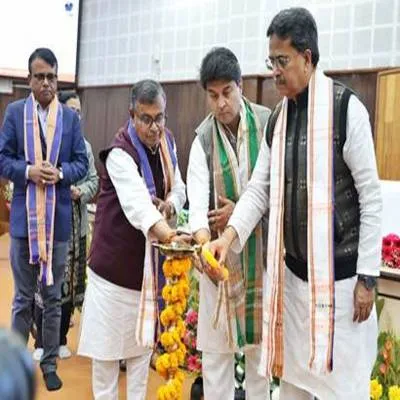
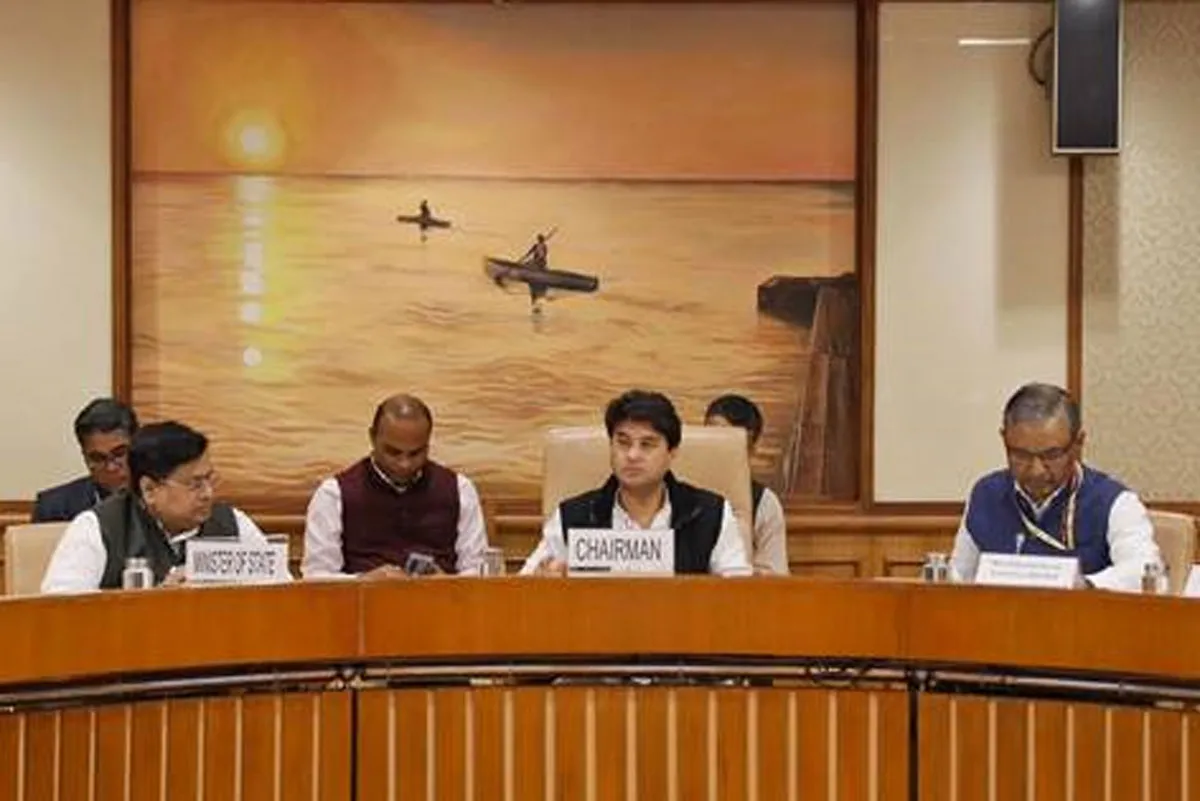
The Consultative Committee of the Ministry of Development of North Eastern Region met recently at the Parliament House Annexe under the chairmanship of the Union Minister of Communications and Development of the North Eastern Region, Jyotiraditya M. Scindia. The Minister of State for Education and Development of the North Eastern Region, Dr Sukanta Majumdar, also attended the meeting.
Welcoming Members from both Houses of Parliament, Scindia underlined the importance of these meetings as part of the Ministry’s continuous dialogue on investment and development across the North Eastern States. He expressed gratitude for the Members’ active participation and insights. Describing PM-DevINE as the Ministry’s most significant scheme, he noted that it was conceptualised in the Union Budget 2022–2023 with a total outlay of Rs 66 billion for the period 2022–2026. As of 31 October 2025, 44 projects valued at about Rs 57 billion had been sanctioned. Three projects worth Rs 176 crore have been completed, while 41 projects valued at about Rs 5,500 crore are under implementation. Projects worth Rs 1.11 billion have also been approved in principle, with additional proposals worth Rs 6.25 billion in the pipeline. The Ministry remains on track to fully utilise the scheme outlay.
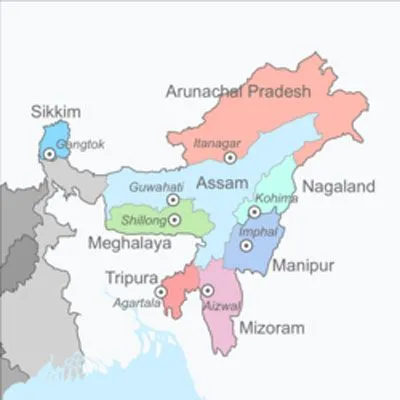
Responding to observations from Members, the Minister provided updates on projects underway in Assam, Nagaland, Mizoram and Tripura. On suggestions concerning tourism in Tripura, he stated that world-class tourist circuits would be developed in each North Eastern State, with locations identified in consultation with State Governments. The Sohra Circuit in Meghalaya and the Matabari Circuit in Tripura are being taken up as pilots. The foundation stone for the Sohra Circuit has already been laid, while the Matabari Circuit is at an advanced stage of approval. Alongside infrastructure development, the initiative will emphasise capacity building to ensure a skilled workforce capable of supporting rising tourism demand and enhancing visitor experiences.
Scindia also highlighted the rigorous, multi-layered monitoring framework adopted for PM-DevINE. Weekly reviews are conducted, with each project tracked against expected versus actual progress. Time-stamped photographs support physical assessments, and officers from MDoNER and the North Eastern Council undertake field inspections. Third-party evaluation mechanisms further strengthen transparency and accountability.
The Minister reaffirmed the Government’s commitment to transparent, rapid and outcome-driven development in the North Eastern Region, emphasising PM-DevINE’s role as a central catalyst for infrastructure expansion and socio-economic growth.

The Consultative Committee of the Ministry of Development of North Eastern Region met recently at the Parliament House Annexe under the chairmanship of the Union Minister of Communications and Development of the North Eastern Region, Jyotiraditya M. Scindia. The Minister of State for Education and Development of the North Eastern Region, Dr Sukanta Majumdar, also attended the meeting.Welcoming Members from both Houses of Parliament, Scindia underlined the importance of these meetings as part of the Ministry’s continuous dialogue on investment and development across the North Eastern States. He expressed gratitude for the Members’ active participation and insights. Describing PM-DevINE as the Ministry’s most significant scheme, he noted that it was conceptualised in the Union Budget 2022–2023 with a total outlay of Rs 66 billion for the period 2022–2026. As of 31 October 2025, 44 projects valued at about Rs 57 billion had been sanctioned. Three projects worth Rs 176 crore have been completed, while 41 projects valued at about Rs 5,500 crore are under implementation. Projects worth Rs 1.11 billion have also been approved in principle, with additional proposals worth Rs 6.25 billion in the pipeline. The Ministry remains on track to fully utilise the scheme outlay.Responding to observations from Members, the Minister provided updates on projects underway in Assam, Nagaland, Mizoram and Tripura. On suggestions concerning tourism in Tripura, he stated that world-class tourist circuits would be developed in each North Eastern State, with locations identified in consultation with State Governments. The Sohra Circuit in Meghalaya and the Matabari Circuit in Tripura are being taken up as pilots. The foundation stone for the Sohra Circuit has already been laid, while the Matabari Circuit is at an advanced stage of approval. Alongside infrastructure development, the initiative will emphasise capacity building to ensure a skilled workforce capable of supporting rising tourism demand and enhancing visitor experiences.Scindia also highlighted the rigorous, multi-layered monitoring framework adopted for PM-DevINE. Weekly reviews are conducted, with each project tracked against expected versus actual progress. Time-stamped photographs support physical assessments, and officers from MDoNER and the North Eastern Council undertake field inspections. Third-party evaluation mechanisms further strengthen transparency and accountability.The Minister reaffirmed the Government’s commitment to transparent, rapid and outcome-driven development in the North Eastern Region, emphasising PM-DevINE’s role as a central catalyst for infrastructure expansion and socio-economic growth.

Next Story
Real Estate

AI: The New Recruit

From getting ideas to evaluating designs, presenting concepts to clients and tracking projects, artificial intelligence (AI) is helping architects work better and faster.“AI allows architects to spend more time doing what only they can do: think critically, synthesise complexity and design with intent,” says Dikshu C Kukreja, Managing Principal, CP Kukreja Architects. “Every minute reclaimed from repetitive processes can be invested in creativity, contextual understanding, interdisciplinary collaboration and innovation – the qualities that define meaningful architecture.”To read the ..

Next Story
Real Estate

Redevelopment 2.0

In 2017, Mumbai identified 160,000 ageing buildings due for structural audit. Close to half of these were in the Western Suburbs. Redeveloping the oldest and structurally weakest of these would help unlock new housing, much needed given the city’s growing population density and constant developed area of 437.7 sq km. At 30,600 people per sq km in 2024, Mumbai’s density was almost thrice that of Gurugram, and 60 per cent higher than Bengaluru’s.Essentially, Mumbai’s realty market has demand. It has capital. It has realty development potential.Fast forward to 2026. Mumbai has 1,094 regis..

Next Story
Technology

Cost intelligence will become a strategic contributor to project success

As India's construction industry accelerates its digital transformation, integrated platforms, AI and connected data are becoming essential to improving cost certainty, project efficiency and sustainability. Ravi Kumar, Sales Director – India, RIB Software India, shares how digital workflows are reshaping project planning, commercial management and decision-making across the construction value chain.India's construction sector is embracing digital technologies at an unprecedented pace. From your perspective, what are the biggest shifts driving this transformation and how is RIB Software enab..

Advertisement

Subscribe to Our Newsletter

Get daily newsletters around different themes from Construction world.

STAY CONNECTED

Advertisement

Advertisement

Advertisement