MoSPI Hosts Meet on Strengthening State Statistical Systems
ECONOMY & POLICY

MoSPI Hosts Meet on Strengthening State Statistical Systems

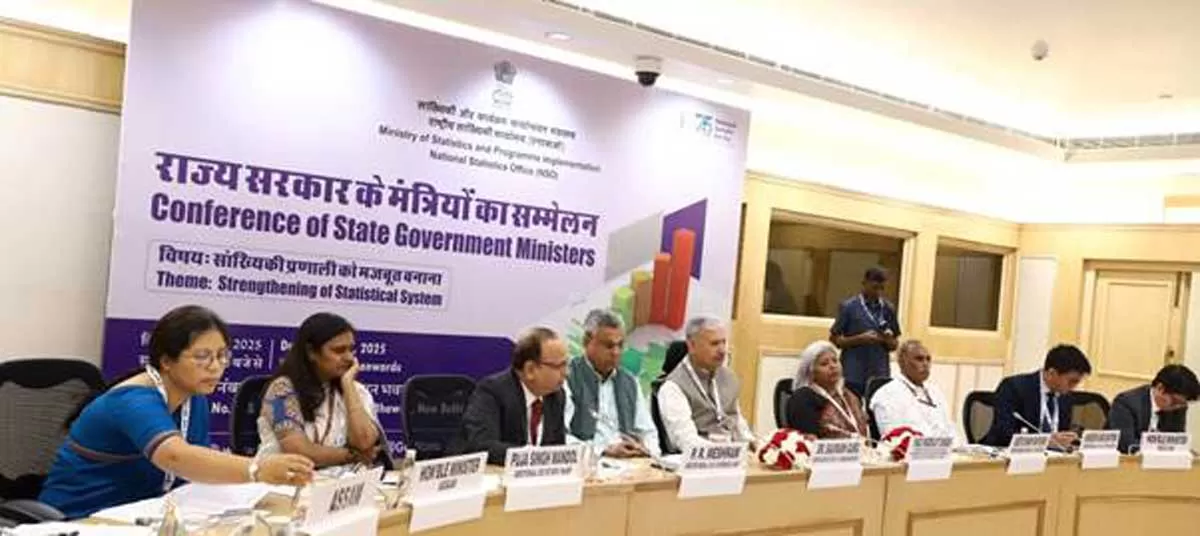
Ministry of Statistics and Programme Implementation (MoSPI) organized a Conference of State Government Ministers on Strengthening of Statistical Systems on 5th April, 2025 at Vigyan Bhawan, New Delhi.

Rao Inderjit Singh, the Minister of State (Independent Charge), MoSPI, Ministry of Planning, and Minister of State (MoS) for the Ministry of Culture, chaired the Conference. In his inaugural address, he appreciated the participation and committed involvement of States / Union Territories (UTs) in the conference and underscored the indispensable role of reliable data in shaping effective policies and called for unified efforts to embrace innovation, foster coordination, and uphold transparency in statistical processes, in a continued journey towards attaining the vision of “Vikshit Bharat 2047” and invited cooperation from all the States/UTs to strengthen the national statistical system.

Dr Saurabh Garg, Secretary, MoSPI, emphasised the importance of robust statistical system for evidence-based policymaking. He highlighted key initiatives of MoSPI, including the Support for Statistical Strengthening (SSS) Scheme and appealed for participation in the National Sample Surveys (NSS). He stressed upon the need for having sub-state level estimates for more granularity. Concluding with a call for strengthened collaboration, he emphasized greater use of administrative and alternate data sources, use of modern technology in data collection, refining statistical frameworks to promote transparency, credibility, accountability, sustainable development and capacity building of States/UTs officials through NSSTA training programmes.

Nandita Gorlosa, Hon'ble Minister of Sports & Youth Welfare, Welfare of Minorities & Development and Public Works (Buildings & National Highways) Departments, Govt. of Assam ; Bijendra Prasad Yadav, Minister of Planning and Development, Govt of Bihar; Gaurav Gautam, Minister of Youth Empowerment and Entrepreneurship and Sports, Govt of Haryana; Radha Krishna Kishore, Minister, Department of Planning & Development, Govt. of Jharkhand; Dr Vanlalthlana, Minister, Department of School Education/Higher and Technical Education/Information and Public relations/Information and Communication Technology, Govt. of Mizoram; K K Vishnoi, Minister of Sports & Youth Affairs, Skill & Employment & Entrepreneurship Department, Government of Rajasthan; Bikash Debbarma, Minister, Planning (Statistics) Department, Government of Tripura; Suresh Kumar Khanna, Minister, Finance and Parliamentary Affairs, Govt of Uttar Pradesh; Saurabh Bahuguna, Minister of Minister of Animal Husbandry, Fisheries, Skill development & Employment, Protocol and Sugarcane Development, Govt. of Uttarakhand and Chandrima Bhattacharya, Minister of State, Department of Planning, Statistics and Programme Monitoring, Govt. of West Bengal participated in the conference.

The State Government Ministers/UT Administrators appreciated the Conference of State Government Ministers and suggested that this should be made a regular feature for better coordination and holistic development of the National Statistical System. They also highlighted the importance of producing relevant, accurate, and timely statistics at both the national and sub-national levels and emphasised on the key areas where deeper collaboration and partnership between the Centre and the States is crucial for strengthening both national and state statistical systems.

Additional Chief Secretary, Secretary (Planning), Special Secretary, Director (DES) and other senior level officers from States/ UTs also participated in the conference and made their valuable suggestions.

The workshop featured presentations on key aspects of statistical development and reforms, focusing on strengthening the national statistical system. Discussions covered the Support for Statistical Strengthening (SSS) Scheme, State participation in the National Sample Surveys (NSS) for district-level and advancements in sub-state level estimates for GDP, IIP, and CPI. Key topics also included statistical standards like NMDS 2.0 and unique identifiers, capacity building, innovation, and sub-national SDG monitoring frameworks. The focus of the conference was also on environment accounts, data dissemination through e-Sankhyiki, review of MPLADS and monitoring of major infrastructure projects, alongside major statistical reforms and achievements.

Ministry of Statistics and Programme Implementation (MoSPI) organized a Conference of State Government Ministers on Strengthening of Statistical Systems on 5th April, 2025 at Vigyan Bhawan, New Delhi. Rao Inderjit Singh, the Minister of State (Independent Charge), MoSPI, Ministry of Planning, and Minister of State (MoS) for the Ministry of Culture, chaired the Conference. In his inaugural address, he appreciated the participation and committed involvement of States / Union Territories (UTs) in the conference and underscored the indispensable role of reliable data in shaping effective policies and called for unified efforts to embrace innovation, foster coordination, and uphold transparency in statistical processes, in a continued journey towards attaining the vision of “Vikshit Bharat 2047” and invited cooperation from all the States/UTs to strengthen the national statistical system. Dr Saurabh Garg, Secretary, MoSPI, emphasised the importance of robust statistical system for evidence-based policymaking. He highlighted key initiatives of MoSPI, including the Support for Statistical Strengthening (SSS) Scheme and appealed for participation in the National Sample Surveys (NSS). He stressed upon the need for having sub-state level estimates for more granularity. Concluding with a call for strengthened collaboration, he emphasized greater use of administrative and alternate data sources, use of modern technology in data collection, refining statistical frameworks to promote transparency, credibility, accountability, sustainable development and capacity building of States/UTs officials through NSSTA training programmes. Nandita Gorlosa, Hon'ble Minister of Sports & Youth Welfare, Welfare of Minorities & Development and Public Works (Buildings & National Highways) Departments, Govt. of Assam ; Bijendra Prasad Yadav, Minister of Planning and Development, Govt of Bihar; Gaurav Gautam, Minister of Youth Empowerment and Entrepreneurship and Sports, Govt of Haryana; Radha Krishna Kishore, Minister, Department of Planning & Development, Govt. of Jharkhand; Dr Vanlalthlana, Minister, Department of School Education/Higher and Technical Education/Information and Public relations/Information and Communication Technology, Govt. of Mizoram; K K Vishnoi, Minister of Sports & Youth Affairs, Skill & Employment & Entrepreneurship Department, Government of Rajasthan; Bikash Debbarma, Minister, Planning (Statistics) Department, Government of Tripura; Suresh Kumar Khanna, Minister, Finance and Parliamentary Affairs, Govt of Uttar Pradesh; Saurabh Bahuguna, Minister of Minister of Animal Husbandry, Fisheries, Skill development & Employment, Protocol and Sugarcane Development, Govt. of Uttarakhand and Chandrima Bhattacharya, Minister of State, Department of Planning, Statistics and Programme Monitoring, Govt. of West Bengal participated in the conference. The State Government Ministers/UT Administrators appreciated the Conference of State Government Ministers and suggested that this should be made a regular feature for better coordination and holistic development of the National Statistical System. They also highlighted the importance of producing relevant, accurate, and timely statistics at both the national and sub-national levels and emphasised on the key areas where deeper collaboration and partnership between the Centre and the States is crucial for strengthening both national and state statistical systems. Additional Chief Secretary, Secretary (Planning), Special Secretary, Director (DES) and other senior level officers from States/ UTs also participated in the conference and made their valuable suggestions. The workshop featured presentations on key aspects of statistical development and reforms, focusing on strengthening the national statistical system. Discussions covered the Support for Statistical Strengthening (SSS) Scheme, State participation in the National Sample Surveys (NSS) for district-level and advancements in sub-state level estimates for GDP, IIP, and CPI. Key topics also included statistical standards like NMDS 2.0 and unique identifiers, capacity building, innovation, and sub-national SDG monitoring frameworks. The focus of the conference was also on environment accounts, data dissemination through e-Sankhyiki, review of MPLADS and monitoring of major infrastructure projects, alongside major statistical reforms and achievements.

Next Story
Technology

AI-Enabled Workflows Lift Profitability and Productivity

Organisations modernising frontline workflows with artificial intelligence, automation and real-time data are reporting stronger financial performance, higher productivity and improved employee engagement, according to a global study by Zebra Technologies and Oxford Economics.The research covered 1,000 senior leaders across retail, manufacturing, transportation and logistics in the US, Mexico, the UK, Germany, India, Japan, Australia and New Zealand.In transportation and logistics, 54 per cent of companies that improved picking and packing operations reported faster operational performance, wh..

Next Story
Real Estate

India Leads Global AI Readiness but Implementation Lags

Indian companies lead global averages across all eight artificial intelligence readiness indicators tracked by JLL, but only 19 per cent have started making changes to their workplaces, according to the JLL 2026 Future of Work Survey.The study found that 77 per cent of Indian business leaders expect AI to change their office requirements, creating a 58-percentage-point gap between awareness and implementation. The survey covered more than 2,200 CEOs, CFOs and real estate leaders across 21 countries during the first quarter of 2026.Despite concerns over automation, 58 per cent of Indian leaders..

Next Story
Equipment

Three WOLFF Cranes Build Riyadh Cable-Stayed Bridges

Three WOLFF 180 B luffing jib cranes are supporting the construction of two cable-stayed bridges alongside the existing Wadi Laban Bridge in Riyadh, Saudi Arabia. The project is being developed for the Royal Commission for Riyadh City and executed by the ICRC joint venture comprising IC Ictas and Al Rashid Trading & Contracting Company.The cranes are handling lifting operations including formwork, reinforcement, concrete placement, work platforms, surveying equipment and other construction materials. Each crane is fitted with a 40 m jib, reaches a hook height of 157 m and offers a maximum ..

Advertisement

Subscribe to Our Newsletter

Get daily newsletters around different themes from Construction world.

STAY CONNECTED

Advertisement

Advertisement

Advertisement