



MSEDCL Urges Consumers To Adopt Smart Meters
ECONOMY & POLICY

MSEDCL Urges Consumers To Adopt Smart Meters

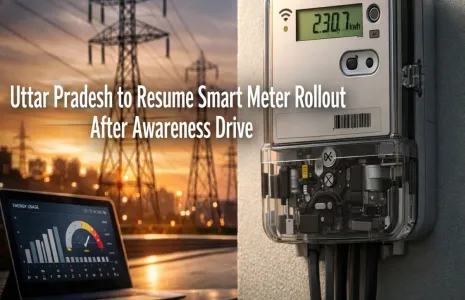
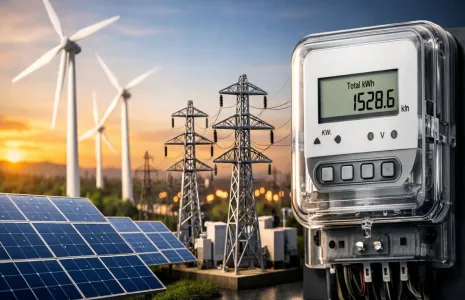
The Maharashtra State Electricity Distribution Company Limited (MSEDCL) has urged electricity consumers to adopt smart meters, stressing improved billing accuracy and consumer convenience. The utility presented the shift as part of a broader technological modernisation intended to enhance transparency and reduce billing disputes. Officials asked consumers to cooperate with field staff during installations and to address misconceptions about meter safety and functionality.

Time-of-Day (TOD) meters enable differential tariff calculation by recording consumption at specific hours and allow users to benefit from lower charges for off peak usage. From one July 2025, domestic low tension consumers and high tension housing societies became eligible for a phased rebate of eighty paise to Rs one per unit for consumption recorded between nine am and five pm. Smart meters also provide hourly, daily, weekly and monthly consumption data via a mobile application, helping households monitor usage and plan demand.

The utility said smart meters replace ageing mechanical and electromagnetic meters that can no longer deliver precise readings and that automation will reduce estimated or average billing complaints. Installation is being undertaken free of cost and smart meters will operate on a postpaid basis under the existing billing framework. Consumers were advised that meter readings will be captured electronically, improving efficiency and providing clearer audit trails for consumption and charges.

MSEDCL encouraged consumers to use the detailed usage information to manage demand and to adopt simple behavioural changes that can lower bills and conserve energy. The utility emphasised that modern metering will support greater operational efficiency, faster complaint resolution and improved consumer engagement. Households were urged to register on the application portal and to coordinate with field teams to ensure timely installations and accurate data capture. Officials noted that the rollout will be phased and that consumers will be informed ahead of local installations.

The Maharashtra State Electricity Distribution Company Limited (MSEDCL) has urged electricity consumers to adopt smart meters, stressing improved billing accuracy and consumer convenience. The utility presented the shift as part of a broader technological modernisation intended to enhance transparency and reduce billing disputes. Officials asked consumers to cooperate with field staff during installations and to address misconceptions about meter safety and functionality. Time-of-Day (TOD) meters enable differential tariff calculation by recording consumption at specific hours and allow users to benefit from lower charges for off peak usage. From one July 2025, domestic low tension consumers and high tension housing societies became eligible for a phased rebate of eighty paise to Rs one per unit for consumption recorded between nine am and five pm. Smart meters also provide hourly, daily, weekly and monthly consumption data via a mobile application, helping households monitor usage and plan demand. The utility said smart meters replace ageing mechanical and electromagnetic meters that can no longer deliver precise readings and that automation will reduce estimated or average billing complaints. Installation is being undertaken free of cost and smart meters will operate on a postpaid basis under the existing billing framework. Consumers were advised that meter readings will be captured electronically, improving efficiency and providing clearer audit trails for consumption and charges. MSEDCL encouraged consumers to use the detailed usage information to manage demand and to adopt simple behavioural changes that can lower bills and conserve energy. The utility emphasised that modern metering will support greater operational efficiency, faster complaint resolution and improved consumer engagement. Households were urged to register on the application portal and to coordinate with field teams to ensure timely installations and accurate data capture. Officials noted that the rollout will be phased and that consumers will be informed ahead of local installations.

Next Story
Technology

AI-Enabled Workflows Lift Profitability and Productivity

Organisations modernising frontline workflows with artificial intelligence, automation and real-time data are reporting stronger financial performance, higher productivity and improved employee engagement, according to a global study by Zebra Technologies and Oxford Economics.The research covered 1,000 senior leaders across retail, manufacturing, transportation and logistics in the US, Mexico, the UK, Germany, India, Japan, Australia and New Zealand.In transportation and logistics, 54 per cent of companies that improved picking and packing operations reported faster operational performance, wh..

Next Story
Real Estate

India Leads Global AI Readiness but Implementation Lags

Indian companies lead global averages across all eight artificial intelligence readiness indicators tracked by JLL, but only 19 per cent have started making changes to their workplaces, according to the JLL 2026 Future of Work Survey.The study found that 77 per cent of Indian business leaders expect AI to change their office requirements, creating a 58-percentage-point gap between awareness and implementation. The survey covered more than 2,200 CEOs, CFOs and real estate leaders across 21 countries during the first quarter of 2026.Despite concerns over automation, 58 per cent of Indian leaders..

Next Story
Equipment

Three WOLFF Cranes Build Riyadh Cable-Stayed Bridges

Three WOLFF 180 B luffing jib cranes are supporting the construction of two cable-stayed bridges alongside the existing Wadi Laban Bridge in Riyadh, Saudi Arabia. The project is being developed for the Royal Commission for Riyadh City and executed by the ICRC joint venture comprising IC Ictas and Al Rashid Trading & Contracting Company.The cranes are handling lifting operations including formwork, reinforcement, concrete placement, work platforms, surveying equipment and other construction materials. Each crane is fitted with a 40 m jib, reaches a hook height of 157 m and offers a maximum ..

Advertisement

Subscribe to Our Newsletter

Get daily newsletters around different themes from Construction world.

STAY CONNECTED

Advertisement

Advertisement

Advertisement