Nearly Eight Sewage Treatment Plants Release Polluted Discharge
ECONOMY & POLICY

Nearly Eight Sewage Treatment Plants Release Polluted Discharge

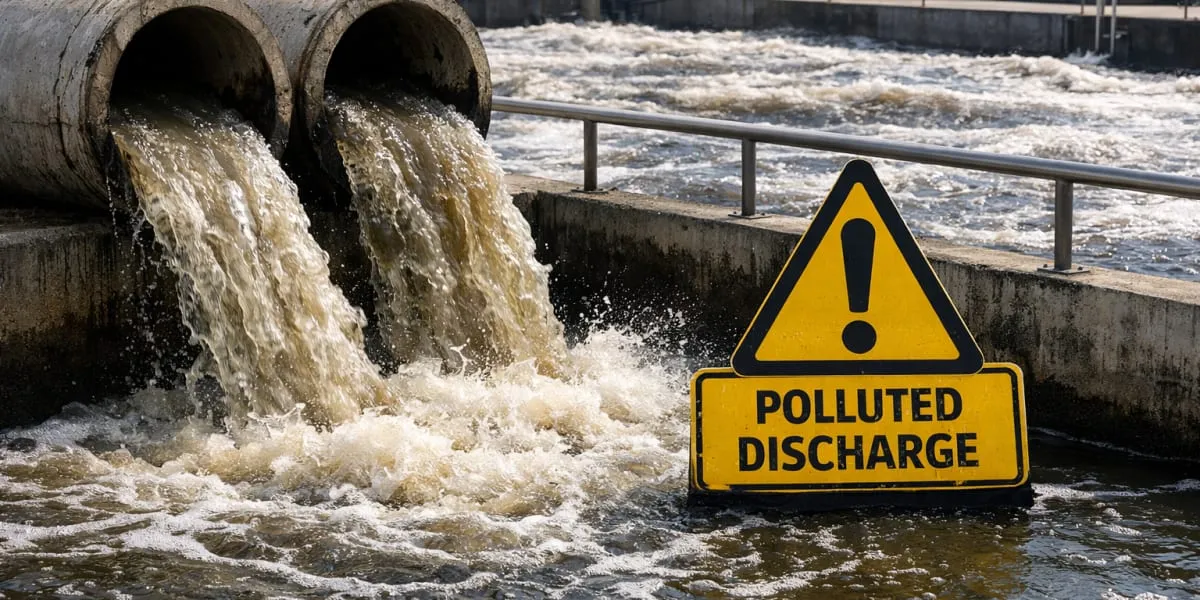
Nearly eight sewage treatment plants in the national capital failed the prescribed discharge standards for total suspended solids, biochemical oxygen demand and faecal coliform levels in July, the Delhi Pollution Control Committee report has revealed. The agency sampled inlet and outlet points at more than 30 treatment facilities as part of periodic monitoring of sewage treatment efficiency. The monitoring aims to ensure compliance with environmental norms.

The report flagged the Yamuna Vihar Phase III plant for non-compliance after an outlet sample recorded total suspended solids at 32 mg/l against the set limit of 10 mg/l and biochemical oxygen demand at 20.4 mg/l against the permissible level of 10 mg/l. The faecal coliform count at that facility was 7,600 most probable number (MPN)/100 ml, well above the standard of 230 MPN/100 ml.

A separate sample from the Yamuna Vihar treatment unit showed a faecal coliform level of 1,500 MPN/100 ml along with elevated suspended solids and biochemical oxygen demand at the outlet. Other plants reported non-compliance at Mehrauli, Ghitorni, two units in Vasant Kunj, Keshopur and Kapashera. The report listed inlet and outlet measurements to assess treatment performance across the network.

Some facilities recorded extremely high faecal coliform counts, with Mehrauli reaching 17,000 MPN/100 ml and Ghitorni 18,000 MPN/100 ml. One of the Vasant Kunj plants recorded 15,000 MPN/100 ml while the other registered 9,200 MPN/100 ml. All of these figures far exceed the prescribed faecal coliform limit and indicate significant microbial contamination in treated effluent.

The Delhi Pollution Control Committee said periodic monitoring is used to identify underperforming units and to inform corrective action to improve sewage treatment. The agency noted that such monitoring is critical to safeguard river health and downstream water bodies and to uphold environmental safeguards. The findings will be used to guide enforcement and operational improvements across the capital.

Nearly eight sewage treatment plants in the national capital failed the prescribed discharge standards for total suspended solids, biochemical oxygen demand and faecal coliform levels in July, the Delhi Pollution Control Committee report has revealed. The agency sampled inlet and outlet points at more than 30 treatment facilities as part of periodic monitoring of sewage treatment efficiency. The monitoring aims to ensure compliance with environmental norms. The report flagged the Yamuna Vihar Phase III plant for non-compliance after an outlet sample recorded total suspended solids at 32 mg/l against the set limit of 10 mg/l and biochemical oxygen demand at 20.4 mg/l against the permissible level of 10 mg/l. The faecal coliform count at that facility was 7,600 most probable number (MPN)/100 ml, well above the standard of 230 MPN/100 ml. A separate sample from the Yamuna Vihar treatment unit showed a faecal coliform level of 1,500 MPN/100 ml along with elevated suspended solids and biochemical oxygen demand at the outlet. Other plants reported non-compliance at Mehrauli, Ghitorni, two units in Vasant Kunj, Keshopur and Kapashera. The report listed inlet and outlet measurements to assess treatment performance across the network. Some facilities recorded extremely high faecal coliform counts, with Mehrauli reaching 17,000 MPN/100 ml and Ghitorni 18,000 MPN/100 ml. One of the Vasant Kunj plants recorded 15,000 MPN/100 ml while the other registered 9,200 MPN/100 ml. All of these figures far exceed the prescribed faecal coliform limit and indicate significant microbial contamination in treated effluent. The Delhi Pollution Control Committee said periodic monitoring is used to identify underperforming units and to inform corrective action to improve sewage treatment. The agency noted that such monitoring is critical to safeguard river health and downstream water bodies and to uphold environmental safeguards. The findings will be used to guide enforcement and operational improvements across the capital.

Related Stories

Gold Stories

Next Story
Real Estate

Gradiant expands Coimbatore engineering centre

Gradiant has expanded its Global Engineering Center (GEC) in Coimbatore, more than doubling its engineering workforce from approximately 100 to over 200 professionals as it strengthens its global project execution capabilities.The expanded centre will bring together multidisciplinary expertise across process engineering, detailed design and project engineering, enabling the India team to take on greater responsibility for the engineering and design of Gradiant’s international projects.According to Govind Alagappan, COO, Gradiant, Coimbatore’s engineering talent and industrial heritage make..

Next Story
Infrastructure Urban

Domestic Firms Choose Locally Designed Reactors to Cut Delays

Domestic companies in the nuclear sector are choosing locally designed reactors to avoid time consuming approvals and supply chain bottlenecks that can delay project execution. The shift reflects an emphasis on reducing dependence on foreign designs and accelerating construction schedules by aligning design, manufacturing and regulatory processes within national frameworks. Industry participants expect that locally designed systems will allow closer coordination with regulators and vendors, shortening lead times for certification and component delivery. Localisation is projected to stimulate t..

Next Story
Infrastructure Urban

Kadiyam Kavya Seeks Separate Railway Division For Kazipet

Warangal Member of Parliament Kadiyam Kavya has urged the establishment of a separate railway division based at Kazipet and submitted a representation to the South Central Railway (SCR) general manager at the headquarters in Secunderabad. She highlighted Kazipet's role as a major railway hub and argued that the junction has not seen development commensurate with its strategic importance. The representative action aimed to press for administrative reorganisation to address local operational and developmental needs. She noted that creation of an independent Kazipet division has been a long stand..

Advertisement

Subscribe to Our Newsletter

Get daily newsletters around different themes from Construction world.

STAY CONNECTED

Advertisement