+
Nepal to Import Up to 1,100 MW from India This Winter
ECONOMY & POLICY

Nepal to Import Up to 1,100 MW from India This Winter

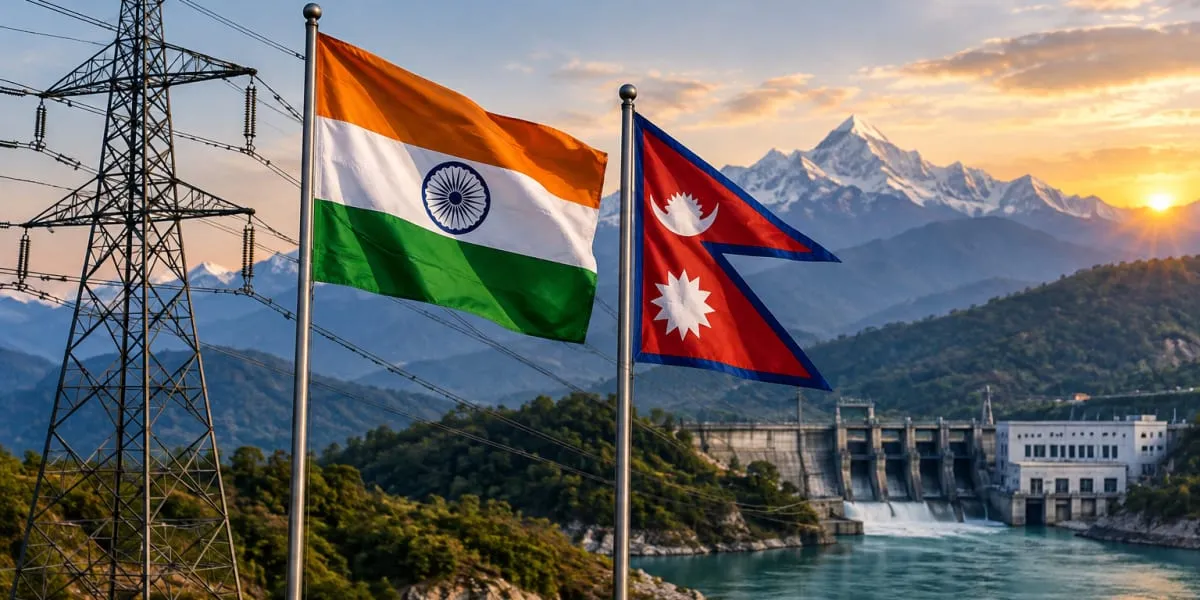
Nepal plans to import up to 1,100 MW of electricity from India during the upcoming dry season to meet peak domestic demand. Flash floods, landslides and heavy monsoon rains have damaged hydropower projects and temporarily reduced the country’s generation capacity.

The Nepal Electricity Authority (NEA) is preparing a work plan for the dry period from December to May 2027. Generation from Nepal’s run-of-the-river hydropower projects typically declines during this period, while demand rises, particularly between February and May.

Nepal currently has about 3,740 MW of generation capacity in operation. However, the August 26 Bhotekoshi flash floods damaged several hydropower plants and related infrastructure, resulting in the loss of about 450 MW of capacity. Heavy monsoon rainfall between September 24 and 27 subsequently damaged the 190 MW Kaligandaki hydropower project.

The combined impact of the disasters has reduced Nepal’s generation capacity by about 640 MW. The NEA is therefore considering electricity imports of up to 1,100 MW from India to balance supply and demand during the winter and the peak-demand period from February to May.

Despite the damage, Nepal is currently exporting between 600 MW and 700 MW of electricity to India. The country has increasingly used cross-border power trade to export surplus electricity during the wet monsoon months and import power during the dry season, when domestic generation falls.

The NEA expects some Bhotekoshi-affected projects to resume generation after maintenance, with about 160 MW expected to be restored by February. The 190 MW Kaligandaki project is also expected to resume operations within a couple of months. India and Nepal have expanded electricity trade in recent years, with New Delhi allowing Kathmandu to sell surplus power in its energy market.

Nepal plans to import up to 1,100 MW of electricity from India during the upcoming dry season to meet peak domestic demand. Flash floods, landslides and heavy monsoon rains have damaged hydropower projects and temporarily reduced the country’s generation capacity. The Nepal Electricity Authority (NEA) is preparing a work plan for the dry period from December to May 2027. Generation from Nepal’s run-of-the-river hydropower projects typically declines during this period, while demand rises, particularly between February and May. Nepal currently has about 3,740 MW of generation capacity in operation. However, the August 26 Bhotekoshi flash floods damaged several hydropower plants and related infrastructure, resulting in the loss of about 450 MW of capacity. Heavy monsoon rainfall between September 24 and 27 subsequently damaged the 190 MW Kaligandaki hydropower project. The combined impact of the disasters has reduced Nepal’s generation capacity by about 640 MW. The NEA is therefore considering electricity imports of up to 1,100 MW from India to balance supply and demand during the winter and the peak-demand period from February to May. Despite the damage, Nepal is currently exporting between 600 MW and 700 MW of electricity to India. The country has increasingly used cross-border power trade to export surplus electricity during the wet monsoon months and import power during the dry season, when domestic generation falls. The NEA expects some Bhotekoshi-affected projects to resume generation after maintenance, with about 160 MW expected to be restored by February. The 190 MW Kaligandaki project is also expected to resume operations within a couple of months. India and Nepal have expanded electricity trade in recent years, with New Delhi allowing Kathmandu to sell surplus power in its energy market.

Related Stories

Gold Stories

Next Story
Infrastructure Urban

VECV Sales Rise 49.6% to 11,396 Units in September

VE Commercial Vehicles Ltd (VECV), a joint venture between Volvo Group and Eicher Motors, recorded sales of 11,396 units in September 2026, up 49.6 per cent from 7,619 units in September 2025.The total included 11,146 units under the Eicher brand and 250 units under the Volvo brand.Eicher-branded trucks and buses recorded sales of 11,146 units during the month, compared with 7,352 units in September 2025, registering growth of 51.6 per cent.In the domestic commercial vehicle market, Eicher trucks and buses reported sales of 10,479 units, up 57.5 per cent from 6,652 units in the corresponding p..

Next Story
Infrastructure Urban

"Agentic AI set to transform supply chain decision-making."

Interview with: Lalit Das, Founder & CEO, Agentra AIWhy the next phase of supply chain technology will be about AI that acts, not just advises?Supply chains no longer have a visibility problem. They have a decision-latency problem. It takes about 8.7 hours to detect a disruption and more than 40 more to understand its impact, all before anyone acts. Meanwhile, disruption costs the global economy an estimated $184 billion a year.Enterprises already own excellent systems of record. What they lack is a system of action. Copilots don't fix that, they just give faster answers about a broken pro..

Next Story
Real Estate

BNW Developments Opens Sydney Office to Target UAE Investors

BNW Developments has expanded its international presence with the opening of a new office in Sydney, Australia, aimed at strengthening engagement with Australian investors interested in the UAE residential property market.The Sydney office will serve as a local platform for investors, wealth advisers, brokerage firms and real estate professionals exploring opportunities in Dubai and Ras Al Khaimah.Headquartered in Dubai, BNW Developments has launched 13 projects and has another 16 projects in its pipeline, representing a combined gross development value of around AED 32 billion (USD 8.7 billio..

Advertisement

Subscribe to Our Newsletter

Get daily newsletters around different themes from Construction world.

STAY CONNECTED

Advertisement

SPECIAL OFFER
QR Code