+
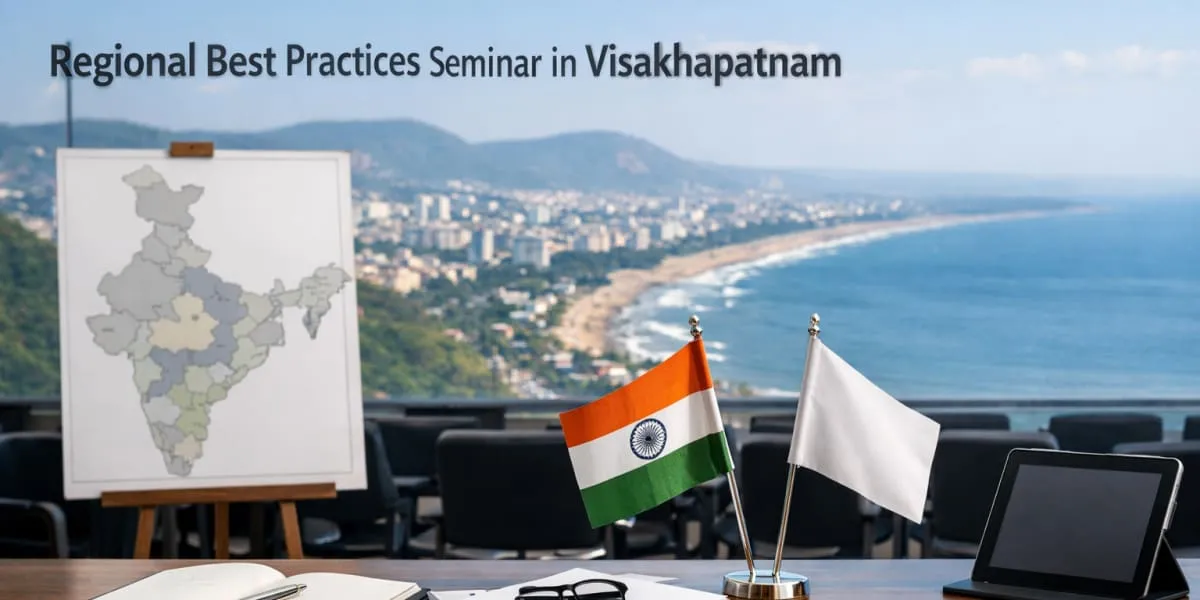
NITI Aayog Convenes Regional Best Practices Seminar in Visakhapatnam
ECONOMY & POLICY

NITI Aayog Convenes Regional Best Practices Seminar in Visakhapatnam

NITI Aayog convened the Regional Best Practices Seminar (South) on nine March 2026 at Visakhapatnam under the Aspirational Districts Programme (ADP) and Aspirational Blocks Programme (ABP), bringing together senior officials from the central government, state governments and district administrations from across southern India. The seminar focused on showcasing replicable district led innovations that have contributed to improving development outcomes in Aspirational Districts and Blocks. Attendees included senior officials from Andhra Pradesh, Telangana, Tamil Nadu, Karnataka, Kerala and the Andaman and Nicobar Islands, including district collectors and departmental representatives.

In his keynote address, the Additional Secretary and Mission Director for the ADP and ABP highlighted the progress of the programmes, commended district and block officials for their efforts and urged making the initiative a Jan Andolan through community participation and departmental convergence. He observed that many indicators were nearing saturation and praised the strong performance of southern states. The seminar was structured around three thematic sessions to enable peer learning and documentation of effective models.

The education and skill development session featured district level initiatives including the NIRMAN initiative from Alluri Sitarama Raju district aimed at improving foundational learning outcomes and the Rural Incubation Centre model from NTR district that promotes innovation and entrepreneurship among rural youth. Health and nutrition sessions showcased initiatives such as the Anaemia Mukt initiative from Bidar district to address anaemia among women and children and the Amma Rakshitha programme from Nirmal district to improve maternal health outcomes. Additional district presentations focused on strengthening youth skills and aligning interventions for measurable results.

Discussions emphasised the importance of scaling locally relevant innovations, documenting successful practices and strengthening implementation through convergence and community engagement. The seminar concluded with the unveiling of a Best Practices Compendium that documents impactful initiatives from districts across southern states and provides a repository of replicable models for service delivery and development outcomes. Officials signalled continued emphasis on peer learning and dissemination to accelerate progress under the ADP and ABP.

NITI Aayog convened the Regional Best Practices Seminar (South) on nine March 2026 at Visakhapatnam under the Aspirational Districts Programme (ADP) and Aspirational Blocks Programme (ABP), bringing together senior officials from the central government, state governments and district administrations from across southern India. The seminar focused on showcasing replicable district led innovations that have contributed to improving development outcomes in Aspirational Districts and Blocks. Attendees included senior officials from Andhra Pradesh, Telangana, Tamil Nadu, Karnataka, Kerala and the Andaman and Nicobar Islands, including district collectors and departmental representatives. In his keynote address, the Additional Secretary and Mission Director for the ADP and ABP highlighted the progress of the programmes, commended district and block officials for their efforts and urged making the initiative a Jan Andolan through community participation and departmental convergence. He observed that many indicators were nearing saturation and praised the strong performance of southern states. The seminar was structured around three thematic sessions to enable peer learning and documentation of effective models. The education and skill development session featured district level initiatives including the NIRMAN initiative from Alluri Sitarama Raju district aimed at improving foundational learning outcomes and the Rural Incubation Centre model from NTR district that promotes innovation and entrepreneurship among rural youth. Health and nutrition sessions showcased initiatives such as the Anaemia Mukt initiative from Bidar district to address anaemia among women and children and the Amma Rakshitha programme from Nirmal district to improve maternal health outcomes. Additional district presentations focused on strengthening youth skills and aligning interventions for measurable results. Discussions emphasised the importance of scaling locally relevant innovations, documenting successful practices and strengthening implementation through convergence and community engagement. The seminar concluded with the unveiling of a Best Practices Compendium that documents impactful initiatives from districts across southern states and provides a repository of replicable models for service delivery and development outcomes. Officials signalled continued emphasis on peer learning and dissemination to accelerate progress under the ADP and ABP.

Next Story
Infrastructure Urban

Implementation Status of Jal Jeevan Mission

Since August 2019 the Government has implemented Jal Jeevan Mission to provide assured potable water through household tap connections in rural India. At the start of the mission only 32.3 million (mn) rural households, representing 16.7 per cent, were reported to have tap water connections. States and union territories have reported that 125.8 mn additional rural households have since been provided with tap connections. As a result, of about 193.6 mn rural households roughly 158.2 mn, or 81.71 per cent, are reported to have tap water supply at home.\n\nThe State, district and village level st..

Next Story
Infrastructure Urban

Jal Jeevan Mission Reaches Eighty One Per Cent Rural Coverage

The Government reported substantial progress under the Jal Jeevan Mission, launched in August 2019 to provide tap water to every rural household. At launch only 32.3 million (mn) rural households had tap connections and states and Union territories reported provision of 125.8 mn additional households by March 2026. Consequently, out of about 193.6 mn rural households around 158.2 mn, or 81.71 per cent, are reported to have tap water at home. The Finance Minister announced extension of the mission until 2028 in the 2025-26 budget speech. The Swachh Bharat Mission Grameen, launched in October 20..

Next Story
Infrastructure Urban

Empowering Local Governance for Sustainable Rural Water Supply

The Ministry of Jal Shakti has aligned the Jal Jeevan Mission (JJM) with the 73rd Amendment to strengthen village level planning and community ownership of water supply. Gram Panchayats, village water and sanitation committees and Pani Samitis are to plan, implement, manage and maintain piped water systems, with gram sabha processes formalising handover and oversight. Implementation support agencies including non government organisations, community based organisations and self help groups have been empanelled to train local committees and promote women participation. Under JJM, the department ..

Advertisement

Subscribe to Our Newsletter

Get daily newsletters around different themes from Construction world.

STAY CONNECTED

Advertisement

Advertisement

Advertisement