+
Panel Proposes 20 Year Lease Extension And Easier Mining Rules
ECONOMY & POLICY

Panel Proposes 20 Year Lease Extension And Easier Mining Rules

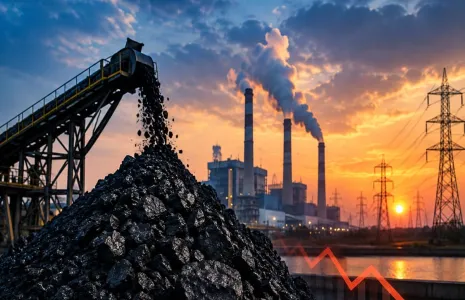
The central government aims to raise domestic coal production to 1.5 billion tonnes (bn t) by 2030 under its Atmanirbhar Bharat strategy. Adequate supplies of the fuel are essential for the economy because they ensure stable, affordable baseload electricity and reduce reliance on imports. Officials link higher output with securing supplies for industrial sectors and insulating energy markets from shocks. The panel proposals seek to remove bottlenecks that impede investment and long term mine planning.

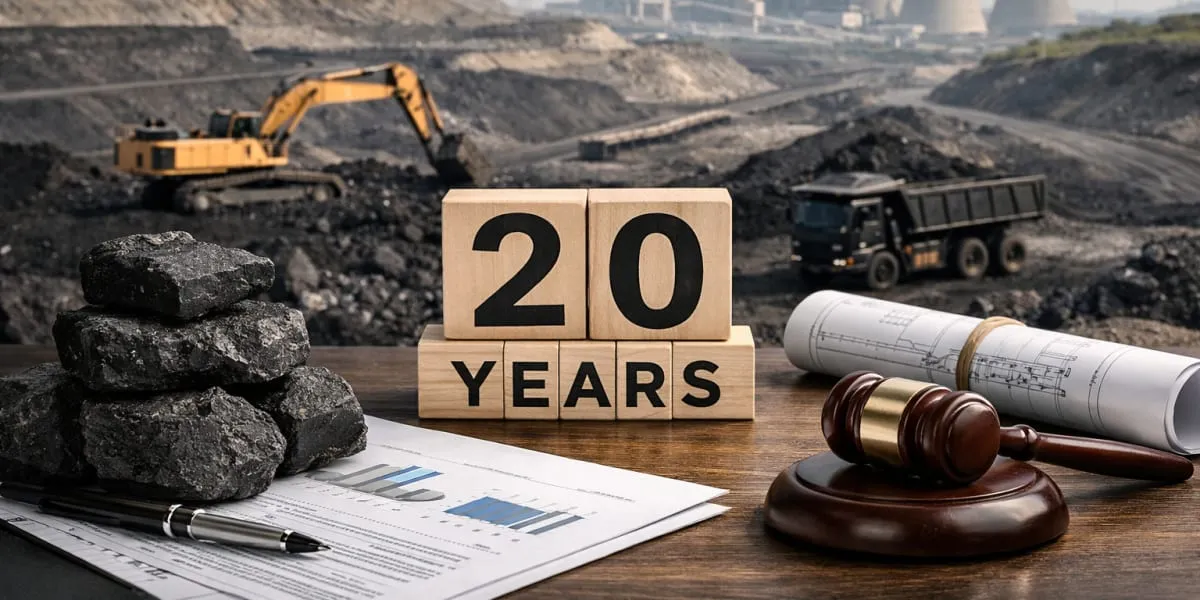
Among the Gauba panel recommendations is a proposal to extend mining lease tenures from 30 years to 50 years, effectively adding 20 years for eligible blocks. The extension is described as addressing regulatory uncertainty and compliance burdens that complicate planning for mines with long operational lives. Industry participants view a 50 year lease as an incentive for higher capital deployment and sustained production. The measure is intended to support predictable timelines for development and rehabilitation.

The panel has suggested permitting insurance surety bonds alongside bank guarantees to improve performance security arrangements. Allowing such bonds aims to reduce the working capital or credit limits that are locked by traditional bank guarantees, thereby freeing funds for mine development, infrastructure and operations. Officials indicate this option could enable companies to deploy more capital towards project execution rather than towards security requirements. The change is presented as a pragmatic step to ease financial constraints on operators.

Another recommendation would permit state run enterprises to use degraded forest land for compensatory afforestation where appropriate, which could shorten delays in forest clearances while maintaining offset plantation obligations. The proposal notes that degraded forest land remains classified as forest despite long term declines in biological quality and capacity to provide services. Official estimates place coal reserves at 401 bn t, underscoring a substantial resource base to boost output and long term planning.

The central government aims to raise domestic coal production to 1.5 billion tonnes (bn t) by 2030 under its Atmanirbhar Bharat strategy. Adequate supplies of the fuel are essential for the economy because they ensure stable, affordable baseload electricity and reduce reliance on imports. Officials link higher output with securing supplies for industrial sectors and insulating energy markets from shocks. The panel proposals seek to remove bottlenecks that impede investment and long term mine planning. Among the Gauba panel recommendations is a proposal to extend mining lease tenures from 30 years to 50 years, effectively adding 20 years for eligible blocks. The extension is described as addressing regulatory uncertainty and compliance burdens that complicate planning for mines with long operational lives. Industry participants view a 50 year lease as an incentive for higher capital deployment and sustained production. The measure is intended to support predictable timelines for development and rehabilitation. The panel has suggested permitting insurance surety bonds alongside bank guarantees to improve performance security arrangements. Allowing such bonds aims to reduce the working capital or credit limits that are locked by traditional bank guarantees, thereby freeing funds for mine development, infrastructure and operations. Officials indicate this option could enable companies to deploy more capital towards project execution rather than towards security requirements. The change is presented as a pragmatic step to ease financial constraints on operators. Another recommendation would permit state run enterprises to use degraded forest land for compensatory afforestation where appropriate, which could shorten delays in forest clearances while maintaining offset plantation obligations. The proposal notes that degraded forest land remains classified as forest despite long term declines in biological quality and capacity to provide services. Official estimates place coal reserves at 401 bn t, underscoring a substantial resource base to boost output and long term planning.

Related Stories

Gold Stories

Next Story
Real Estate

BMC OC Amnesty Scheme Requires Key Approvals from Mumbai Societies

The Brihanmumbai Municipal Corporation (BMC) has clarified that housing societies applying under its Occupation Certificate (OC) amnesty scheme must possess key approvals linked to the original construction. The requirements include a valid Intimation of Disapproval (IOD), an approved building plan and a Commencement Certificate (CC), along with a No Objection Certificate (NOC) from the developer or original construction applicant. The Standard Operating Procedure (SOP) makes clear that the absence of an OC alone will not qualify a building for relief. Societies must establish that their build..

Next Story
Real Estate

Gurugram Emerges as Luxury Senior Living Hub

Gurugram is emerging as a potential hub for luxury senior living, supported by available land, healthcare infrastructure, connectivity and a concentration of affluent professionals, high-net-worth individuals and non-resident Indians. These factors could give the city an advantage over land-constrained metros such as Mumbai. A report by the Association of Senior Living India (ASLI) and JLL estimates that India’s organised senior living market could represent a $10.1 bn opportunity by 2030. The sector had about 25,050 organised units as of June 2026, while penetration stood at only 1.5 per ce..

Next Story
Real Estate

Corrosion Costs India’s Infrastructure Rs. 142 bn Annually

Corrosion costs India an estimated Rs. 1.42 tn annually, equivalent to 4.3 per cent of gross domestic product, according to a report by the Confederation of Indian Industry and the National Research Institute. Infrastructure accounts for Rs. 142 bn of the annual burden, making it the sector with the largest absolute cost among those examined. The report, presented at the CII Annual Infrastructure Summit 2026, said the infrastructure-sector cost equals about 2.9 per cent of the sector’s gross domestic product. It estimated that effective measures could generate maximum savings of Rs. 495.8 bn..

Advertisement

Subscribe to Our Newsletter

Get daily newsletters around different themes from Construction world.

STAY CONNECTED

Advertisement

SPECIAL OFFER
QR Code